
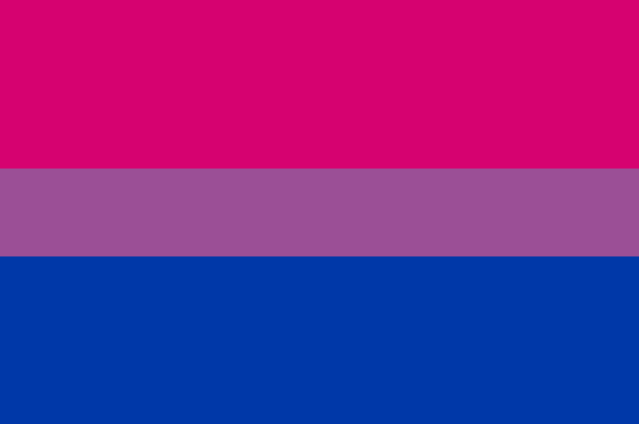
The next time someone asks you why Pride Month is in June, or why it exists at all, or where the word “Pride” even comes from, the answer is a bisexual woman from the Bronx named Brenda Howard. She is the reason June feels the way it feels. She is the reason there is a parade and not just a memory. And almost nobody knows her name.
Every June, cities across the world hold Pride marches. Millions of people walk through streets draped in rainbow flags. Corporations change their logos. Politicians issue statements. The celebration has become so large, so global, so commercially embedded that it is easy to forget where it started. It started with a riot. And it became a movement because one woman decided that the riot deserved an anniversary.
It Started as a Raid, Not a Parade
On June 28, 1969, shortly after midnight, police officers from the New York Police Department’s Public Morals Squad walked into the Stonewall Inn in Greenwich Village. It was a routine raid. The Stonewall was a mafia-owned gay bar operating without a liquor licence. Under New York’s criminal statutes at the time, a person could be arrested for wearing fewer than three items of “gender-appropriate” clothing. Police raids on gay bars were common. Patrons were lined up, checked for identification, and arrested if they were found to be in violation of the dress code or other statutes. Most nights, people submitted. They had no choice.
That night, they did not submit. When officers began making arrests, the crowd outside the bar pushed back. Coins were thrown. Bottles followed. Someone uprooted a parking meter.
The confrontation escalated into what is now known as the Stonewall Uprising, six days of clashes between LGBTQ+ individuals and the NYPD in the streets of Greenwich Village. The uprising was led, in large part, by the most marginalised members of the community, transgender women of colour, drag queens, homeless queer youth, people who had nothing left to lose. Marsha P. Johnson and Sylvia Rivera, both transgender women of colour, are today recognised as central figures in the rebellion.
Stonewall did not create the LGBTQ+ rights movement from nothing. Organisations like the Mattachine Society and the Daughters of Bilitis had been working for years. But Stonewall was the spark that turned quiet advocacy into visible, collective resistance. It was the moment the movement stopped asking for tolerance and started demanding rights.
The Woman Who Turned a Riot Into a Tradition
Brenda Howard was born on December 24, 1946, into a Jewish working-class family in the Bronx. She grew up in Syosset, New York. She earned a nursing degree from the Borough of Manhattan Community College. But nursing was never going to be her life. By the time she was in her early twenties, she was already the kind of person who showed up wherever there was a fight worth having. Anti-Vietnam War marches. Civil rights protests. Feminist organising. If someone was being pushed down, Brenda Howard was standing next to them.
When the Stonewall Uprising happened in June 1969, Howard was 22 years old. She was already connected to the queer activist community in New York. She had friends who were inside the Stonewall Inn that night. And in the weeks that followed, as the energy of the uprising began to settle into memory, Howard had an idea that would change everything. She wanted to mark the anniversary. Not just with a moment of silence or a private gathering. With a public march.
At the Oscar Wilde Memorial Bookshop on Christopher Street, the first gay bookshop in the country, Howard met with L. Craig Schoonmaker, Robert A. Martin, and other queer activists to plan what would become the Christopher Street Liberation Day March. They set the date for June 28, 1970, exactly one year after the first night of the Stonewall Uprising. Howard did not just plan the march. She had a bigger idea. She wanted a full week of events around it, rallies, gatherings, discussions, and celebrations. Not just a day, but a week. That idea became the template for what the world now knows as Pride Week.
And the word itself? “Pride.” Before Howard and her collaborators, there was no consensus on what to call these gatherings. L. Craig Schoonmaker is credited with coining the term, and Howard, along with Robert A. Martin, helped popularise it. The word was chosen deliberately. Not “tolerance.” Not “acceptance.” Pride. The word itself was a political act.
June 28, 1970: The First Pride
On the morning of June 28, 1970, a small group gathered at the southern end of Christopher Street in Greenwich Village. They did not know how many people would come. They did not know if anyone would try to stop them. They started walking. And as they walked north through Manhattan, the crowd grew. By the time the march reached its destination, thousands of people had joined. It stretched across 15 blocks. People chanted. People held signs. People walked in the open, in daylight, as themselves, many of them for the first time in their lives.
It was not a parade in the way we think of parades today. There were no corporate floats. No branded merchandise. No sponsors. It was a march. A political act. A group of people walking through a city that had criminalised their existence, saying: " We are here, we are not ashamed, and we are not going away. Other cities followed. Los Angeles held its own march the same day. San Francisco and Chicago followed soon after. Within a few years, the Christopher Street Liberation Day March had become an annual tradition in cities across the United States and then across the world.
Brenda Howard made that happen. A bisexual woman from the Bronx who earned a nursing degree and spent her life showing up.
Thirty Years of Showing Up
Howard did not stop after 1970. For the next 35 years, until her death, she was a fixture of New York’s LGBTQ+ activist community. In 1986, she worked with the Coalition for Lesbian and Gay Rights to help guide New York City’s gay rights law through the City Council. In 1987, she co-founded the New York Area Bisexual Network. She was a co-chair of the 1987 March on Washington for Gay and Lesbian Rights. In 1993, she fought for the inclusion of the word “bisexual” in the title of the March on Washington for Gay, Lesbian, and Bi Equal Rights and Liberation. She was active in ACT UP and Queer Nation.
She was arrested in Chicago in 1988 while demonstrating for national healthcare and the fair treatment of women, people of colour, and those living with HIV and AIDS. She was arrested in Georgia in 1991 for protesting the firing of a lesbian from the state attorney general’s office under Georgia’s anti-sodomy law. She was arrested multiple times. She kept going.
Her partner, Larry Nelson, later told The Advocate: “She was an in-your-face activist. She fought for anyone who had their rights trampled on.” Bisexual activist Tom Limoncelli put it more simply: “The next time someone asks you why LGBT Pride marches exist or why LGBT Pride Month is June, tell them: a bisexual woman named Brenda Howard thought it should be.”
Brenda Howard died on June 28, 2005. She was 58 years old. She died during New York City’s Pride Week, the very event she had created 35 years earlier.
The Flag That Lost Two Stripes
Before the rainbow flag, many LGBTQ+ communities used a pink triangle, a symbol adapted from the badge that gay prisoners were forced to wear in Nazi concentration camps. The community had reclaimed it as a symbol of resistance. But it was born in atrocity. People wanted something more hopeful.
In 1978, artist and activist Gilbert Baker designed the first rainbow flag in San Francisco. It had eight stripes, each with a specific meaning: hot pink for sex, red for life, orange for healing, yellow for sunlight, green for nature, turquoise for art, indigo for harmony, and violet for spirit. The flag was hand-dyed and hand-stitched. When demand for the flag surged after the assassination of Harvey Milk in November 1978, Baker ran into a practical problem. Hot pink fabric was commercially unavailable in the quantities needed. The stripe was dropped. Later, turquoise was also removed, so the flag had an even number of stripes, six, which allowed it to be split evenly on both sides of parade routes. The most recognisable symbol of the LGBTQ+ rights movement lost two of its original colours for purely practical reasons.
When Protest Became a Product
Pride Month was not always official. In the United States, it was formally recognised only in 1999 and 2000, when President Bill Clinton declared June as “Gay and Lesbian Pride Month.” President Barack Obama expanded the language in 2009 to “Lesbian, Gay, Bisexual, and Transgender Pride Month.” By then, Pride had already gone global.
But with global reach came a tension that Brenda Howard’s generation could not have anticipated. Pride parades today are sponsored by banks, tech companies, alcohol brands, and fashion houses. Rainbow logos appear on corporate social media accounts every June 1 and disappear every July 1. Some of the same companies that march in Pride parades also donate to politicians who vote against LGBTQ+ rights. The term “rainbow-washing” has entered the vocabulary of the community itself.
This tension is not new. It has been building for years. And it raises a question that has no clean answer: can a movement that began as a riot survive becoming a brand? Can the spirit of Stonewall, of people with nothing left to lose, standing up against the state, coexist with corporate floats and branded merchandise? Some say yes, that visibility matters regardless of its commercial wrapper. Others say no, that when protest becomes a product, the protest is already lost.
The Reason June Feels the Way It Feels
In 2026, Pride Month will be celebrated in cities across the world. There will be parades and festivals and speeches and flags. In some countries, it will be a celebration of rights won. In others, it will be an act of defiance in places where those rights do not yet exist. In 67 countries, same-sex relations are still criminalised. In 11, they carry the death penalty. The fight that started outside a bar in Greenwich Village in 1969 is not over. It has just changed shape.
Brenda Howard did not live to see marriage equality in the United States. She did not live to see India decriminalise homosexuality in 2018. She did not live to see Thailand legalise same-sex marriage in 2025. She died during Pride Week, at the age of 58, having spent her entire adult life organising, protesting, getting arrested, and showing up.
She was bisexual. She was Jewish. She was from the Bronx. She earned a nursing degree and never practised nursing. She gave the world the word “Pride” and the template for how to celebrate it. And almost nobody knows her name.
This June, when you see the flags and the marches and the logos and the celebrations, remember where it started. It started with a riot. It became a tradition because a 23-year-old woman from the Bronx decided it should be. Her name was Brenda Howard. She was the Mother of Pride. And every parade on earth walks in her footsteps.
References
- The Advocate — “Bisexual Pioneer Brenda Howard Is the Mother of Pride” (May 26, 2023). https://www.advocate.com
- Blurred Bylines — “Brenda Howard: Mother of Pride & Bisexual+ Rights Activist” (December 18, 2025). https://blurredbylines.com
- Hey Alma — “Meet Brenda Howard, the Bisexual Jewish Activist Some Call ‘The Mother of Pride’” (March 23, 2022). https://www.heyalma.com
- Pride Belongs — “Brenda Howard: The Bisexual Activist Who Created Pride Month” (May 2026). https://pridebelongs.com
- Legacy Project Chicago — “Brenda Howard.” https://legacyprojectchicago.org
- Z100 New York — “The First Pride Parade and the Bisexual Woman Behind It” (June 7, 2021). https://z100.iheart.com
- All India Queer Association — “Brenda Howard — The Mother of Pride” (February 26, 2023). https://allindiaqueerassociation.com
- Yale SOM — “History of Pride Month.” https://groups.som.yale.edu
- Certified Proud — “Icon: Brenda Howard.” https://www.certifiedproud.com