
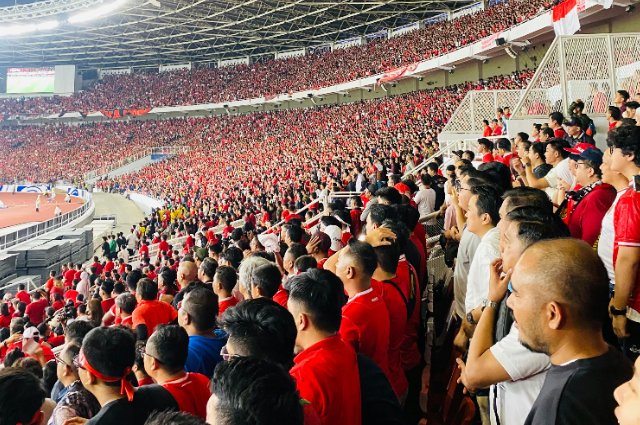
June 5, 2025, was supposed to be just another workday. Or so I thought.
The night before, the Royal Challengers Bengaluru had lifted the trophy in the 18th edition of the Indian Premier League. After 17 long years of unwavering faith, heartbreak, memes, near-misses, and the relentless chant of “Ee Sala Cup Namde,” the cup was finally ours.
For years, that phrase had been equal parts hope and humour — a promise made half in belief, half in self-awareness. Season after season, we had said it. Season after season, we had watched it slip away. But this time, something was different. This time, the dream had held its ground. The final whistle had blown, the scoreboard had confirmed it, and suddenly, all those years of waiting crystallised into a single, overwhelming truth — RCB were champions.
Bengaluru was in a frenzy.
It wasn’t just a celebration; it was a release. It felt as if the city had been holding its breath for nearly two decades and had finally exhaled. Streets echoed with cheers late into the night. Firecrackers burst into the sky. Social media flooded with red jerseys, emotional messages, and disbelief wrapped in joy. Strangers smiled at each other like old friends. For a moment, the city felt united in a way that is rare and fleeting.
In India, cricket is often described as a religion — and for Bengaluru janaru, RCB is nothing short of divine. The victory was not just for the players or the management; it belonged to every fan who had stood by the team season after season, through collapses and comebacks, through trolling and teasing, through hope that refused to die.
And that day had arrived.
It was only natural that such a long-awaited triumph demanded a city-wide celebration. When news broke of a grand victory parade, excitement surged again. The procession would pass near my office, close to Cubbon Park, before culminating at the iconic M. Chinnaswamy Stadium. Suddenly, I was no longer just an office-goer with deadlines and meetings — I was a fan with a mission.
At over fifty, I perhaps should not admit how giddy I felt at the thought of possibly seeing Virat Kohli up close. Maybe even a handshake. Maybe even a selfie. It sounds ridiculous when written down. But fandom does not recognise age. It does not follow logic or restraint. It exists in a space untouched by practicality — where a glimpse of your hero can feel like a personal milestone.
Being a true Bengalurean and an ardent RCB supporter, I allowed myself that childlike excitement.
The morning began like any other. I got ready for work, dressed neatly, packed my files, and stepped out into what I expected would be a routine day — albeit one coloured by lingering celebration. But beneath that routine, there was a current of anticipation. The city felt different. There was energy in the air, an undercurrent that suggested something extraordinary was about to unfold.
At the office, productivity competed with distraction. Conversations drifted inevitably toward the parade. Screens flickered with live updates. Now and then, someone would pause mid-task to check for news. Even those who were not ardent cricket fans seemed drawn into the collective excitement.
I positioned myself strategically — close enough to stay informed, yet trying to maintain the illusion of a normal workday. One eye on spreadsheets, the other on YouTube live streams. The parade was expected to begin around 11 a.m. and reach the stadium shortly after. I asked colleagues to alert me if there was any movement on the screen.
Time ticked by.
Eleven came and went.
Then noon.
Lunch hour arrived, but appetite was secondary. I ate mechanically, my attention elsewhere. There was a strange patience in the waiting — as if anticipation itself had become part of the celebration.
Still, I did not give up.
Then, without warning, the tone shifted.
A line flashed across the screen.
One person died in a stampede during the victory parade.
I stared at it, hoping it was an error. A misreport. A glitch. This was meant to be a celebration — a festival of joy, a moment of pride. What was happening?
But the number began to rise.
Slowly at first, then with unsettling consistency.
The visuals changed. The celebratory footage gave way to something else entirely. People are being carried on stretchers. Faces contorted in panic. Crowds are surging uncontrollably. What should have been chants of victory had turned into cries of distress.
The atmosphere in the office changed instantly. Conversations stopped. Screens became the centre of attention. There was disbelief, confusion, and an unspoken question that hung in the air — how had this gone so wrong?
News anchors filled the airwaves with urgency. Words like “mismanagement,” “overcrowding,” and “lack of preparedness” began to dominate the narrative. The blame game had already begun — authorities, organisers, police, infrastructure. Everyone had an opinion. Everyone had a theory.
But in that moment, beyond politics and outrage, I felt something else.
A sinking heaviness.
It was not about missing a glimpse of Kohli anymore. It was not about the parade or the celebration or even the victory. It was about the price that was being paid for that frenzy.
Celebration had crossed into chaos.
And chaos had turned into tragedy.
Confusion gripped the city. Roads were blocked. Traffic came to a standstill in several areas. Public transport was disrupted. What had drawn people together was now trapping them in uncertainty.
By the time I decided to leave, it was clear that getting home would not be simple. Buses were delayed, cabs were scarce, and routes were unpredictable. I began walking — first out of necessity, then with a kind of numb determination.
Nearly five kilometres to Nadaprabhu Kempegowda Majestic Metro Station.
Under normal circumstances, it would have felt exhausting. That day, it felt insignificant.
The physical strain barely registered. My mind was elsewhere — replaying images, processing fragments of information, trying to make sense of something that refused to make sense.
Around me, the city continued to move, but with a different energy. There was less excitement now, more urgency. Groups of people spoke in hushed tones. Phones were clutched tightly. Everyone seemed to be searching for updates, for clarity, for reassurance.
But clarity was slow to arrive.
That night, the celebrations felt distant — almost inappropriate in hindsight. The same victory that had united the city now felt overshadowed by something darker. Joy had not disappeared, but it had been interrupted, complicated, altered.
The next morning brought confirmation of what we had feared.
Nineteen lives lost.
Nineteen.
The number was no longer abstract. It was final.
Newspapers carried heart-wrenching photographs — young faces, frozen in time. Lives that had barely begun. Dreams that would now remain unfulfilled.
They were between 18 and 30 years of age.
That detail lingered.
These were not just fans in a crowd. They were individuals at the threshold of possibility. Among them could have been future doctors, engineers, artists, entrepreneurs, teachers, or perhaps even cricketers inspired by the very team they had gathered to celebrate.
Each one had a story.
A family.
A future.
And in a matter of moments, all of it had been taken away.
It is difficult to process such loss, especially when it emerges from something meant to bring happiness. There is a certain cruelty in that contrast — the idea that a moment of collective joy could transform so abruptly into collective grief.
June 5, 2025, will forever be remembered as the day RCB lifted its maiden IPL trophy.
That fact cannot be erased. It is part of history now — a long-awaited triumph that fans had dreamed of for nearly two decades.
But it may also be remembered as a Black Day.
A day when celebration came at an unbearable cost.
In the days that followed, discussions continued. Questions were asked. Responsibility was debated. Could this have been prevented? Should there have been better planning? Was the scale of the crowd underestimated?
Perhaps answers will emerge over time.
Perhaps they won’t.
But beyond those questions lies something more immediate and more human — the recognition of loss.
For the families of those nineteen individuals, this is not a story about mismanagement or infrastructure. It is not about cricket or celebration. It is about absence. About the silence left behind. About lives that will never return to the routines they once filled.
For them, June 5 will not be remembered for a trophy.
It will be remembered for everything they lost.
As for the rest of us, we are left with a complicated memory. One that refuses to settle into a single emotion. Pride and grief coexist uneasily. Celebration feels incomplete. Reflection becomes unavoidable.
I do not know whether to consider myself fortunate for staying back and being safe — or simply heartbroken for those who were not.
Perhaps both.
Because sometimes, survival carries its own weight. The awareness that things could have been different. That a small decision — to step out or stay in — can alter the course of a day, or a life.
In the end, what remains is a reminder.
Of how fragile moments can be.
Of how quickly joy can shift into something else.
Of how collective experiences — even the most jubilant ones — carry responsibilities that extend beyond emotion.
And of how, sometimes, history writes glory and grief on the very same page.