
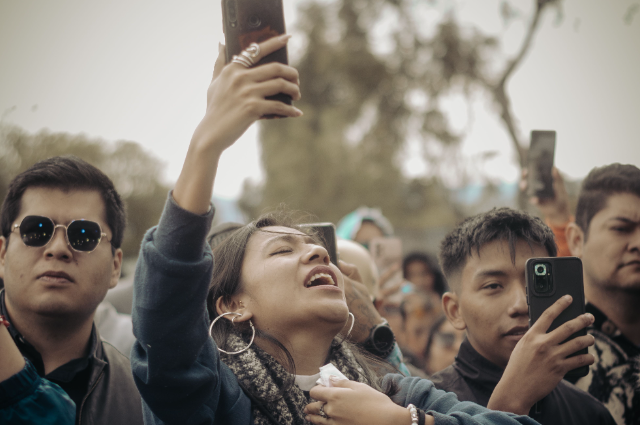
On May 15, 2026, Chief Justice of India Surya Kant remarked during a Supreme Court hearing, comparing certain individuals to “cockroaches and parasites of society”, which got widely misquoted, torn out of context, and aimed squarely at India’s unemployed youth. By the next morning, Abhijeet Dipke, a 30-year-old PR professional and Boston University graduate, had announced the Cockroach Janta Party. Within 72 hours, it had over a lakh members. The tagline? “Voice of the Lazy and Unemployed.” The voting symbol? A mobile phone. The vibe? Chaotic, funny, deeply online.
But buried inside the CJP’s five-point manifesto was one demand that nobody was laughing at.
The Demand That Broke the Internet (Further)
The CJP’s second manifesto point is blunt: if any legitimate vote is deleted from the electoral rolls, the Chief Election Commissioner shall be arrested under the Unlawful Activities Prevention Act. Their reasoning is stated plainly: “taking away the voting rights of a citizen is no less than terrorism.”
This wasn’t a random provocation. Across multiple recent elections, thousands of voters had shown up to polling booths only to find their names missing. Civil society reports documented that these deletions were disproportionately concentrated in opposition-leaning areas. The CJP decided that if the UAPA is good enough for student activists and journalists, it should be good enough for officials who erase democracy one voter at a time.
Within days, the party had gone viral, and the demand was the reason people kept sharing it.
Why This Is Legally Explosive
Here is the uncomfortable truth about the UAPA: between 2016 and 2020, over 5,000 cases were filed under it against more than 24,000 people. The conviction rate was roughly 2–3%. Nearly 89% of cases are still pending in courts. The law allows someone to be held for up to 180 days without charge. Bail is nearly impossible to obtain.
It has been used against Kashmiri human rights defender Khurram Parvez, jailed since 2021 with no trial in sight. Against journalist Siddique Kappan. Against academics and activists from the Elgar Parishad case, some of whom died in custody. Amnesty International and the United Nations have both raised alarms about how the law is being applied.
Applying this same law to the Chief Election Commissioner, a constitutional authority removable only through a parliamentary address and protected under Article 324, raises serious legal questions. Voter roll deletion is not, strictly speaking, a “terrorist act” as defined under the UAPA’s existing framework. Legal experts point out that making the CJP’s demand work would require stretching the law’s already dangerously broad definitions even further, which is exactly the kind of overreach civil libertarians have been warning about for years.
Taken literally, the demand has real problems.
But Here’s the Thing
The CJP knows this. The demand is not a legislative draft; it is a mirror.
For years, the UAPA has been pointed downward: at protestors, at minorities, at people who asked uncomfortable questions in the wrong rooms. The CJP is simply asking what happens when you point it upward. If deleting a citizen’s vote is truly a harmless bureaucratic error, why does the government treat peaceful protest as terrorism? And if democratic rights are sacred enough to merit national security-grade protection, then why does the person responsible for guarding those rights face no real accountability at all?
The demand is absurd. It is also the most coherent thing anybody has said about electoral accountability in years.
The Crackdown Said It All
The government’s response was swift and, in its own way, revealing. The CJP’s X account was withheld under Section 69A of the IT Act. Its Instagram was compromised. Its .org domain was blocked. And then, as if on cue, a lawyer named Sudhir Jakhar separately applied to the Election Commission to register “CJP” as his own political party with entirely different objectives, conveniently stripped of the original five demands.
You don’t censor jokes you are not afraid of. The speed and thoroughness of the crackdown on a satirical movement with a meme symbol and no funding told its own story more clearly than any editorial could.
What It Actually Means
The Cockroach Janta Party is not going to win the 2029 elections. The UAPA demand is not going to become law. But that was never really the point.
What the CJP exposed in the most terminally online way possible is that India’s democratic institutions have developed a very comfortable set of double standards. Laws brutal enough to destroy lives are applied casually to ordinary citizens. The same standard of accountability is considered outrageous when imagined for those in power. Protest is terrorism. Deleting voters is paperwork.
The cockroaches are not the unemployed youth scrolling through their phones at 2 AM, looking for a party that finally sounds like them. They are, as it turns out, the questions that keep surviving no matter how many times the system tries to delete them.
References & Sources:
- CJP Official Manifesto — https://www.cockroachjantaparty.buzz
- Siasat Daily, “Cockroach Janta Party takes Indian internet by storm after CJI’s remarks” — https://www.siasat.com
- The Week, “xTrouble in Cockroach Paradise: CJP heading for a split as lawyer moves EC to register CJP” — https://www.theweek.in
- LawShun, “What is UAPA Law in India” — https://lawshun.com
- ImpACT International, “India’s UAPA Law: Weaponising Justice Against Human Rights Defenders” — https://impactpolicies.org
- Drishti IAS, “Controversies Surrounding UAPA” — https://www.drishtiias.com