
The Life I Was Born To Live
Every family has its unwritten rules. Some are said out loud, while others silently affect the lives of children from a very young age. I was raised in an Orthodox family, where discipline, protection and tradition were considered important values. My parents loved me very much, they cared about me, and they wanted the best for my future. But like many girls from conservative homes, I was raised with invisible boundaries.
I was a girl, and I was told to watch out. I had to think twice before going out alone, talking to strangers, or making my own decisions. Safety was always mentioned in the same breath as fear. Society already had its list of warnings for girls like me. The world is a dangerous place. “Girls don’t travel alone.” “What’ll everybody think?” These sentences became daily.
For many years, I accepted those limitations, unquestioned. I told myself that the safest way to live was to stay in comfort zones. But deep in my heart, there was always a hidden desire to experience life differently.
I wanted to get out of the familiar world and find out who I really was without my labels of daughter, sister, and obedient girl.
I didn’t want luxury. I wanted not a rebellion for the sake of notoriety. What I wanted was liberty, if only for a little while. I wanted to know what it was like to make my own choices, to walk the streets I had never seen, to live my life without being watched. That quiet desire finally got the better of my fear.
It was a normal day when I made an extraordinary decision. I decided to go to Alappuzha by myself.
That decision changed my life forever.
The Fear Before the Journey :
The beginning of a journey is often the most difficult part. My mind was full of confusion when I left home. I knew it would be hard to get my parents to agree to a solo trip. It wasn’t normal for us girls to travel alone. The world outside had changed, but many traditional mindsets remained unchanged in homes like mine. I packed my bag but could not explain my feelings. I was nervous and excited and guilty and curious. My hands were shaking as I fumbled with my clothes. I remember checking my phone several times before leaving my house. Part of me wanted to cancel the trip and go back to the safety of my room. But another part of me was desperate to prove I could survive on my own.
What if things had gone wrong?
What if I didn't survive on my own?
What if people judged me?
What if I were overcome with fear halfway through?
But hidden beneath all those fears, another feeling slowly began to rise – determination. Somewhere inside me, a quiet voice whispered, ‘If not now, then when?’
That voice was my strength.
When I finally set out for the journey, I discovered that freedom is not without fear. Sometimes courage is just doing the next thing when you are scared.
Journey towards Alappuzha :
The actual journey felt very special and emotional. Since I am leaving my hometown, it was an emotional experience, and after driving off some distance from my place for so long, I was looking out the window. Trees went running towards the back, rain clouds gathered in the sky, and new places one after the other came by. The real journey was not out but in me. For the very first time in my life, I was travelling on my own.
There was no one to guide me.
There was no one to decide for me.
There was no one to stare at me all the time.
Initially, I felt awkward, for I was so dependent on the views and company of people all my life that independence itself felt alien. Gradually, the awkwardness changed into ecstasy. The memory of rain is still fresh. Little raindrops pitter-pattering at the glass window and a cool wind blowing through the small cracks was just amazing and just matched the weather inside me, mixed feelings of apprehension, instability and loveliness. I knew this was not the run from my home; I was just travelling towards me. At one point on the journey, my mobile phone battery ran low, and for a few moments, my panic immediately escalated as I came to realise how much I have always relied on people during any travelling experience. Fear struck again in full intensity for some minutes. But soon enough, I pulled myself together, dealt with the situation myself and gained a realisation about confidence, which not even all the self-help speeches together ever managed to instil.
With each mile travelled, I gained more confidence.
Each sight, new and uncharted to my eyes, fueled my curiosity.
Each moment spent in solitude sharpened my self-awareness.
I understood for the very first time that being alone and being lonely are indeed very different concepts.
First Impressions of Alappuzha :
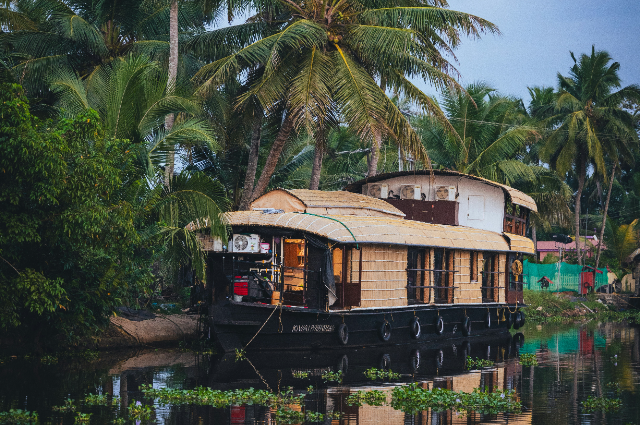
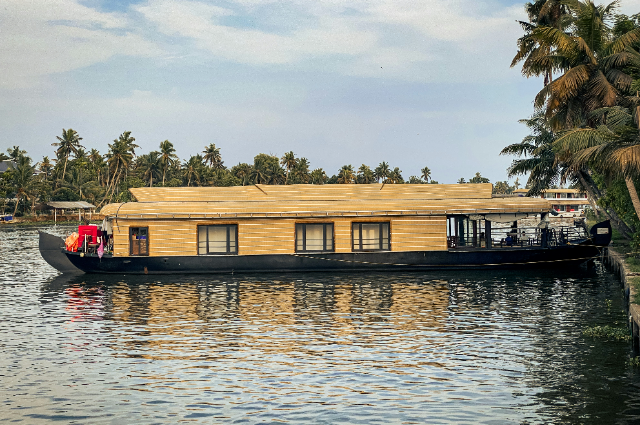
When I arrived in Alappuzha, I felt something hard to put into words. The ambience there felt like something. Not with the rush of speed and the roar of crowds but the hum of something quiet and peaceful, which seemed to accept me without question. The backwaters extended as far as my eyes could see, like vast mirrors reflecting the sky. Houseboats slid lazily across the water, moving so slowly it was as if the notion of time itself had slowed down in these waters. Coconut trees swayed to the rhythm of the breeze. The scent of rain and lake water perfumed the air, and my body felt infused with an invigorating sense of freshness. I stood there quietly for a few moments and realised.
I had done it.
I had travelled solo.
The simplicity of that thought filled me with such pride. The solo traveller. To some people, it must be just an ordinary thing, but for a girl who had spent her life cooped up inside the restrictive orthodox traditions of her family, it was nothing short of a revolution. I was no longer a dreamer of freedom; I was a doer.
An Observation of Raw and Unfettered Life
One of the advantages of travelling solo is having to learn to observe keenly. When we travel with friends and family, we remain mostly caught in our own worlds of conversations, jokes and discussions. But with a solo journey, your eyes and ears begin to perceive things that they ordinarily miss.
In Alappuzha, I began to notice little things that I wouldn't normally notice in the hurly-burly of everyday life.
The sound of water lapping against the boat's sides.
The stillness of old people sitting and chatting by the roadside tea shops. The sheer, unfettered joy of kids splashing in the rain.
The tired yet serene expressions on the faces of the local labour force.
Life there was raw and naked.
I found myself one evening standing in the small tea stall on the side of the road, letting the rain drip from the thatched roof while my cold hands cradled a steaming hot glass of tea and watched the passersby in their haste, oblivious to my existence, the fact that I did not belong, that I was an outsider in that place, that no one knew me, or where I was from, felt strangely comforting and liberating.
I wandered the streets without hurry or any purpose. I sat and watched strangers and their lives unfold by the backwaters, observed their daily activities and eavesdropped on snippets of their conversations. I discovered beauty in the most mundane of tasks.
For the first time in my life, I had escaped expectation.
I was not expected to be a perfect human.
I was not expected to justify my every action.
I was not expected to fit into a mould.
I was just being me, and the pure existence I found there became the greatest gift from my solo journey.
Breaking the Shell of Fear :
Fear is like a shell. It shelters us, but it also confines us.
Fear has dominated a lot of my decisions for years – fear of society, fear of judgment, fear of danger, fear of letting people down. Slowly, fears became invisible walls, defining the periphery of my existence.
But my solitary journey began to dismantle these walls brick by brick.
Every independent task that I accomplished on my own boosted my confidence levels – whether it was asking for directions, managing time, making decisions, or dealing with situations individually. These may appear simple tasks, but for me, they turned into moments of triumph. I understood that strength is not an instantaneous bloom; it gradually unfolds with humble experiences.
At a point during my travels, I sat by the water and thought deeply about my life. The rhythm of the flowing water helped me feel calm. It hit me-how much of my life was driven by fear, rather than choices.
A lot of women spend years waiting for validation to start living. Society, in general, conditions girls and women to be focused on safety, rather than ambition, on obedience rather than confidence.
Of course, safety is essential; responsibility is a crucial trait. But fear shouldn't be the sole determining factor in a woman's life.
Women deserve chances to find themselves beyond the man-made boundaries. The emotion I learned the most about was this: it was the turning point of my trip.
Understanding Independence :
Before this journey, my notion of independence was limited to travelling solo and having the freedom to move around freely. During my travels, I learned that true independence goes beyond just that.
Independence is an emotional state.
Independence is psychological freedom.
Independence is the ability to believe in yourself.
I realised how to make decisions without a constant stream of assurance from others. I understood how to cope with the uncertainty gracefully. Most of all, I knew that I was capable of more than I ever imagined.
My perspective on myself changed drastically.
Earlier, I used to question my abilities a lot. I was always afraid of making mistakes and failing. However, this journey taught me that one must make experiences to gather confidence, and bravery doesn't bloom from within one's comfort zone.
A butterfly can't learn to fly unless it comes out of its cocoon.
In many aspects, I felt like that butterfly during my Alappuzha trip. For years, I stayed within a shell of security, and my trip to Kerala was my first flutter.
The Conflict Inside :
Though this journey was a happy one, there were conflicting feelings within me as well. I knew my parents wouldn't totally understand the significance of this trip, and I would never want to hurt or disrespect them and their values.
That was one of the most difficult aspects of this journey.
So many women from traditional backgrounds face these inner battles – they love their families immensely, but also want their space to explore themselves and make independent choices. They want independence without losing their bond with their family. They want the best of both worlds, even though society often suggests it's a black-and-white scenario.
It wasn't about disrespecting my parents or my culture. It was about exploring myself within that framework. I came to the realisation that respect for traditions and self-growth aren't mutually exclusive, and independence isn't about abandoning everything. It is about discovering ourselves as unique individuals with desires and experiences of our own. The Confidence I Carried Home
When I got back to my home after Alappuzha, not a single thing around me had changed – my home, my neighbourhood, nothing. But something inside me had fundamentally changed. I noticed a lot of minute differences in my conduct. I spoke with more confidence, faced new situations with less fear, followed my instincts more, and no longer saw myself as feeble. Most importantly, I no longer considered freedom a mirage.
Sometimes, even a single experience is enough to alter our entire perspective towards life. For me, my solitary trip was precisely that experience.
Even now, if fear tries to hold me back from trying something new, I remember Alappuzha, the rain, the backwaters, the lonely roads, and the woman who gathered her courage to explore despite fear. The memory still serves as a wellspring of strength.
Why More Women Need Such Experiences
In several parts of the world, women are conditioned to limit themselves emotionally and physically. Girls are restricted in ways that most boys are not. Although restriction comes from love, sometimes excessive protection limits growth.
Women must be provided with the opportunity to discover themselves in their own way, without the guidance or intervention of others. A trip taken solo may not be just a recreational activity, but a profound experience for self-discovery, teaching women a sense of responsibility, awareness, self-trust, and the ability to face challenges head-on. Not every woman needs to take up such adventures, but every woman has a right to her own choices in life and the freedom to exercise them. A woman who wants independence is not doing something wrong, and a woman who seeks independence is definitely not a threat to the world.
Learning to Fly
In hindsight, Alappuzha could seem like an unremarkable trip to most people. There was no grand adventure or costly vacation involved. But to me, it became the most important one of my life. It showed me that courage isn't always loud and triumphant; often, it is a silent choice by an ordinary person on an ordinary day. My trip to Alappuzha wasn't just about visiting an unknown destination; it was about travelling outside the confines of fear, stepping out of the invisible cocoon that societal pressure and years of hesitation had built around me. Like a butterfly leaving its shell, a different version of me emerged from that journey. The taste of freedom was sweet, and the ability to walk alone, think for myself, and live each moment directly gave me a joy that is difficult to express in words. When I returned from Alappuzha, my bag wasn't laden with any expensive souvenirs, but it was full of something more valuable: the courage to be the woman I'd always been too afraid to become. Even now, thinking of Alappuzha brings me memories not just of the serene backwaters or the rain-soaked lanes, but of the shift that occurred within me. It wasn't just a trip that changed how I travelled; it changed how I lived.