
We all see the same stars every day, but the Mayans managed to read the stars and chart their past, present and future. In an age with no telescopes, they managed to read the stars like no other. In 2012, a wave of global panic swept across the world, with many believing that an ancient prediction had foretold the end of civilisation. This widespread fear, amplified by media and popular culture, was attributed to the calendar of the ancient Maya. However, this interpretation was far from accurate. The 2012 phenomenon serves as a compelling case study of how one of the most sophisticated astronomical systems in history was widely misunderstood. To uncover the real story, it becomes essential to examine the depth and precision of Mayan astronomy beyond the myths surrounding it.
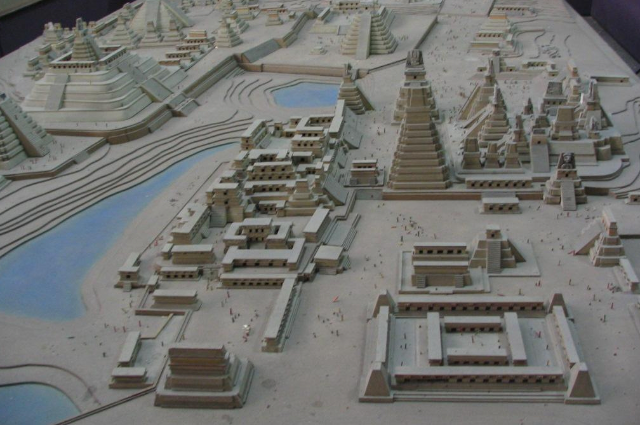
Maya is one of the greatest civilisations that existed in Mesoamerica. It is popularly known as the “Mayan Civilisation”. They have made numerous contributions in architecture, mathematics and agriculture. They were an advanced civilisation steeped in culture, science and philosophy. One of their greatest contributions to the world is that of astronomy.
The Mayans have always been ahead of their time with their scientific achievements; they believed in the pattern of the planets and their influence on the daily course of their life. The Mayan astrologers observed the stars to chart the seasons and predicted the cycles of life, death and rebirth. This was their religion, Stephen D. Houston, an Archaeologist and Mayanist scholar writes, “For them, religion was not a matter apart from everyday life, but rather one that explained it, undergirded it, enveloped it and provided an idiom for appropriate behaviour”.
The Mayans tracked the movements of planets like Venus, Mars, Saturn, and Jupiter, with Venus being the most significant, symbolising war. In the Mesoamerican worldview, the Sun symbolised heat, fire, and drought, while the Moon and Venus, particularly as the evening star, were associated with water, maize, and fertility. Additionally, the Sun was linked to the east, while the Moon and Venus (as the evening star) were connected to the west. They timed battles and sacrifices to Venus' position in the sky. The Mayans accurately calculated Venus' cycle at 584 days, nearly matching the modern figure of 583.92 days. By timing battles with Venus’ position, rulers could present their actions as cosmically sanctioned, reinforcing their authority and legitimacy.
Architecture was also deeply influenced by their astronomical charts, especially the Mayan pyramids. Maya astronomers tracked celestial bodies from observation points aligned with pyramids. At Chichén Itzá, the Pyramid of Ku'kulkan serves as an astronomical marker during equinoxes. As the Sun sets, shadows form triangles resembling a serpent slithering down the pyramid. The final light illuminates the snake’s stone head, signalling the agricultural cycle. Today, thousands gather in Mexico to witness this event.
Mayan rulers placed significant emphasis on interpreting celestial events like solar eclipses and planetary alignments, viewing them as divine messages that influenced political and religious actions. Solar eclipses, for instance, were often seen as dangerous, signalling a disturbance in the natural and divine order. These events were sometimes interpreted as warnings from the gods, prompting rulers to conduct sacrifices or perform ceremonies to restore cosmic balance. For instance, inscriptions from the city of Copán detail that eclipses were followed by human sacrifices to appease the gods and prevent chaos.
These celestial events added divine legitimacy to their decisions, making the timing of these campaigns seem fated or approved by the gods. This practice of aligning political and religious decisions with celestial phenomena reinforced the authority of rulers, suggesting that they had divine guidance in their leadership.
Such practices also appear in Mayan art and inscriptions, where depictions of rulers observing celestial events or participating in related ceremonies can be seen. These visual representations further strengthened the connection between Mayan rulers and the heavens, enhancing their spiritual and temporal authority.
The Maya developed their own calendars, which they used for ascertaining astronomical calculations for important events. The calendar was non- linear, repetitive and cyclical in nature, which is very similar to the Hindu calendar, which believes in the cyclical nature of time.
The most well-known Maya cyclical calendars are the Haab, the Tzolkz’in and the Calendar round. These calendars all have different variations of time. The Haab cycle is 365 days and is a solar year calendar. It consists of 19 months, of which 18 are of 20 days, and one month is made of 5 days known as the Wayeb.
The agricultural activities and festivals were followed by the Haab calendar. They used to track the changing of the seasons, duration of daylight and the rainfall patterns according to which they would find the ideal time to plant crops in the agricultural cycle. They also had many agricultural festivals in the same month according to the calendar, such as ceremonies called Sac Ha’, Cha’a Chac and Wajikol.
The Wayeb days were considered extremely unlucky. The five days was believed to be when the gods rested, which blurred the line between the underworld and the mortal world, leaving people vulnerable to misfortune. To avoid any disaster or bad luck, the people refrained from any long journeys, made important decisions, observed fasts and prayed for the gods to return.
Tzolk’in was the sacred calendar of the Mayas. The Tzolk'in calendar consists of 20-day glyphs combined with the numbers 1 to 13, creating 260 unique days. This 260-day cycle aligns with nine lunar cycles, the human gestational period, the zenith Sun, and the corn-growing cycle. This calendar determines the time of religious and ceremonial events. Certain days in the Tzolk’in were associated with specific characteristics and gods, such as Qanil- it is a sacred day tied to fertility gods, symbolising human nourishment, crop growth, the cycle of death and rebirth, and the milpa. Thanksgiving is offered on Qanil after the harvest.
The Haab and the Tzolk’in are interwoven in the Calendar Round. In the Calendar Round, a specific combination of a Tzolk’in day and a Haab day repeats only after 52 cycles of 365 days. The Maya believe that reaching 52 years of age grants a person the special wisdom of an elder.
Historical or any mythical events that went on for more than 52 years required them to use an additional calendar, which was known as the Long Count. This is the longest cycle that was found in the Maya Calendar system. It consisted of 13 baktun cycles, consisting of 1,872,000 days or 5,125.366 years. The cycle is believed to have started on 11th August, 3114 BCE in the Gregorian calendar according to historians. The Mayas believed this day to be when the universe was created. The cycle ended on the day of the winter solstice on December 21st, 2012, with a new cycle beginning. This came to be interpreted as the 2012 phenomenon, as it was believed to be doomsday and the end of the planet, whereas it was just the end of a cycle. The next baktun cycle is approximated to end on March 26, 7138.
Astronomy deeply influenced the daily life of the Maya, shaping their architecture, agriculture, and rituals. Celestial events guided their religious ceremonies and political decisions, reflecting the close connection they saw between the heavens and their world. Even today, traces of these beliefs endure, linking the past with the present and future. While some Mayan predictions may not have materialised as expected, the rich astronomical knowledge they possessed remains valuable, offering insights into their profound understanding of the universe. The legacy of Mayan astronomy continues to captivate and informs us and enrich us in many ways.
While modern missions such as the Artemis II rely on advanced astrophysics rather than symbolic interpretation, they echo a deeper continuity, the enduring human reliance on the heavens to guide critical decisions. Much like the Maya timed wars with Venus, contemporary space agencies calculate launch windows based on planetary alignments, reflecting a shift from mythological meaning to mathematical precision.
Today, the legacy of Mayan astronomy endures not because of apocalyptic predictions, but because it challenges modern assumptions that science and spirituality must exist separately. Instead, the Maya demonstrate how knowledge can simultaneously explain the universe and give it meaning, leaving behind a legacy that continues to intrigue, inform, and inspire.
References
- Rubiño-Martín, J., Belmonte, J., Prada, F., & Alberdi, A. (n.d.). Cosmology across cultures. NASA/ADS. https://ui.adsabs.harvard.edu
- Aveni, A. F. (2001). Skywatchers of ancient Mexico (Rev. ed.). University of Texas Press.
- National Aeronautics and Space Administration. (n.d.). Maya astronomy. Retrieved April 28, 2026, from https://solarsystem.nasa.gov
- Smithsonian Institution. (n.d.). Maya astronomy and calendar systems. Retrieved April 28, 2026, from https://www.si.edu
- National Geographic Society. (n.d.). Maya civilization. Retrieved April 28, 2026, from https://www.nationalgeographic.org
- Mark, J. J. (n.d.). Maya civilization. World History Encyclopedia. Retrieved April 28, 2026, from https://www.worldhistory.org