
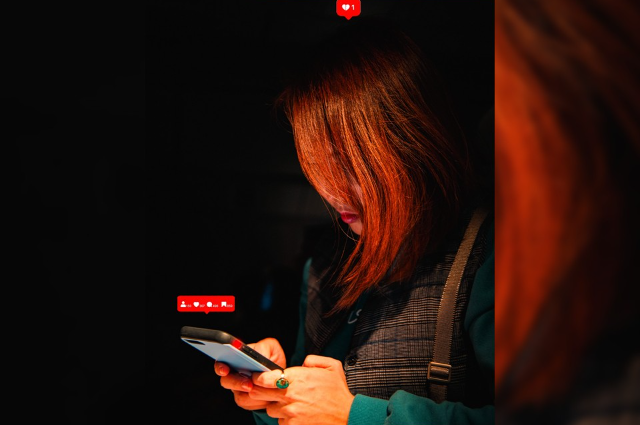
Image by Patricio González from Pixabay
In an era where our lives are increasingly lived through screens, it is easy to believe that what happens online stays there—harmless, fleeting, and detached from reality. But sometimes, a single moment in the digital world can ripple into real life in ways we never anticipate. This is a true story—not of technology alone, but of awareness, responsibility, and the quiet power of human connection.
The Beginning of a Habit:
Riya was an ordinary university student, much like any other. Living away from home for the first time, she found comfort in her phone. Social media became her escape from academic pressure, loneliness, and the constant need to prove herself. What started as casual scrolling soon turned into a habit. Hours passed unnoticed as she moved from one app to another, comparing her life to carefully curated images of others. Slowly, without realising it, she began measuring her worth in likes, comments, and views.
Her sleep cycle was disrupted. Her grades declined. But what worried her most was something she could not name—a constant feeling of inadequacy.
A Message That Changed Everything:
One evening, while scrolling through her messages, Riya noticed a notification from an unknown account. The message was simple:
"Why do you look so sad in your photos?"
At first, she was confused. Her pictures were full of smiles, filters, and bright captions. She almost ignored it. But something about the question lingered.
After a moment of hesitation, she replied, “I’m not sad.”
The response came instantly. "Sometimes, we don’t realise it ourselves." That short exchange stayed with her longer than any number of likes ever had.
The Mirror She Avoided:
Over the next few days, Riya found herself thinking about that message. She started looking at her own photos differently—not as a viewer seeking approval, but as someone searching for truth.
She noticed the forced smiles, the tired eyes, and the subtle signs of exhaustion she had been ignoring. For the first time, she asked herself a difficult question: “Am I really okay?” The answer was not immediate, but it was honest—no, she wasn’t.
The Hidden Reality of Many:
Riya’s story is not unique. Across the world, countless young people experience the same silent struggle. Social media, while offering connection, often creates unrealistic standards and invisible pressure.
People share their best moments, their achievements, and their happiness—but rarely their failures, fears, or loneliness. As a result, viewers begin to believe that everyone else is living a perfect life, except them. This illusion can quietly damage self-esteem, mental health, and even real-life relationships.
Awareness of this issue is not just important—it is necessary. Choosing Change Instead of ignoring her feelings, Riya decided to take small steps.
She started by limiting her screen time. It was not easy. The urge to check notifications returned again and again. But she persisted. She began spending more time outside her room—walking, reading, and reconnecting with people around her. Conversations replaced comments. Laughter replaced emojis.
Most importantly, she allowed herself to feel without filters. Some days were difficult, but they were real.
The Courage to Speak:
Weeks later, Riya made a decision that scared her. She wrote a post—not a polished, perfect one, but an honest one. She spoke about her struggles with comparison, anxiety, and the pressure of appearing “fine.” She did not use heavy filters or dramatic captions: just simple words and her truth. Before posting, she hesitated. What will people think? Will they judge me?
But she posted it anyway.
The Unexpected Response:
What happened next surprised her.
Instead of criticism, she received messages—hundreds of them. People she barely knew shared their own experiences. Friends admitted they had felt the same but never said it aloud. Her vulnerability created a space where others felt safe to be honest.
That single post did something no perfect picture ever had—it connected people on a deeper level.
The Reality We Ignore:
Riya’s story reflects a larger issue affecting millions today.
Social media creates a curated reality. People share highlights, not hardships—achievements, not anxieties.
This creates a dangerous cycle:
We compare
We feel inadequate
We hide our truth
And the cycle repeats
“Comparison is the thief of peace, and silence is the enemy of awareness.”
Without realising, many people are fighting battles they never speak about.
A Lesson in Awareness:
This real-life experience highlights a crucial truth: awareness begins with acknowledgement. Mental health struggles, digital addiction, and emotional isolation are real issues. Ignoring them does not make them disappear. But recognising them is the first step toward change.
Social media is not the enemy. It is a tool. The problem arises when we allow it to define our reality rather than complement it. We must learn to use technology mindfully—to connect, not compare; to express, not impress.
The Power of Small Actions:
Sometimes, change begins with something small. A message. A conversation. A moment of honesty. The anonymous message Riya received was simple, yet it changed her perspective.
We often underestimate our impact on others.
“Kind words cost nothing, but their impact can be priceless.”
Being aware also means being kind—to ourselves and to others.
The Role of Each Individual:
Awareness is not limited to personal change. It extends to how we treat others. A simple message, a kind word, or a genuine question can make a difference. The anonymous message that Riya received was not extraordinary, yet it changed her perspective. We often underestimate the impact of small actions. But sometimes, they are enough to start a transformation.
Conclusion:
Riya’s journey is a reminder that behind every screen is a human being—with emotions, struggles, and stories that deserve understanding.
In a world that celebrates perfection, choosing honesty is an act of courage. In a space filled with noise, choosing awareness is an act of wisdom. The real victory is not in gaining followers or likes, but in finding balance, authenticity, and peace within oneself. As we continue to live in a digital age, let us not forget to stay human—to look beyond the screen, to listen without judgment, and to care without conditions. Because sometimes, the loudest truths are hidden behind the quietest screens. The truth is simple: “You do not need to be perfect to be worthy.” As we continue to live in a digital age, let us not lose touch with reality. Let us look beyond filters, beyond comparisons, and beyond illusions.