
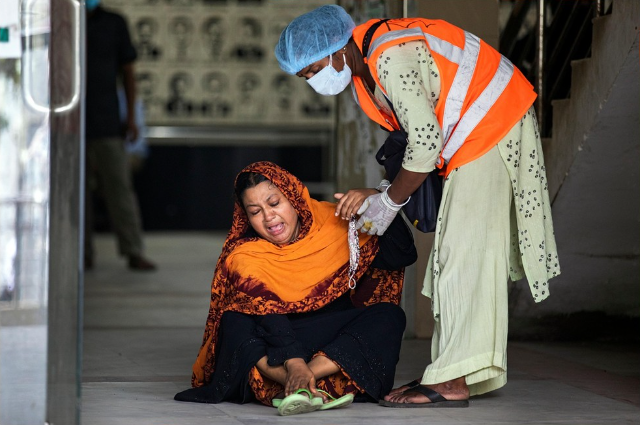
Image by Abdul Goni from Pixabay
"Grief is the price we pay for love." – Queen Elizabeth II.
What you are about to read is a composite story drawn from real experiences that unfolded during humanity's most challenging period — a testament to life's fragility and the unbreakable bonds of family love, even when separated by insurmountable circumstances. During those unprecedented months when the world stood still, love itself became too dangerous to express through physical touch.
When the World Stopped: The Beginning of Endless Sorrow
The year 2020 brought an enemy that would forever alter human existence. As the World Health Organisation declared COVID-19 a pandemic, families worldwide found themselves fighting battles they never imagined. Hospitals became fortresses of isolation. Homes became prisons of fear. And physical connection — the most basic human need — became a luxury too perilous to afford.
The streets that once bustled with life became scenes from an apocalypse. Grocery stores, when you could reach them, looked like battlefields after a war — empty shelves where bread and milk once sat, desperate people fighting over the last packages of rice, pharmacy aisles stripped bare of even basic medications. The few people brave enough to venture outside moved like ghosts, eyes wide with terror above their masks, rushing from one safe space to another as if death itself were chasing them.
The second wave hit like a tsunami—an invisible predator that erased entire families overnight. As death tolls climbed into the tens of thousands, the news reduced lives to cold statistics. Behind that clinical detachment, individual tragedies vanished: shattered families and stolen futures, swallowed without mercy.
This is one such true story — raw, painful, and achingly real. It chronicles a family that trusted in tomorrow, only to discover that tomorrow is never promised. It
explores love tested by distance, hope crushed by circumstance, and the devastating realisation that sometimes the greatest act of love is having no choice but to let go.
The Calm Before the Storm: A Family's Simple Life
Robert Williams, a seventy-year-old shopkeeper, lived with his wife Margaret in the heart of the city's oldest district. Their modest corner store had served the community for over thirty years, becoming a gathering place where neighbours shared news, children bought penny candy, and elderly residents found companionship during long, solitary afternoons. Robert's weathered hands had counted change for three generations of customers, and his warm smile had welcomed everyone.
Their world revolved around their only son, David — a forty-year-old man whose life had been marked by struggle and quiet disappointment. The divorce five years earlier had left David emotionally scarred and financially drained. His ex-wife had taken not
only half his assets but also his confidence, his social circle, and his faith in lasting relationships. Professional setbacks followed: a failed business venture, a series of dead-end jobs, and the gradual erosion of once-bright ambitions.
Loneliness had become David's constant companion, wrapping around him like a heavy coat he could not remove. He withdrew from family gatherings, declined social invitations, and built walls around his heart that even his parents' love struggled to penetrate. Despite their repeated pleas to return home, to help with the store, to let them care for him, David maintained his fierce independence. He lived alone in a small apartment across town, furnished with second-hand furniture and filled with echoes of what might have been.
Together with his best friend Mike — perhaps the only person who truly understood his struggles — David ran a modest food truck business. It was not glamorous work, but it provided just enough income to maintain his independence and, more importantly, his pride.
"Don't worry about me, Dad. Everything's fine." Those words, repeated countless times over the years, would soon become a haunting echo of false hope and missed opportunities for deeper connection.
The First Warning Signs: When Denial Meets a New Reality
Ten days before tragedy struck, David visited his parents unexpectedly, complaining of fever and fatigue. Robert, ever vigilant about his son's health, urged him to get tested. The testing site looked like something out of a war movie — people lined up six feet apart, everyone in masks, hand sanitiser everywhere. The whole thing felt surreal.
Two days later, David called with what seemed like relief: "It's just the flu, Dad. The doctor says I'll be fine."
The family believed him. Why wouldn't they? David had always been prone to seasonal illnesses, and the initial COVID test had returned negative. Meanwhile, the virus was silently spreading through the community like wildfire, though no one knew it yet.
Ironically, it was Robert who fell ill next — a stomach ailment that kept him bedridden. The city was under strict lockdown by then. Grocery stores had become battlegrounds. People fought over toilet paper and canned goods as if civilisation were ending. During their phone conversations, David remained optimistic: "Focus on getting better, Dad. Take care of yourself. I'm doing well, business is good. Soon, you and Mom can finally rest."
But fate had written a different ending.
The Descent: When Hope Becomes Desperation
As David's condition worsened over the following week, the harsh reality of the pandemic's social impact became crystal clear. The neighbourhood that had once been a close-knit community transformed overnight into a collection of isolated households. Neighbours who had shared meals and celebrations for decades suddenly became strangers behind locked doors, peering suspiciously through curtained windows at anyone who dared venture outside.
Fear had transformed communities into islands of isolation. Mrs. Patterson from next door, who had borrowed sugar from Margaret for twenty years, now crossed the street rather than pass too close to their front door. They listened to the news like it was a lifeline, even though each update felt like another nail in the coffin.
Mike, David's loyal friend and business partner, became the family's lifeline — the only person brave enough or caring enough to maintain contact. He navigated the maze of hospital bureaucracy, medical protocols, and safety requirements that seemed to change daily. Through sheer determination and the kind of loyalty that defines true friendship, Mike ensured David's admission to St. Mary's Hospital, the city's main medical facility that had been transformed into a fortress against an unseen enemy.
There, in a sterile room filled with beeping machines and the constant hum of ventilation systems, a second COVID test revealed the truth they had all been dreading: positive. The word hit the family like a physical blow, confirming their worst fears and sealing David's fate.
David was immediately transferred to the intensive care unit. Through video calls, Robert and Margaret could see their son surrounded by equipment, fighting for every breath. The virus had attacked his lungs with a fury that turned his own body against him, joining dozens of other patients trapped in what had become a war zone against an ancient enemy — death itself.
The Agony of Distance: A Father’s Powerless Love
Through Mike's persistent advocacy, the family received regular updates via video calls from compassionate healthcare workers who understood that families needed more than clinical reports — they needed a human connection, even if mediated by
technology. Dr. Sarah Chen, David's primary physician, went beyond her medical duties to provide emotional support, often calling after exhausting shifts to share small details about David's day that meant everything to his worried parents.
But the infection had spread deep into David's lungs, creating a landscape of damage that even the most advanced medical equipment struggled to repair. His fear of the oxygen mask — a claustrophobic panic that made breathing even more difficult — triggered severe anxiety attacks that left him gasping for air he could not properly absorb.
"He's frightened," Nurse Jennifer Martinez explained during one particularly difficult video call. "He won't keep the oxygen mask on long enough for it to help. It's frightening all of us, and we understand why. He's scared, and he's also fighting for
his own recovery." Her voice carried the weight of someone who had delivered similar news too many times, to too many families, during those dark months.
Robert and Margaret desperately tried to encourage their son through pixelated screens that could not convey the warmth of their touch or the depth of their love. They spoke to him — sharing memories of his childhood, reminding him of family vacations and birthday celebrations, telling him about customers at the store who asked about him. But their voices seemed to fade against the clinical beeping of machines and the overwhelming fear that had consumed their son's rational thinking.
In their final conversation, David's eyes — hollow and terrified in the harsh hospital lighting — filled with tears as he whispered words that would haunt his parents forever: "Dad, I can't do this anymore. I won't be coming home."
For Robert, those words shattered something fundamental in his soul. Here was his child — his only child, the little boy who had once built blanket forts in the living room and dreamed of becoming a firefighter — dying alone, afraid, and beyond his reach. The man who had spent seventy years believing he could protect his family from life's cruellest blows now faced the agonising reality that some battles cannot be won through love alone.
During their final video call late one night, David used every remaining ounce of strength to speak. Barely audible, he confessed that when his wife left, he didn't just lose her; he lost who he was. He admitted that the wall he had built for five years wasn't keeping anything out—it was keeping him in. Choking back tears, he told his father that every time they spoke, he had wanted to say, "Come get me," but his pride stopped him. He formed the word "sorry" with his lips. Then, exhausted, he asked his father to sing the song. Through a breaking voice, Robert sang.
“You Are My Sunshine, my only sunshine...
You make me happy, when skies are grey...”
On the screen, David's lips moved with every word until he whispered that he couldn't do it anymore, that he wouldn't come home.
The Final Call: When Silence Becomes Eternal
At 5:47 a.m. on a Tuesday, the phone rang.
"Sir, your son has passed away."
Ten words. That was all it took to end a lifetime of dreams, hopes, and unconditional love.
The cruelty of the pandemic did not end with death:
When Robert and Margaret arrived at the hospital, the administrator coldly informed them. They would not be permitted inside; the body would be brought to an external receiving area. When the official referred to David as "the body," Margaret's shattered voice cut through the sterile air: "He is not a body. He is our son. His name is David."
They were escorted to a concrete loading dock and ordered to stand behind a yellow painted line—just two feet of asphalt separating them from their child. Mike arrived in full PPE, his face ruined by grief.
When Robert begged to know if Mike had seen David, Mike broke down, explaining that his best friend was sealed in plastic and zipped inside a black bag. Despite standing right next to him, Mike hadn't even been allowed to see David's face. When Margaret begged to see her son, Mike could only sob that he couldn't see his face either.
Driven by helpless rage, Robert stepped over the yellow line, screaming that he had taught his son to ride a bike but couldn't even see his face. A guard forced him back with a whispered, "I know, sir."
A sealed black bag was wheeled out. Margaret reached out, but the guard stopped her. Her trembling hand hovered an inch from the plastic, then dropped. In place of a touch, she knelt and laid a worn crayon drawing beside the gurney—a stick-figure father taller than the sun, labelled “TO DAD FRUM DAVID.” She told the bag he would always be their sunshine.
The bag disappeared behind steel doors. Later, a text informed them they were barred from the cremation. As Robert told his wife, there were no rights left—only protocols, lines on concrete, plastic bags, and zippers.
Life After Loss: Finding Light in the Darkest Hour
Today, Robert and Margaret exist in a world permanently altered by grief. Mike has moved in with them, helping to run the small shop. Together, they have made a pact: a significant portion of their earnings will go toward helping other families facing similar crises.
"We cannot bring David back," Robert says quietly, "but perhaps we can prevent another family from walking this path alone."
The Ripple Effect: When Personal Pain Becomes Universal Purpose
Mike, forever changed by the loss of his best friend, has dedicated himself to community service. He volunteers with local support groups, helping families navigate the complex emotions of pandemic loss.
"David would have wanted us to help others," he explains. "His death was not meaningless if it leads to saving even one family from this pain."
A Father's Final Words: The Plea That Echoes Beyond Grief. Through tears that have become as familiar as breathing, Robert shares his message:
"Please, listen to the warnings. Follow the guidelines. Protect your health and the health of those around you. Do not let the tragedy that destroyed our home visit yours. Life is precious, fragile, and can be taken away in an instant."
His voice breaks as he adds, "Will I ever find peace? I do not know. But if sharing our story saves one life, one family, then perhaps David's death will have meaning."
What Loss Teaches Us About Life
David's story represents thousands of similar tragedies that unfolded during the pandemic. Yet within this darkness lie profound lessons about the human condition:
Grief can become purpose. Robert, Margaret, and Mike transformed their overwhelming loss into a mission to help others. Pain, when channelled constructively, can become a powerful force for positive change.
Resilience emerges from the depths of despair. Even in their darkest hour, this family chose to continue living, to find meaning in their loss, and to use their experience to help others.
Final Reflection: The Weight We All Carry
As the world moves forward from this global tragedy, it carries with it the weight of countless untold stories like David's. Each number in the death toll represents a Robert somewhere, grieving the loss of irreplaceable love. Each statistic represents a family forever altered.
But we also carry the responsibility to ensure that their sacrifices were not in vain. We must remember. We must learn. We must protect each other. For in the end, we are all connected by the same fragile thread of humanity — and it is only by caring for that thread that we can prevent it from breaking again.
The morning sun still rises over the quiet street. Margaret tends her small garden behind the shop. Robert helps customers find what they need. Mike shares stories that make people laugh through their tears. In these simple acts, David's spirit continues.
The weight of silence is heavy, but the weight of remembering is heavier still. Yet it is a weight worth carrying — for in remembering, we honour not just the dead, but the living who continue to love, hope, and fight for a better tomorrow.
In every act of kindness, in every moment of connection, in every choice to care for one another, David's legacy lives on.
In memory of all the Davids lost, and in solidarity with all the Roberts who continue to carry on.