
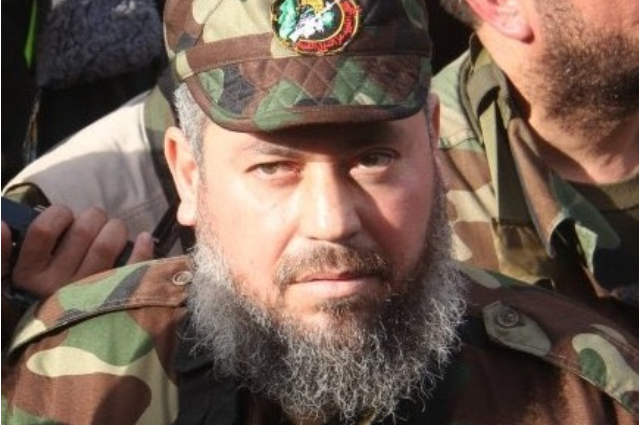
“Hamas armed wing leader Haddad killed in an Israeli airstrike on Gaza“ is what the Israeli military said on Saturday, that Izz al-Din al-Haddad was killed in what they described as a precise strike on Gaza City on Friday.
Hamas-linked sources and family members reportedly confirmed his death, though the details remain contested across different reports. He was killed with his wife and daughter. In the statement, they described him as a central figure involved in directing combat operations.
Hamas spokesman Hazem Qassem confirmed the death and killing on social media.
Israeli authorities have described al-Haddad as one of the last senior military figures allegedly involved in planning the October 7, 2023, attacks on Israel. Those attacks reportedly killed around 1,200 people in Israel and resulted in more than 250 hostages being taken into Gaza.
Palestinian accounts emerging from Gaza have simultaneously highlighted the civilian toll of the strike, with around 850 Palestinians having been killed in the strikes since the October ceasefire; how many of them were combatants and civilians is unknown.
The incident appears to reflect the central contradiction of the war: military operations aimed at eliminating commanders continue to unfold in densely populated civilian spaces where families, children and displaced people remain trapped.
Al-Haddad was often described by Israeli and regional media as a long-time commander within Hamas’ armed wing, the Izz ad-Din al-Qassam brigades. And according to multiple reports, he reportedly rose through Hamas ranks over decades and assumed greater authority after the deaths of other senior leaders, including Mohammed Sinwar.
Israeli military statements alleged that he played a role in overseeing hostage operations and rebuilding Hamas’ military capabilities during the ongoing conflict. Hamas has not publicly released extensive operational details about its role.
Within Gaza, however, some Palestinians reportedly viewed him as a symbol of resistance, while others may have seen senior militant leadership as inseparable from the cycle of retaliation that has devastated civilian life.
His reported death also appears to continue a broader Israeli strategy of targeting Hamas leadership structures through airstrikes and intelligence-led operations.
Analysts and observers appear to be divided on what succession inside Hamas could look like. Some reports suggest that Hamas’ military structure has become increasingly fragmented after repeated killings of senior commanders over the past two years.
Others are speculating that the leadership toward: younger underground commanders operating within Gaza, political leaders based outside Gaza, particularly Qatar or elsewhere in the region, and more decentralised militant cells with less centralised command.
Hamas is preparing to elect its first political leader since the death of Yahya Sinwar, a decision which could alter the future direction of the Palestinian militant group and the wider Middle East.
Hamas has been holding a highly secretive internal ballot for the past few weeks to decide the leader of its political wing.
However, they failed to elect a new political leader, announced on Saturday night, promising another round of elections would soon take place. This decision was delayed due to Israel's invasion and bombardment of the enclave, which has further brutalised Gaza's civilian population.
The current race will likely position either Hamas's leader abroad, Khaled Mashaal, or senior Hamas politician Khalil al-Hayya as Hamas’s new leader.
Hamas media advisor Taher al-Nunu informed Al Jazeera that Israeli assassinations had forced the group to restructure and reorganise, and that relevant vacancies would be filled according to the “consultative mechanism and silent elections”.
“The nature of the elections happening within Hamas is not based on individual candidacy, but rather all the members of the council are considered candidates, while the final decision is in the hands of the voters,” he said, adding that several leadership positions have been filled and will soon be announced by the relevant people.
Now the outcome of the elections may signal which direction the movement intends to take- particularly as the US and other mediators discuss post-war governance of Gaza, reconstruction and rehabilitation efforts, along with the future status of the armed groups there.
According to Dr. Harel Chorev, a senior researcher at the Moshe Dayan Center and a historian of the Middle East specializing in the social and political history of Palestinians, for the first time since 2017, the power distribution in Hamas is being shifted from the military wing to the political wing, also the fact that very little of Hamas’s original leadership is left alive, especially after the IDF assassinated Izz al-Din al-Haddad, there is an opportunity for Hamas to take less of a militaristic direction, which depends on the results of the election.
He stressed that both Mashal and Hayya are dedicated to the destruction of Israel. He noted that Hayya was more aligned with Iran and wanted to see Gaza continue in the direction it has been going, while Mashal envisioned more diplomatic attacks on Israel.
Hamas governs the Gaza Strip and, in recent years, has had growing support in the West Bank, though its activities there are heavily constrained by the Israeli military and Palestinian Authority security forces.
A US-backed ceasefire in Gaza came into effect in October, and negotiations continue over the deal's later phases.
Under the proposed terms of the US plan, Hamas would have no role in the territory's future governance. Governance would eventually be handed over to the Palestinian Authority, which administers parts of the West Bank, once it has undergone reforms.
The elimination of al-Haddad marks a significant transition in Hamas’ internal dynamics. With the military hierarchy depleted, political figures may now exert greater influence over the group’s trajectory amidst ongoing regional negotiations.
For the thousands of displaced people remaining trapped in Gaza, these shifts in leadership strategy likely remain secondary to the harsh realities of hunger, loss, and the struggle for survival. As the group reportedly reorganises through its consultative mechanisms and mediators attempt to finalise terms for post-war governance, the territory’s future is defined by deep uncertainty.
The ultimate impact of these changes—whether leading toward further fragmentation or a shift toward political engagement—will likely depend on the results of the internal ballot and the international response to a conflict that continues to devastate civilian life on both sides.
Sources:
- https://www.theguardian.com
- https://www.ungeneva.org
- https://www.reuters.com
- https://www.bbc.com
- https://www.jpost.com
- https://www.independent.co.uk
- https://nypost.com
- https://www.pbs.org
- https://www.kpbs.org