
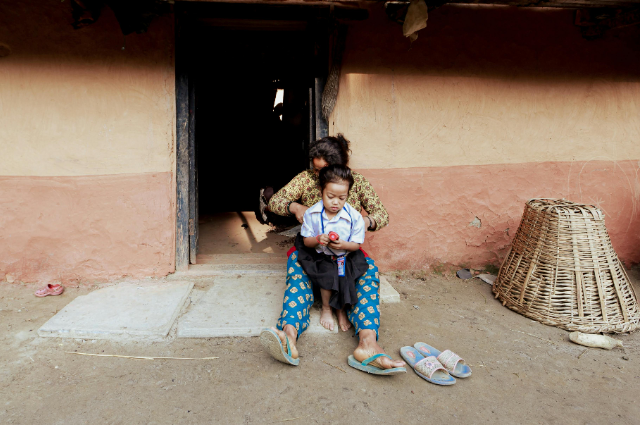
A father in rural India is spending more on gutka than on his daughter's education. Not because he doesn't value schooling but because his choices are shaped by forces far beyond simple preference. Addiction makes gutka a daily habit, something that feels small and manageable in the moment. It's low-cost and easily available, meaning it slips into everyday spending without much thought.
At the same time, education demands something very different; it requires planning consistency, and money paid in larger amounts, all of which can feel overwhelming when income is uncertain or irregular. For someone navigating financial stress, immediate relief often takes priority over long-term investment.
So this isn't just a story of misplaced priorities. It is a reflection of a system where economic pressure, lack of awareness, and the pull of addiction quietly influence decisions, turning what should be a clear choice into a complex and deeply human struggle.
Data from India's household consumption and expenditure survey (HCES 2022-2023) confirms that rural households spend ~4% of total consumption on tobacco (mainly gutka), and only ~2.5% of it is spent on education. This gap is what makes this issue alarming, as it shows that rural India prioritises addictive consumption over long-term investment like education and school fees.
Tobacco spending in rural India increased from ~3.2% in 2011-12 to ~3.8-4% in 2022-23 and per capita tobacco spending rose by a whopping ~58% in rural areas over a decade. These numbers show that this problem is not static, it's growing across income groups and regions.the biggest driver for this increase was- Gutka. Gutka consumption in rural India rose by 6x and it now accounts for about 41% of tobacco spending in rural India. Gutka is the most dominant form of tobacco among rural populations due to it being cheap, easily available and addictive.
This takes away a major chunk of money allocated to essentials, and spends it on tobacco. Economists call this the opportunity cost of addiction. In rural India tobacco accounts for about 3.6% of food expenditure, hence directly affecting nutrition, education and healthcare. Money that could improve life, help their kids and themselves live a little better is being diverted to addictive consumption, that also harms one's health.
Over 70% of the poorest and 40% of rural households consume tobacco. In some states this even rises to 85%+ among low-income groups. This puts into perspective the spending priorities of poor households, them spending a higher share of income on tobacco than richer households. This then creates a cycle led by poverty, stress and addiction which leads to more tobacco use, less money for development which leads to continued poverty and the said cycle starts all over again.
Coming to the other part of this education, rural education spending dropped from about 3.49% to 3.30% over a decade. In newer estimates it's dropped even lower to about 2.5% this suggests that either education is becoming less accessible/affordable or households are prioritising immediate consumption and satisfaction over long-term investment.
Based on research and data, the reason this happens is that Gutka is cheap, portable and widely-available, and is consumed daily in small amounts which over time builds a habit of consuming it. Lower education levels also correlate with a higher use of tobacco. Also people who earn daily wages, can
afford to spend 10 to rupees daily on gutka, but they struggle to pay large, lump sum school fees. In many rural settings, tobacco is socially embedded making it a sort of social requirement.
This issue often goes and stays under-discussed because tobacco use is often framed as “personal choice” instead of a structural problem. And spending on education is heavily influenced by free government schooling and subsidies that make actual paid spending appear low. Also, the revenue from tobacco taxes is quite substantial, creating a policy contradiction where public health goals often clash with economic dependence on tobacco income.
This issue goes far beyond just simple comparison, far beyond just Gutka vs. School Fees. It's a reflection of the deeper structural realities of inequalities that limits the choices of people, of addiction that takes hold of said choices and of public health systems that fail to intervene early, and of gaps in awareness amongst people and the accessibility that leave these people without much better alternatives.
At its core, this is not about negligence or misplaced priorities. It's about the difficult decisions people are forced to make when resources are scarce, and survival is uncertain. In such conditions, immediate relief, no matter how harmful, often outweighs distant and expensive promises like education, which requires time, stability and sustained investment.
And that is what makes this situation a real tragedy.
Because every small decision, choice is shaped by compulsion or circumstance, which slowly adds up to something that is much larger, the narrowing of opportunities, the delaying of progress, and the quiet erosion of a future that could have been different. Until these underlying issues are addressed, the problem will persist, not as a headline, but as a lived reality for millions.
References:
- Rural India Spending 4% On Buying Tobacco, Just 2.5% On Education
- Rural India spends 4% on tobacco, 2.5% on education: Report
- Spending on paan, tobacco increased in the last decade (Business Standard)
- Indians spent more on tobacco, education spending falls (Economic Times)
- Opportunity cost of tobacco consumption on nutrition (PubMed study)
- Rural-urban disparities in tobacco use (BMC Public Health)