
In recent weeks, a public controversy has reportedly emerged between Anjana Om Kashyap and several popular online educators, eventually escalating into legal proceedings, with defamation allegations being raised in court. The claims and counterclaims remain debatable.
In May 2026, Kashyap made a statement against YouTuber teachers, which led to widespread social media backlash, along with allegations and counter-allegations. While she commented on the growing influence of online “star teachers” and commercialisation of online teachers, using derogatory words like “do kaudi ke Star teachers” etc for them, implying that they were frauds and impostors.
Now, according to multiple reports, the remarks were made during discussions surrounding examination-related issues, including concerns over NEET and the broader ecosystem. This led to massive social media reaction in the form of videos, posts and broadcasts from many online teachers, with some using defamatory words and accusing Anjana and Aaj Tak of spreading fake news, later Anjana and TV Today Network filed a defamation suit before in Delhi High Court against Khan Sir, Abhinay Sharma, Babita Tyagi, Arvind Bhadauriya and the 4 PM News Network, seeking a compensation of Rs. 2 crore and immediate removal of defamatory material from social media platforms.
The reaction may have been so intense because millions of Indian students today receive at least part of their education from YouTube. For many students in small towns and rural areas, online educators arguably became accessible long before elite coaching institutes did. A student in Bihar, Rajasthan, Maharashtra, or Assam can often access lectures from top educators for free or at a fraction of the cost of traditional coaching.
The controversy may therefore have felt personal to many students. When criticism appeared directed at YouTube teachers as a group, some students interpreted it as criticism of people they consider mentors rather than influencers.
Now for decades, television was one of India's primary sources of information and public debate. Educational programming certainly existed, from doordarshans instructional broadcasts to various competitive exam shows, but education was rarely the centrepiece of primetime television.
Primetime news increasingly became associated with political debates, ideological arguments and confrontational panel discussions. Critics have argued that educational issues often receive less sustained attention than political controversies. These criticisms remain matters of opinion rather than settled fact. Meanwhile, the internet dramatically reduced barriers to distributing educational content.
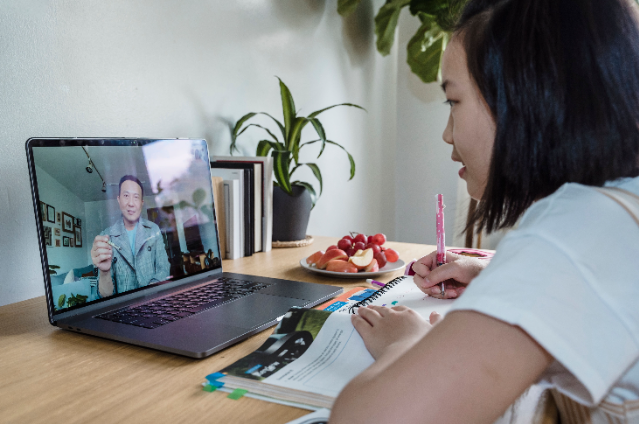
One reason YouTube educators became influential was accessibility. Educators such as Alakh Pandey reportedly built large audiences by providing free or low-cost lessons to students preparing for competitive examinations, which usually aren't available or affordable to financially challenged students. So many students who could not afford expensive coaching institutes suddenly had access to recorded lectures, practice sessions and exam guidance from their phones.
Therefore, unlike television personalities, many online teachers appeared to present themselves as mentors rather than public commentators. Their content is often focused on solving immediate student problems:
understanding concepts, passing examinations and navigating admissions. This may have created much more of a personal relationship between educators and learners.
And these YouTube teachers tend to interact directly with students through comments, live streams and social media. Some observers argue that this direct communication may have helped establish trust in ways that traditional methods could not easily replicate.
A balanced discussion would also acknowledge that not all criticism of online education is necessarily unfounded. Like any large digital ecosystem, YouTube contains a wide spectrum of content quality. Some educators are highly qualified specialists, while others may rely on personality-driven branding.
Researchers and platform studies have previously highlighted concerns regarding misinformation, content quality and algorithm-driven amplification on digital platforms. It may therefore be reasonable to ask questions about accountability, qualifications and educational standards. The issue for many critics, however, was not that questions were asked, but the language allegedly used while asking them.
Words matter as much as arguments. The phrase “do kaudi ke” may have been interpreted by many students as dismissive rather than analytical. So in a country where teachers traditionally hold a respected social position, such language was bound to provoke emotional reactions. Many students reportedly felt that the remark overlooked the role online educators played during the COVID-19 pandemic, during competitive examination prep, affordable learning access for lower-income families and regional-language education.
Beyond the headlines, this controversy may reveal something deeper about modern India. The average student preparing for UPSC, SSC, NEET, JEE, banking exams or even state services often does not care whether knowledge comes from television, a coaching institute or a YouTube channel.
They care whether someone can explain a difficult concept clearly. For many families facing financial constraints, online education has arguably reduced barriers that once kept quality teaching concentrated in just a few urban centres. In that sense, the popularity of YouTube educators may be less a story about technology and more a story about accessibility. This rise of digital teachers could be interpreted as a response to unmet educational demand rather than merely a social media trend.
The controversy surrounding Anjana Om Kashyap’s remarks may ultimately be remembered less for what was said and more for what it revealed. It exposed a possible trust gap between sections of mainstream media and a generation of students who increasingly learn, interact and build communities online.
Whether one agrees with television journalists or YouTube educators, the public reaction appears to suggest that many Indians now see teaching as something larger than institutional prestige. And if that interpretation is correct, then the central question may not be whether television or YouTube is winning. It may be that influence in India is gradually shifting from those who speak to audiences to those who teach with them.
Sources:
- https://economictimes.indiatimes.com
- https://www.theveritas.in
- https://www.thejanpost.com
- https://corporatesoldiers.in
- https://www.indsoft24.com
- https://www.missionkiawaaz.com
- https://en.wikipedia.org