
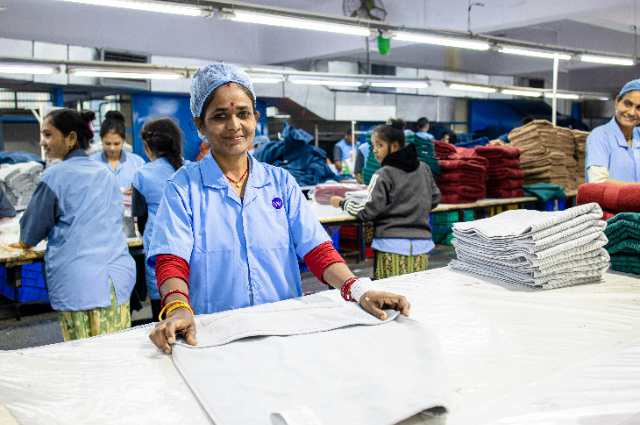
Behind the headlines of smoke and clashes in Noida’s industrial belts is a more personal story of exhaustion. For the women working in these garment units, the unrest isn't just a protest over numbers; it's a breaking point that's come after years of their wages falling behind the actual cost of living.
By April 2026, this gap became impossible to ignore. Seeing a significant wage hike in neighbouring Haryana made their own paychecks feel even smaller. When the government’s proposed 21% increase failed to meet the 18,000–20,000 rupees they needed to survive, frustration turned into the chaos seen in Sector 60. While the news focuses on the arrests and police action, the core issue remains human. Workers are simply tired of being unable to afford a basic life in the very city they help build.
Noida's industrial ecosystem (garments, electronics, packaging, etc.) relies heavily on female contract workers, especially in jobs such as stitching, assembly-line electronics and packaging units. Many of these working women are migrants from rural UP/bihar, primary or supplementary earners and employed on temporary/contractual terms.
Women workers often tend to depend on unstable contracts, lack union protection and face a higher risk of dismissal. Men may seem to dominate visible protest spaces, but women from the silent backbone participate cautiously, often from the margins.
Usually workplace conditions are harsh especially for women. Workers report that they have to work 10-12 hour workdays despite official 8-hour shifts, with minimal amount of breaks with having to work in conditions like extreme heat and poor ventilation. For women it's harder due to restricted washroom access, the stigma around menstrual breaks and verbal harassment for taking longer breaks. A female worker negotiating something as basic as a bathroom break becomes a powerful micro-story of dignity vs production.
Wages often range between 10,000-16,000 rupees a month post-hike, and would fall short of rising costs of basic necessities like rent, LPG and food. Rent alone can be up-to about 5,000 rupees leaving very little for survival. When viewed through a gender lens, the distinct economic roles women play become a central focus of household and communal stability. Women often manage household expenses, send remittances and absorb economic shocks more directly.
These workers live in overcrowded housing in industrial sectors, with poorly ventilated rooms with extreme heat. For women unpaid domestic labour continues even after factory work. In cramped settlements it leads to larger safety concerns and a lack of privacy and sanitation. Therefore, not only are these female workers tired due to underpaid factory work but also the unpaid second shift at home.
The unrest isn't just about one single bad day at work, it's rooted in the precarious contract labour system. Many of these workers find themselves stuck in a “middleman” loophole where contractors just skim the essentials withholding hard-earned wages, ignoring overtime pay, and skipping out on bonuses. This creates a sense of instability, but the weight isn't distributed evenly. For women, this system is particularly harsh. Because they are often viewed as someone who can be replaced easily, are less likely to protest and are more vulnerable to exploitation.
In areas like Noida SEZ, union access is limited. Here protests are often spontaneous and loosely organised. This means that women lack formal channels to voice grievance, which pushes them into informal or risky protest participation.
The rising cost of living, especially LPG prices, the wage stagnation post-COVID and the widening are the broader economic triggers. Here the top 10% hold 58% of the income and the bottom 15% of it hold only 15%.
Now this unrest has spread to domestic workers, many of them being women. They too raised similar demands, like wage hikes and dignity at work. This shows a shared gendered labour struggle across formal and informal sectors.
The government claims that “external elements” were what escalated violence, however activists claim that rights violations and mass detentions were the straw that broke the camel's back.
However, after two days of protests, authorities announced relief measures that included mandatory weekly offs, double wages for overtime and holiday work, salaries disbursed by the 10th of every month, annual bonuses before November 30, and a formal complaints system including a committee led by a woman to handle harassment cases. The yogi government also established a high-level committee to investigate the root causes and recommend measures to prevent future incidents.
The unrest in Noida is often reduced to numbers: wage percentages, arrest counts, amounts of people protesting, policy responses, etc. but at its core are women whose labour sustains both factories and their own families, yet this remains largely invisible in moments of crisis, their presence in this movement may not always be loud or confrontational, but its constant- shaped by caution, resilience and necessity. Any meaningful resolution to the conflict will have to move beyond just temporary wage fixes and address the deeper inequalities that define their everyday lives. Till then, the women at the heart of Noida's workforce will continue to stand at the intersection of survival and resistance, carrying a burden that rarely makes the headlines.
References:
- https://indianexpress.com
- https://timesofindia.indiatimes.com
- https://timesofindia.indiatimes.com
- https://timesofindia.indiatimes.com
- https://www.thehindu.com
- https://www.leftviews.in
- https://en.wikipedia.org