
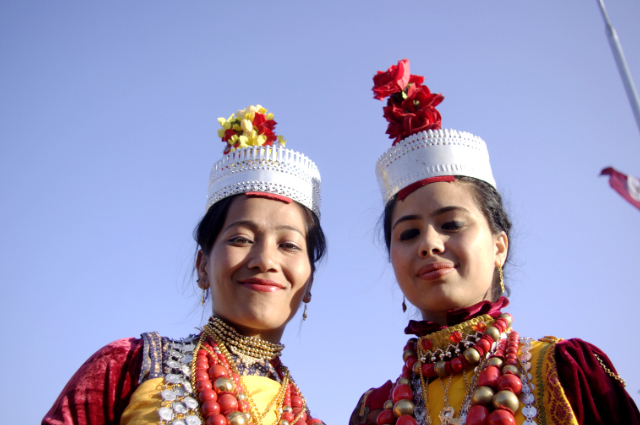
India is often portrayed as a deeply patriarchal society where debates around women's rights, inheritance, marriage and personal freedom continue to shape public discourse. However, for a long time, way before modern conversations about gender equality entered mainstream politics and law, several indigenous tribal communities had already developed detailed social systems that granted women significant autonomy and respect.
These tribal traditions challenge the assumption that progressive gender practices are solely modern or urban concepts. Across various regions of India, certain tribes have historically allowed women greater control and power over property, marriage, family decisions, and personal relationships.
The Muria tribe of Chhattisgarh and the Khasi tribe of Meghalaya are among the most notable examples. Their customs reveal alternative models of family, consent, inheritance, and social organisation that differ a lot from dominant patriarchal norms.
Studying these communities offers valuable insight into the diversity of indian society and demonstrates that ideas of women's empowerment have deep indigenous roots.
The Muria are an Adivasi (scheduled tribe) of the Bastar district of Chhattisgarh, India. They are a part of the Gondi people. Traditionally, they are economically homogeneous and strive to work as a collective. They also have mixed-sex dormitories where adolescents are sent to practice premarital sex, sometimes with a single partner, other times serially.
The Muria tend to embrace sexuality from a young age. Youths are sent to Mixed-sex dormitories called ghotul, where they live in close quarters and are expected to engage in sexual activities, up to and including intercourse; this expectation does not just extend to group sex, however, which is discouraged.
When a boy is ready to commit, he offers a flower to the girl. Here she either rejects it or accepts it. Her choice, no pressure or force. Here consent is everything, and it matters.
Now, according to reports, Muria tribes fled the Dandakaranya region in Chhattisgarh during the conflict between left-wing extremists and State-sponsored Salwa Judum, and settled in the reserve forests of Andhra Pradesh.
However, their access to primary education, safe drinking water and social welfare benefits remains a dream, and now they are at risk of development. Even with such progressive ideas about gender, sexuality, and marriage, we have still not adopted their ideas or their mindset.
Now the Khasi tribe is one of the world’s last matrilineal societies; women control property and inheritance and dominate public spaces. In the north-eastern Indian state of Meghalaya, things were different. In Iewduh, one of the region's oldest and largest open markets located in Meghalaya's capital city, Shillong, women filled the crowded bazaar with stalls selling local vegetables and handmade goods.
Female elders, called mei, walked the aisles controlling the trade and ordering the men who worked for them to lift bags of fresh produce. In Meghalaya, women do not just occupy space; they dominate it. That's because the Khasis, who account for the state's largest ethnic community, are one of the last existing matrilineal societies in the world.
Here, children receive their mother's last name, the husbands move into their wife's house, and the youngest daughters inherit the ancestral property.
Most Khasis today live in Meghalaya, which became independent in 1972. During the Bangladesh Liberation War in 1971, some Khasi families became separated and now have to live across the border from Meghalaya in Bangladesh.
A Khasi historian named Amena Nora Passah said that Khasis are people of oral tradition, but ironically enough, according to this very oral history, they are said to have patriarchal roots. And as warriors who often battled with other groups for land, Khasi men often went down to the plains for clashes. During those very clashes, some men died, and the others settled for a new life in the plains.
Left without their partners, Khasi women would have to remarry or find other partners, and it often became difficult to determine a child’s paternity.
“The society might have labelled those children ‘illegitimate’,” said Passah. And at some point in time, our ancestors thought that they did not want this slur attached to their women or children. So they decided that the children should have one last name: their mother’s”
Therefore, this practice stemmed from a place of loss, pain, and respect. Respect for the bodies that carried the babies and for the children born.
Khasi matrilineality also shares similarities with the world’s other handful of matrilineal societies, such as wealth and property passing from mother to daughter and descent through the mother’s line.
The Khasi tribe gives women ownership of the family, while the Muria tribe gives women the right to choose their partner.
The experiences of tribes such as the Muria and Khasi illustrate that gender equality can emerge from cultural traditions and modern reforms. Their practices highlight the importance of consent, personal choice and women's social and economic security within the community.
At the same time, however, tribal communities are not perfect utopias and continue to face contemporary challenges such as modernisation, migration, economic change and cultural erosion. Nevertheless, their customs provide valuable lessons about alternative ways of organising family and social life.
In a country that is still grappling with issues such as gender discrimination, inheritance disputes and women's autonomy, these communities offer perspectives worth understanding. Their stories remind us that some of India's oldest societies were practising forms of empowerment long before the nation actually began debating them.
Sources:
- https://en.wikipedia.org
- https://www.atlasofhumanity.com
- https://www.atlasofhumanity.com
- https://en.wikipedia.org
- https://eastkhasihills.gov.in
- https://www.bbc.com