
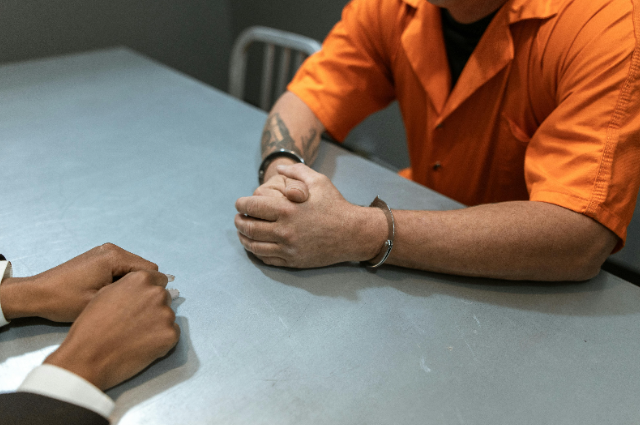
The Sathankulam custodial case stands as one of the most disturbing cases of police brutality in recent history, exposing deep structural flaws in law enforcement practices while simultaneously testing the strength of the country’s judicial system. What began as a seemingly minor violation during the COVID-19 lockdown slowly unfolded into a deeply troubling episode of custodial violence. The arrest of a father and son in a small town did not initially draw widespread attention, but the events that followed shook the conscience of the nation. As details of the brutality emerged, public anger grew, and the case transformed into a symbol of deeper systemic issues within law enforcement. Years later, in April 2026, when the court pronounced the death sentence for nine police personnel, it did more than deliver a verdict; it marked a moment that forced the country to confront difficult questions about justice, accountability, and the kind of deterrence required to prevent such tragedies from repeating.
In June 2020, with COVID-19 at its peak, in the quiet town of Sathankulam in Tamil Nadu, a routine enforcement action took a tragic turn. P. Jayaraj, a 58-year-old shopkeeper, and his son J. Bennix, aged 31, were taken into custody by the local police. Their alleged violation was minor, keeping their mobile accessories shop open beyond the permitted hours during the lockdown. What might have otherwise remained an unnoticed incident soon spiralled into something far more grave, as the events that followed revealed a level of brutality that no minor offence could ever justify. Both individuals were subjected to severe custodial torture at the Sathankulam Police Station. Reports that emerged later described prolonged physical assault and abuse, which ultimately led to fatal consequences. Bennix succumbed to his injuries on June 22, 2020, while his father, Jayaraj, passed away the following day. The brutality of the incident, combined with its trivial trigger, ignited nationwide protests and drew comparisons to global conversations around police violence.
The aftermath of the case turned into a long and demanding legal journey. In the early stages of the investigation, ten police personnel were taken into custody, each facing serious allegations tied to the events at the Sathankulam Police Station. However, progress was slow and uneven. One of the accused succumbed to COVID-19 before the trial could reach its conclusion, leaving nine to stand trial. The proceedings stretched over several years and passed through multiple sessions of judges, reflecting both the complexity of the case and the slow nature of the judicial process in India.
The verdict delivered by the court was both unprecedented and consequential. All nine convicted officers were sentenced to death, with the court categorising the crime under the “rarest of rare” doctrine. This legal standard, established by the Supreme Court of India, is reserved for crimes considered exceptionally heinous where alternative punishments are inadequate. In this case, the judge explicitly stated that life imprisonment would not serve as a sufficient deterrent and that the death penalty was necessary to ensure accountability within
the police force. This reasoning reflects a broader judicial concern that custodial violence is not merely an isolated act but a systemic issue requiring strong corrective measures.
The officers sentenced include Inspector S. Sridhar, Sub Inspectors P. Raghu Ganesh and K. Balakrishnan, Head Constables S. Murugan and A. Samadurai, and Constables M. Muthuraj, S. Chelladurai, X. Thomas Francis, and S. Veilumuthu. In addition to the capital punishment, the court ordered these individuals to collectively pay ₹1.40 crore as compensation to the victims’ families. While monetary compensation cannot undo the loss of life, it reflects an acknowledgement of responsibility and provides some support to those affected.
The Sathankulam case must also be viewed within the broader context of custodial violence in India. According to data from the National Crime Records Bureau, dozens of custodial deaths are reported each year, with many cases going unrecorded and uninvestigated. Convictions in such cases remain rare, often due to lack of evidence, institutional protection, or procedural lapses. This makes the 2026 verdict particularly significant, as it demonstrates that the judicial system can, in certain circumstances, overcome these barriers and deliver strict punishment.
The story of custodial violence in India did not begin with Sathankulam. Decades earlier, cases like the 1985 Mathura custodial rape case and the landmark 1997 judgment in D.K. Basu vs State of West Bengal had already forced the legal system to confront the realities of abuse within custody. These moments led to the creation of important safeguards, with the D.K. Basu guidelines laying down clear procedures such as mandatory arrest memos, regular medical examinations, and the right of the accused to inform a relative or friend. Yet, over time, these safeguards often remained confined to legal texts rather than everyday practice. The events in Sathankulam brought this gap into focus, showing how the existence of laws alone cannot prevent injustice unless they are consistently enforced and supported by real institutional accountability.
As the case continued to unfold, its impact extended far beyond the courtroom, shaping conversations around police reform and institutional accountability. Legal experts and civil rights groups pointed out that the tragedy was not an isolated failure but part of a larger systemic issue. They highlighted the need for reforms, including greater transparency through CCTV surveillance in police stations, the creation of independent oversight mechanisms, and stricter adherence to established arrest procedures. Although the Supreme Court had earlier directed the installation of CCTV cameras in police stations across India, the uneven implementation of this directive became evident in the wake of Sathankulam. The incident served as a reminder that policies, no matter how well-intended, hold little value unless they are enforced consistently and translated into real safeguards on the ground.
As the dust begins to settle on the trial, the legal journey is far from over. The nine convicted officers are expected to challenge the verdict before the Madras High Court, initiating the next phase of judicial scrutiny. In cases involving the death penalty, such appeals are not mere formalities but detailed re-examinations of evidence, testimonies, and procedural integrity. Given the gravity of the sentence, the matter may eventually reach the Supreme Court of India, where the final determination will be made. This layered process ensures that justice is not only delivered but also tested at the highest level.
Beyond the courtroom, however, the Sathankulam case leaves behind a deeper question about power and accountability. It stands as a reminder of what can happen when authority operates without restraint and when systems meant to protect citizens fail them. The 2026 verdict is not just an act of punishment but an acknowledgement of wrongdoing at an institutional level. Whether it becomes a turning point will depend on what follows, on reforms that move beyond paper, on consistent enforcement, and on a shift in policing culture. The message has been delivered with clarity, but whether it leads to lasting change or fades into memory remains to be seen.
References:
- National Crime Records Bureau Crime in India Reports (Custodial Death Data) https://ncrb.gov.in
- D.K. Basu vs State of West Bengal Guidelines on Arrest and Custodial Safeguards https://indiankanoon.org
- Supreme Court of India Directions on Installation of CCTV Cameras in Police Stations (2020) https://main.sci.gov.in
- PRS Legislative Research Police Reforms and Accountability in India https://prsindia.org
- Human Rights Watch Reports on Custodial Violence and Police Abuse in India https://www.hrw.org
- The Hindu Coverage of Sathankulam Custodial Death Case https://www.thehindu.com
- The Indian Express Case Timeline and Court Proceedings Reports https://indianexpress.com
- BBC News India Police Brutality and Sathankulam Case Coverage https://www.bbc.com