
The world rarely pauses to catch its breath. In the span of a single week in May 2026, a political dynasty wobbled in Southeast Asia, drones pierced the defences of a nuclear power's capital, a disease once thought contained erupted back into the headlines, and a small Balkan nation shocked the continent with a pop anthem. Taken together, these stories are not isolated events. They are symptoms of a world under enormous strain: geopolitical, humanitarian, and democratic.
The Philippines: A Dynasty Under Siege
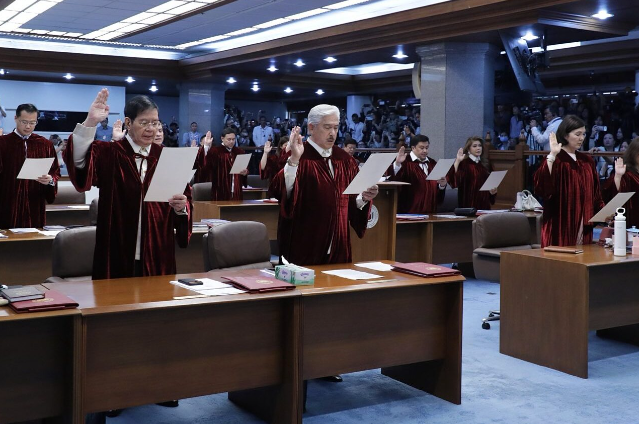
The impeachment of Philippine Vice President Sara Duterte by the House of Representatives is not simply a legal proceeding. It is the latest act in a political drama that cuts to the heart of dynastic power in Southeast Asia. The House impeached Duterte with well over the required number of votes; a previous impeachment effort in 2025 had gathered 215 votes in a House of 313 members, surpassing the two-thirds threshold. The charges are serious: they include culpable violation of the Constitution, betrayal of public trust, graft and corruption, alleged assassination threats against President Bongbong Marcos and the First Lady, and alleged involvement in the extrajudicial killings of drug suspects during her father's administration.
What makes the story particularly layered is that this is actually the second impeachment. Duterte had earlier been impeached in February 2025, but the Supreme Court subsequently declared that the complaint was unconstitutional, citing violations of the one-year constitutional bar on multiple impeachment proceedings. Now, with the clock reset, the House has moved again. However, the path to removal remains uncertain; Duterte's supporters orchestrated a leadership change in the Senate chamber just before the House vote, electing Senator Alan Cayetano, a former foreign secretary under her father Rodrigo Duterte, as Senate president. Despite the political headwinds, Sara Duterte is widely seen as a frontrunner for the 2028 presidential election, making every twist in this saga a direct preview of the country's political future.
Gaza: A Generation of Broken Bodies
The statistics coming out of Gaza are numbing in their scale, and yet each number represents an individual life. Since the October 2025 ceasefire, the UN has documented at least 229 children killed and 260 injured. Some 10,000 children in the Gaza Strip are living with life-changing injuries, and an estimated 43,000 of the 172,000 people injured in the territory since October 2023 have suffered trauma affecting limbs, the spinal cord, or the brain. The UN's own figures represent only what has been confirmed and documented; the real toll is almost certainly higher.
Save the Children reported that in 2024, an average of 475 Palestinian children suffered lifelong disabilities each month as a result of the war, and Gaza has become what the group describes as home to the largest cohort of child amputees in modern history. The shortage of prosthetics, medical equipment, and specialist rehabilitation services means that tens of thousands of children face the rest of their lives without adequate care. For the international community, this is not merely a conflict casualty figure; it is a public health and humanitarian catastrophe whose consequences will be measured in decades.
Ukraine: Bringing the War Home
For more than four years, Ukrainian cities have suffered missile and drone strikes. On the night of May 17, 2026, Kyiv returned the favour in a manner that has not been seen before. Ukraine launched more than 500 drones overnight, targeting regions across Russia. The attack on Moscow was described as the largest in over a year, coming just days after a massive wave of Russian strikes on Kyiv killed at least 25 people. Russian air defence shot down 81 drones headed for Moscow, but the strikes still killed at least four people, wounded a dozen others near an oil refinery, and sent debris onto the grounds of Sheremetyevo airport, Russia's largest, without causing flight disruption.
President Zelenskyy confirmed the strikes, calling them "entirely justified," and analysts described the attack as retaliation for the Russian bombardment of Kyiv that followed the brief Victory Day ceasefire on May 9. The 180 drones that targeted Moscow specifically represented the most drones that have ever been directed at the Russian capital in a single strike. On the diplomatic front, EU Foreign Affairs Minister Kaja Kallas has publicly stated that Russia is in a weaker position than at any point in the war, a claim whose credibility is reinforced by the fact that Moscow's own residents are now ducking for cover in the same way that Ukrainians have for years.
Britain: The Slow Unravelling of Starmerism
UK Prime Minister Keir Starmer and his Labour Party suffered major losses in local and regional elections across Britain, resulting in multiple calls for Starmer to resign. The defeat was inflicted on both flanks. Labour was squeezed from the right by Nigel Farage's Reform UK and from the left by the Green Party, with younger voters in London and university cities defecting to the Greens in significant numbers. The results saw Labour lose more than 1,400 councillors in England.
In response, Starmer pledged to forge closer ties with the European Union, six years after the UK departed from the bloc, arguing that rebuilding the relationship with Europe was central to the
country's economic recovery. But the move is politically treacherous. A closer reset with the EU risks alienating many voters, and the results highlighted the extent to which Labour's support has fractured along lines echoing the original Brexit referendum divide. More than 70 Labour MPs have now called for Starmer to step down, and the question of whether he can survive until a general election has become the defining story of British politics.
Ebola: A New Emergency in Central Africa
A disease that the world has repeatedly thought it had contained is back, and this time, declared a global health emergency. On May 16, 2026, the WHO Director-General determined that the Ebola outbreak caused by the Bundibugyo virus in the Democratic Republic of the Congo and Uganda constitutes a Public Health Emergency of International Concern. As of May 22, 2026, 836 suspected cases and at least 186 deaths had been reported, with the true number of infections considered likely to considerably exceed those figures.
The outbreak is alarming for several compounding reasons. A critical four-week gap between the onset of symptoms in the presumed index case and laboratory confirmation of the outbreak suggests a dangerously low level of clinical suspicion among healthcare providers, worsened by the presence of co-circulating viruses that mimicked Ebola's early symptoms. The Bundibugyo species of Ebola was first identified in Uganda in 2007 and has historically been associated with somewhat lower fatality rates than other strains, but severe disease and death can and do occur. Crucially, existing approved Ebola treatments were developed and tested against the Zaire ebolavirus, not Bundibugyo, complicating the medical response significantly. Cases have now been confirmed not only in Ituri Province but also in Kinshasa, Uganda's capital Kampala, and a separate imported case in South Kivu, a geographic spread that has put global health authorities on high alert.
Eurovision: Bulgaria's Unlikely Triumph
Amid a week of darkness, there was at least one moment of collective joy. Bulgaria won the 70th Eurovision Song Contest in Vienna, with singer Dara's dance anthem "Bangaranga" beating 24 other competitors, with both national juries and the televoting public crowning it the winner. The song won with 516 points, a 173-point lead over second place, which is the largest winning margin in the contest's history, surpassing even Alexander Rybak's legendary 2009 victory. Dara, whose real name is Darina Yotova, was greeted at Sofia's airport by hundreds of flag-waving fans and said the victory should inspire support for Bulgarian artists and creative industries. Bulgaria had never won the contest before, and was not among the pre-competition favourites. Sometimes, the underdog wins.
What these six stories share is a common undercurrent: the fragility of systems, political, military, public health, and democratic, that we take for granted. Dynasties fall and reform. Wars escalate despite ceasefire agreements. Diseases re-emerge in new strains just months after the previous outbreak ends. And elected governments discover that voter patience is shorter than any political cycle. The world does not pause. It only accelerates.
Reference
- https://www.aljazeera.com
- https://en.wikipedia.org
- https://media.un.org
- https://www.unicefusa.org
- https://www.npr.org
- https://www.cnn.com
- https://www.pbs.org
- https://www.aljazeera.com
- https://www.who.int