
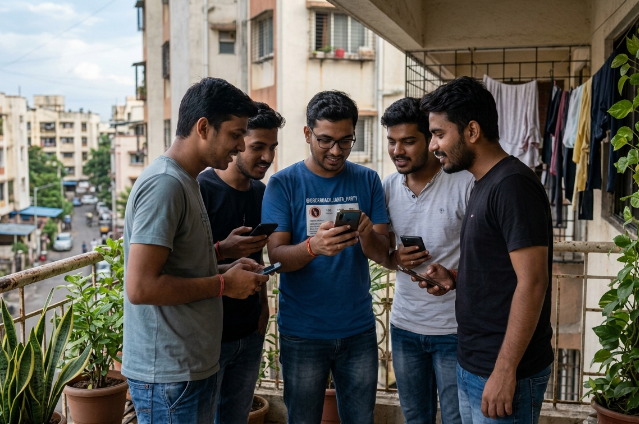
It started as most internet jokes do. One random tweet. One frustrated user. One joke that should have disappeared in a few hours.
Instead, it somehow became one of the funniest and weirdest online movements Indian social media had seen in a long time.
The tweet itself was simple. A user jokingly wrote that cockroaches were more qualified to run the country than politicians because at least cockroaches survive every disaster, adapt to every environment, and never disappear, no matter what happens. It was sarcastic, dramatic, and very internet-coded. Nobody expected anything serious from it.
But within minutes, people started replying with fake campaign slogans. Someone designed a logo. Another person made a fake manifesto promising “development in every drain.” Then came edited election posters with giant cockroaches standing in front of crowds. So,n meme pages on Instagram, Reddit threads, and X accounts were all talking about the “Cockroach Janta Party” as if it were an actual political organisation.
By the end of the day, the joke had completely escaped the control of the original tweet.
This is what makes internet culture in India so fascinating. A meme is never just a meme for long. People here do not simply react to content. They add to it, remix it, exaggerate it, and push it into absurd territory until it becomes something entirely new. The Cockroach Janta Party became less of a joke and more of a shared online performance where everyone wanted to contribute something funnier than the last person.
One user posted a fake news graphic claiming the party had already won several seats in “drain-dominated constituencies.” Another edited famous political speeches so they sounded like motivational speeches for insects. Somebody even made fake interviews where animated cockroaches promised transparency, survival, and resistance against pesticides. The comments under these posts were filled with people pretending to be party workers asking others to “join the movement.”
The funniest part was how seriously some people began discussing it ironically. Users started comparing the imaginary party to real political systems. Memes appeared saying the cockroaches had better unity, better crisis management, and better survival instincts than actual politicians. One viral post joked that cockroaches never switch parties because they already survive under every government.
What really pushed the trend into mainstream internet culture was the speed of sharing. Indian meme culture works like a chain reaction. Once a joke becomes relatable enough, every page wants its own version of it. Big meme accounts on Instagram reposted the jokes. YouTube creators made short videos pretending to analyse the rise of the party. Even small businesses joined in. A food delivery page posted that cockroaches were now offering “24-hour governance.” Another brand joked that their pest control products had become “anti-national.”
The internet thrives on exaggeration, and the Cockroach Janta Party was perfect material because it mixed politics, frustration, sarcasm, and complete nonsense in a way people instantly understood.
Part of the reason the meme exploded was timing. Social media in India has become extremely political in recent years. Every issue turns into online warfare within minutes. People argue constantly about elections, policies, corruption, and ideology. After a while, many users become exhausted from serious political debates. Satire becomes an escape. Instead of fighting directly, people laugh at the absurdity of everything.
That is why the cockroach joke worked so well. It did not attack one specific political group. It ridiculously mocked the entire system. Everyone could project their own frustrations onto it. For some people, it was just stupid humour. For others, rs it became commentary about survival politics and corruption. The meme was flexible enough to mean different things to different people.
This kind of online behaviour is becoming increasingly common in India because of how massive the internet culture has become. Cheap mobile data and short video platforms have completely changed how young people interact online. Earlier, only celebrities, news channels, or politicians shaped public conversations. Now, one random tweet from an ordinary person can dominate timelines across the country within hours.
The “Binod” meme from a few years ago worked in a similar way. A completely meaningless comment somehow became a national joke. Brands started using it. Companies tweeted about it. Even police departments joined the trend. The Cockroach Janta Party followed the same pattern but added political satire into the mix, which made it even more engaging.
What makes memes powerful today is not just humour. It is participation. People enjoy feeling like they are part of a giant inside joke happening in real time. Every repost, every edited image, every fake slogan adds another layer to the story. The internet rewards creativity and speed more than accuracy. That is why ridiculous content often spreads faster than serious information.
Some people actually became confused and wondered whether the party existed. Screenshots of fake manifestos and edited headlines circulated without context. This shows the strange side of
meme culture, too. Satire and misinformation sometimes blend online so quickly that people struggle to separate jokes from reality.
Still, most users understood exactly what it was: collective internet chaos at its finest.
Looking back, the funniest thing about the Cockroach Janta Party is how believable it almost became. For one entire day, Indian social media acted like cockroaches were preparing for elections, giving speeches, building voter bases, and forming alliances. The joke became so large that it no longer belonged to one person. The internet adopted it and transformed it into something much bigger.
And that is probably the best way to describe modern meme culture in India. Nobody plans these moments. There is no strategy meeting or marketing blueprint. Sometimes all it takes is one sarcastic thought posted at the right moment, and suddenly millions of people are building an entire fictional universe around it before the day even ends.
The Cockroach Janta Party was fake, but the reaction to it revealed something very real about the internet generation. People today process politics, frustration, and public life through humour. Memes are not just entertainment anymore. They are how people participate in conversations, express emotions, and survive the endless noise of online life.
For a brief moment, the entire country united under one absurd idea: that maybe the cockroaches were more organised than everyone else after all.
References
- Internet and Mobile Association of India Report 2024 – https://www.iamai.in
- Reuters Institute Digital News Report – https://reutersinstitute.politics.ox.ac.uk
- MIT Research on Viral Content Spread – https://news.mit.edu
- Deloitte Digital Media Trends Report – https://www2.deloitte.com
- Statista India Social Media Usage Data – https://www.statista.com