
The tragic death of eight-year-old Ayush Kumar Nath at a private school in Kolkata has ignited a national conversation about school safety during India's increasingly severe summer heatwaves. Ayush, a Class 3 student at Maharishi Vidya Mandir in the Bansdroni area, passed away on May 26, 2026, after battling for 11 days in a coma at SSKM Hospital. His death is not merely an isolated incident but a stark manifestation of systemic negligence that continues to plague Indian schools despite official guidelines and mounting climate evidence.
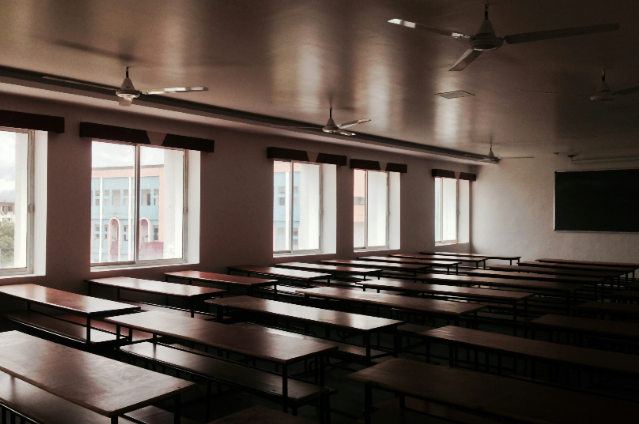
On May 13, 2026, the last day before summer vacations, Ayush told his class teacher during the first period that he was feeling extremely sick from the intense summer heat and wanted to go home. Instead of contacting his parents or escorting him to a medical room, the teacher allegedly denied him permission to leave and ordered him to sit at the back of the classroom with his head down on the desk. According to his father, Ashis Kumar Nath, the child remained in that position for six periods in a corner of the classroom that lacked a functioning fan, causing his condition to severely worsen in sweltering temperatures. When school finally dispersed around noon, a weakened Ayush was carrying his heavy schoolbag down the stairs when he collapsed and fell, suffering a massive brain haemorrhage from hitting his head. The family accused the school of negligence, alleging that his condition worsened due to the lack of timely medical assistance on school premises during class hours.
The incident sparked massive protests by angry parents outside the school campus,s demanding accountability. Following a police complaint filed by the father, the Kolkata Police initiated a negligence case and detained three individuals, including the class teacher Pragya Sahu Choudhary, the school principal Sushmita Chakraborty, and Shaktipada Jana, head of the school management, for questioning. The school management denied any wrongdoing, with a managing committee member terming the family's allegations baseless and claiming the student may have fallen ill due to the heat, while maintaining that primary treatment was administered as soon as the child complained of discomfort.
Ayush's death represents a horrifying pattern that extends far beyond Kolkata. According to a UNICEF report published in January 2025, approximately 54.8 million children in India were affected by heatwaves in 2024 alone. These extreme weather events, combined with other natural disasters like floods, landslides, and cyclones, have not only harmed children's health but also caused widespread destruction to schools across the country. The report revealed that fast-onset hazards such as heatwaves are becoming increasingly frequent and intense, making it harder for children to access a safe and conducive learning environment. India ranks 26 out of 163 countries in the UNICEF Children's Climate Risk Index, indicating extreme vulnerability to climate change impacts.
The heatstroke statistics across India paint an equally alarming picture. A study published in August 2025 found that at least 84 heatstroke deaths were recorded across India between February and July 2025. In 2024 alone, India recorded 459 heat-related deaths and thousands of heatstroke cases, with early 2026 forecasts warning of even more prolonged and intense heatwave conditions. By mid-2024, media outlets had confirmed over 40,000 suspected cases of heat stroke and at least 110 related deaths across the country, as the rising frequency of heatwaves increasingly posed a global threat. In 2026, extreme heat has driven temperatures in many Indian cities above 45 degrees Celsius, resulting in numerous heat-related deaths and heatstroke cases. Cities like Agra, Jhansi, and Kanpur in Uttar Pradesh have been noted for significant temperature increases, prompting concerns over public safety and the potential for heat-related illnesses.
Despite these devastating statistics, the Ministry of Education's own heatwave guidelines issued in May 2022 remain largely unimplemented in many schools. The guidelines explicitly state that schools should ensure all fans are functional and that all classrooms are properly ventilated. The document emphasises the importance of comfortable classrooms, availability of alternate power backup, hydration for students, and first-aid facilities. The National Disaster Management Authority defines a heat wave as when the maximum temperature reaches at least 40 degrees Celsius for plains and recommends moving persons to cool places, giving water or rehydrating drinks, fanning the person, and cooling them with a cool wet cloth if someone is suffering from heat. Yet in Ayush's classroom, none of these basic protections was present.
The physical vulnerability of children to heat makes school negligence particularly dangerous. Children sweat less than adults, making it more difficult for them to cool themselves down on their own. The hottest time of the day is generally between 10 a.m. and 4 p.m., precisely when most Indian schools conduct their main classes. Heat can make kids feel more tired than normal, and signs of heat illness include dizziness or weakness, muscle cramps, heavy sweating, headaches, and nausea. Ayush exhibited multiple warning signs when he told his teacher he was feeling unwell, yet the school's response was to force him to remain in sweltering heat rather than provide basic cooling and medical attention.
Similar incidents of heat-related school tragedies have occurred across India, though they rarely receive the same media attention. In May 2024, at least 33 people died of suspected heat stroke in India's Bihar, Uttar Pradesh, and Odisha on a single Friday alone, with children among the vulnerable populations. A 2024 study published in the journal Environment International found that there was a 14.7 per cent increase in deaths on days defined as heat wave days compared to other days. Two scholars from the University of California, Berkeley, determined that five heat waves each summer, lasting five days each, could result in at least 150,000 additional deaths across India. The National Disaster Management Agency recorded 17,706 heat wave fatalities from 2000 to 2020, while the India Meteorological Department reported only 10,545 deaths during the same timeframe, suggesting that official numbers significantly underestimate the true toll.
The absence of maximum temperature regulations for school premises in India compounds the problem. While European countries have policies setting minimum indoor temperatures in school classrooms ranging from 17 degrees Celsius to 20 degrees Celsius, and some establish maximum air temperature limits from 22 degrees Celsius to 29 degrees Celsius, India's National Building Code of 2016 contains no separate thermal comfort guidelines for schools. This regulatory vacuum allows schools to operate classrooms in dangerously hot conditions without legal consequences, leaving children like Ayush exposed to life-threatening temperatures.
ADRA India's Anticipatory Heatwave Response Plan,n implemented in 2025, marked a significant shift toward proactive intervention, establishing community-based cooling centres to provide shaded rest spaces, safe drinking water, hydration support, and immediate relief for vulnerable populations, including children. The initiative was implemented in close collaboration with the National Disaster Management Authority and local District Disaster Management Authorities across Delhi-NCR, Gujarat, Maharashtra, and Madhya Pradesh, responding to extreme temperatures and arid conditions in Saurashtra and Kutch regions, combined heat-humidity stress in Vidarbha and Marathwada belts, and frequent 45 degrees Celsius plus temperatures in Madhya Pradesh, compounded by limited access to reliable water sources. However, these measures target outdoor workers and general communities rather than addressing the specific vulnerabilities within school environments.
The legal and accountability framework surrounding Ayush's death offers some hope for systemic change. Kolkata Police completed questioning of all three teachers—the principal, a science teacher, and a managing committee member—mentioned in the FIR of negligence registered after Ayush's death. His parents expressed anger that none of the school authorities had been arrested yet, highlighting the gaps in India's accountability mechanisms for educational negligence. The police visited each of the four to five hospitals the child was taken to and learned he had a tumour, examining CT scans at IRIS Hospital before lodging the negligence case. The postmortem report was still awaited as of late May 2026, leaving some medical details unresolved.
This case underscores the urgent need for mandatory thermal comfort standards in Indian schools, regular inspections of fan and ventilation functionality during heatwave seasons, and immediate disciplinary action against schools that violate safety guidelines. Schools must implement the Ministry of Education's existing heatwave guidelines rather than treating them as optional recommendations. Teachers need training to recognise heat illness symptoms and respond appropriately when students report feeling unwell. Most critically, parents and communities must demand accountability when schools fail to provide basic safety measures, as Ayush's parents did through their protests and legal action.
The summer of 2026 has seen record temperatures across India, with 2024 experiencing the longest recorded heatwave since 2010. Many states experienced daytime temperatures over 40 degrees Celsius for entire months. As climate change intensifies these patterns, the question is not whether extreme heat will continue but whether Indian schools will adapt to protect the children in their care. Ayush Kumar Nath's death should serve as a catalyst for change rather than another statistic in India's mounting heat-related tragedy. No child should die because a school fan was broken and a teacher refused mercy.
References
- https://www.indiatoday.in
- https://www.newindianexpress.com
- https://health.economictimes.indiatimes.com
- https://www.telegraphindia.com
- https://www.nytimes.com
- https://www.facebook.com
- https://timesofindia.indiatimes.com
- https://adraindia.org
- https://www.aninews.in