
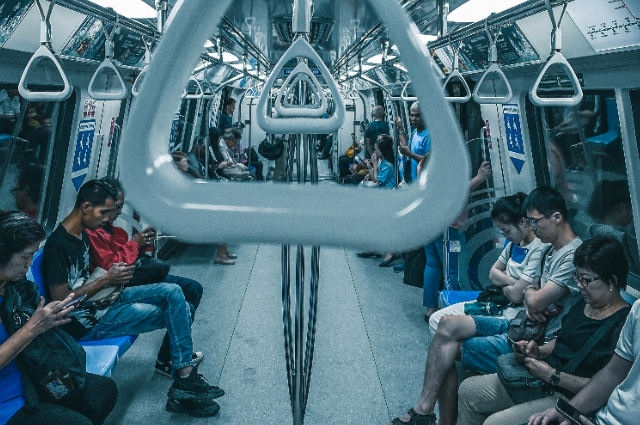
At 8:47 a.m., the metro doors open and a wave of people step out, almost in sync. Most are looking down at their phones. A few have earphones in, already somewhere else mentally. Nobody really looks at each other, and honestly, they don’t need to. In cities like Delhi or Bangalore, you can go through an entire day without speaking to anyone beyond what is necessary. You can order food, book a cab, attend meetings, and come back home, all without a real conversation. Everything works smoothly. Maybe a little too smoothly.
Smart cities in India were meant to make life easier, faster, and more efficient. And they do. Traffic is managed better, services are online, and information is always available. But somewhere in all of this, something quieter has started slipping away. The small, unplanned interactions. The feeling of belonging without trying too hard. The kind of conversations that do not have a purpose.
There is a strange contradiction here. Cities are more crowded than ever, yet people seem more alone. You are constantly surrounded by others, but still feel disconnected. It is not the kind of loneliness that is obvious or dramatic. It is subtle. It shows up in moments, like scrolling through your phone with no one to actually talk to, or sitting in a room full of people and still feeling out of place.
When you look at the data, it starts to make sense. Studies have shown that people living in urban areas in India are more likely to experience anxiety and depression than those in rural areas. A 2023 report suggested that around 61 percent of Indians feel lonely, and most of them are young adults between 18 and 34. Which is ironic, because this is the same group that cities are built around, students, young professionals, people chasing opportunities.
A big part of this comes from migration. People move to cities for college, jobs, and better exposure. But in doing that, they leave behind familiar people and spaces. What replaces that is not always the same. Making new friends in a city is not as easy as it sounds. Everyone is busy, schedules do not match, and relationships often stay on the surface. You meet people, you talk, but it does not always turn into something deeper.
Even in crowded places, there is a kind of distance. A study across cities like Mumbai and Kolkata found that many people regularly feel isolated despite being surrounded by others. Just being around people does not automatically mean you feel connected to them. If anything, cities can make you feel more anonymous than ever.
Technology adds another layer to this. It helps, of course. You can stay in touch, you can reach out instantly. But it also changes how we interact. Conversations move to texts, reactions turn into emojis, and sometimes that is where they stay. Social media especially creates this strange situation where you are constantly aware of other people’s lives but still feel disconnected from your own relationships.
Even the way we express emotions is changing. Short messages, quick replies, typing instead of talking. In a country like India, where communication has always been more personal and expressive, this shift feels a bit off. It is not that people do not feel things anymore, it is just harder to say them properly.
Then there is the city itself. The physical environment plays a bigger role than we usually admit. Long commutes, traffic, noise, and lack of open spaces all build up. You are always moving, always in a rush. There is not much space to slow down, either physically or mentally. Over time, that starts affecting how you feel, even if you do not notice it immediately.
You can see this clearly in places like Bangalore. A lot of young professionals there follow the same routine every day, work, commute, screens, sleep. It starts to feel repetitive, almost mechanical. Some reports have pointed out how this kind of lifestyle can lead to low motivation and a sense that things are just going on without meaning. On the other hand, in cities like Delhi, older people face a different issue. Many of them are not comfortable with digital systems, which makes it harder to stay connected, both socially and practically.
There are also cultural factors. Talking about mental health is still not easy for many people. Especially for men, there is hesitation in expressing loneliness or emotional stress. That said, there has been an increase in people reaching out to helplines, which shows that something is changing, even if slowly.
All of this raises a bigger question, what does a smart city really mean. If it is only about efficiency and technology, then it misses a huge part of what makes life livable. More recently, there has been some discussion around designing cities that actually consider mental well being. Things like better public spaces, areas that encourage interaction, and environments that do not feel so rushed all the time.
Loneliness is not just a personal issue anymore. It has real effects on health, both mental and physical. It has been linked to depression, heart problems, and even shorter life expectancy. In a country where mental health support is still developing, this becomes even more serious.
At the same time, not everything depends on systems or policies. Some of it comes down to small choices. Reaching out to someone instead of just scrolling. Taking time to actually listen. Being present. These are not big changes, but they matter more than we think.India’s cities will keep growing. That is not going to change. They will become smarter, more advanced, and more efficient. But the real question is whether they will still feel human. Because at the end of the day, a city is not just roads and networks and buildings. It is people. And if the people feel disconnected, then no amount of technology can really fix that.
REFRENCES
- https://pmc.ncbi.nlm.nih.gov
- https://www.sciencedirect.com
- https://thelogicalindian.com
- https://www.aspeninstitute.org
- https://en.wikipedia.org
- https://en.wikipedia.org
- https://idronline.org