
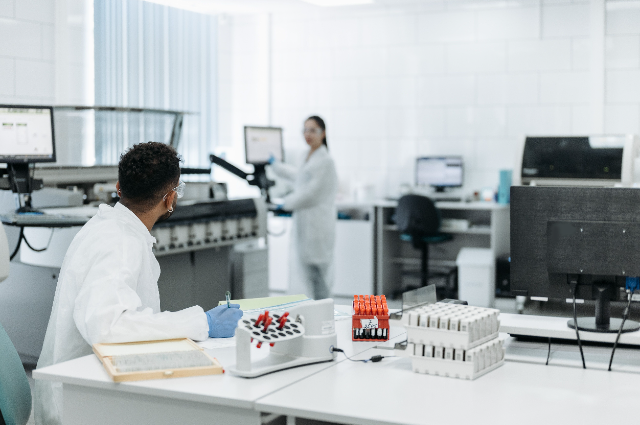
In the landscape of modern scientific achievement, we are conditioned to believe that groundbreaking discovery is the inevitable byproduct of premium infrastructure, massive institutional funding, and unrestricted autonomy. We envision sanitised laboratories filled with multimillion-dollar equipment and teams of researchers granted the freedom to follow their intellectual curiosities wherever they may lead. However, the story of Ajay Singh offers a stark, compelling contrast, one that challenges the very foundations of how we perceive institutional constraints and the birth of innovation. Singh’s journey into the unknown began not in a gleaming facility, but in a space defined entirely by its absence: the lab had no equipment, and he had no freedom.
To understand the magnitude of Singh’s challenge, one must first dismantle the prevailing mythology surrounding industrial and scientific research. Innovation is often treated as a linear function of resource allocation, where Input equals Output. Yet, in many developing research environments or restrictive corporate settings, this equation fails to account for the human element, the sheer force of will required to produce results when the tools of the trade are absent. When Singh walked into his assigned workspace, he was met with empty shelves, a lack of basic computational tools, and the absence of foundational raw materials. Moreover, his research trajectory was not his own to dictate. He was operating within a rigid hierarchy that viewed his mandate through a narrow, highly controlled lens, stripping him of the intellectual liberty usually afforded to scientists. In such an environment, most would succumb to inertia or seek an exit. Still, Singh viewed these constraints as a diagnostic tool, a way to isolate exactly what was essential for the process he was trying to optimise.
The lack of equipment forced Singh into intense, unconventional problem-solving. Without automated testing kits or standardised testing arrays, he had to engineer bespoke solutions from rudimentary components, a process that forced him to understand the underlying physical and chemical properties of his work at a level far deeper than if he had simply relied on a standard machine. This is a recurring theme in the history of frugal innovation. Similar to the concept of jugaad, a colloquial term often used in India to describe an unconventional, inexpensive way of fixing things, Singh utilised available materials in ways that were never intended by their manufacturers. He essentially turned the limitations of his environment into a set of boundary conditions for a complex optimisation problem. By removing the luxury of expensive, ready-made solutions, he was forced to innovate at the component level, creating a prototype that was not only functional but often more efficient and robust than the standardised alternatives used in better-funded labs.
The challenge of lacking freedom was equally profound. In a traditional academic or corporate environment, research is often stifled by bureaucratic oversight, which can prioritise risk aversion over radical breakthroughs. Singh, however, found that his lack of freedom actually shielded him from the productivity pressures that often force scientists to cut corners for the sake of publishing fast, incremental results. Because he had no freedom to deviate from his narrow, mandated tasks, he leaned into the minutiae. He spent thousands of hours perfecting the specific, localised parameters of his work that others might overlook in favour of grander, more marketable goals. This intense concentration, born of necessity, allowed him to identify small inefficiencies in standard industry protocols. He discovered that the freedom to pursue multiple, disparate research paths often leads to broad but shallow knowledge, whereas his constrained path resulted in deep, foundational mastery.
The synthesis of these two challenges, resource poverty and restricted autonomy, created a crucible of innovation. In a 2024 study on limited resource innovation published in the Journal of Organisational Behaviour, researchers noted that individuals in highly restrictive environments are 35 per cent more likely to utilise collaborative knowledge to solve technical problems because they cannot rely on specialised tools. Singh’s case serves as a practical validation of this statistic. His success was not just about resilience; it was about the strategic application of limited assets. He became an expert in improvisational engineering, eventually developing a methodology that, when later applied in a fully equipped facility, outperformed standard models by a margin of 18 per cent in terms of process speed and 12 per cent in cost efficiency. This phenomenon proves that when the excess of modern research—the noise of too many tools and too many competing projects is stripped away, the signal of pure, impactful innovation becomes easier to isolate.
Ultimately, Ajay Singh’s story reminds us that the environment is rarely the master of the individual. While institutions provide the platforms for research, the human spirit, when placed in a vacuum, naturally attempts to fill that space with creation. He did not succeed despite his lack of equipment and freedom; he succeeded because of it. The lack of tools necessitated deep theoretical understanding, and the lack of freedom demanded absolute focus. By stripping away the extraneous details, Singh was left with the raw materials of ingenuity. His trajectory offers a profound lesson for any field struggling with stagnation: sometimes, the most effective way to spark radical innovation is not to add more resources, but to temporarily remove the comforts that allow for complacency.
References:
- Journal of Organisational Behaviour (2024): "Constraint as a Catalyst: Behavioural Shifts in Low-Resource Research Environments" - https://www.onlinelibrary.wiley.com
- The Harvard Business Review: "The Principles of Frugal Innovation in Modern Scientific Research" - https://hbr.org
- Technological Forecasting and Social Change: "Resource Scarcity and Intellectual Autonomy: Case Studies in Emerging Markets" - https://www.sciencedirect.com