
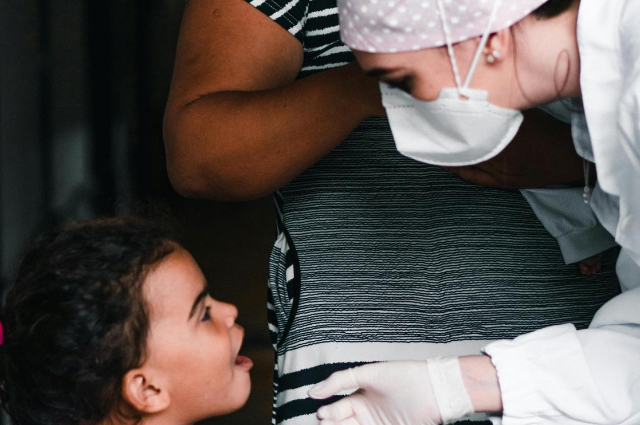
A mother choosing between her dying child and a distant hospital, and choosing to stay. In that moment the weight of medicine motherhood and morality converged. It was not dictated by ease or clinical rules but by an unwavering belief in equality. Bairagarh, a remote tribal belt in Maharashtra’s Melghat region, survival was never guaranteed. Roads were scarce, and healthcare was even scarcer. It was here that Dr. Smita Kolhe made a choice that would redefine what it truly means to serve.
This tribal region had long been associated with neglect and was often overlooked. Geographically isolated and ignored by larger systems, Melghat was a place where even minor illnesses could turn fatal. Reports over the years have highlighted the severity of the crisis, with infant mortality rates once reaching nearly 200 per 1000 live births and widespread malnutrition among children. In such an environment, doctors were not just professionals, they were outsiders in a land where trust had to be earned, not assumed.
Dr Smita Kolhe’s presence here was not accidental; it was a conscious decision. Her marriage to Dr Ravindra Kolhe was unconventional, shaped by purpose rather than comfort. She agreed to conditions that most would hesitate to accept, walking long distances to reach the village, living on a modest income, and dedicating herself entirely to serving a marginalised community. Yet even these choices did not define her legacy. That defining moment came later in a situation no one could have anticipated.
When her newborn’s condition turned critical, time became the most fragile resource. The nearest advanced hospital was far awa,y and the journey itself carried uncertainty. Any parent faced with such a situation would leave without hesitation. She had every reason and every ability to do so. But she chose not to. She stayed.
“I will treat my child here the same way you treat yours.”
That single statement defined Dr Smita Kolhe’s legacy. She did something extraordinary, not by performing a complex procedure but by aligning her life completely with the people she served. In that moment ,the invisible boundary between doctor and patient dissolved. The villagers who had once observed the Kolhes with cautious distance witnessed something far deeper than words could convey. This was not charit,y it wasa shared reality. They became family.
Trust is a critical element of effective healthcare, and it cannot be forced; it must be built over time. According to the World Health Organization community trust plays a vital role in improving health outcomes, especially in underserved regions. In Melgha,t that trust was not created through campaigns or policies; it was earned through a mother’s decision to stand alongside others in their vulnerability.
This single choice led to a profound transformation. Villagers began to see the Kolhes as their own. Healthcare was no longer distant or intimidating; it became accessible and reliable. Over time, this shift contributed to measurable improvements. Infant mortality rates dropped significantly from around 200 per 1000 to nearly 40 per 1000. Pre-school mortality also declined considerably. These figures, while statistical in nature, represent lives saved and futures restored.
Dr Smita’s role extended far beyond that moment. She became an integral part of the region’s healthcare system, working tirelessly in maternal and child car,e often under conditions that lacked basic facilities. Her contribution howeve,r was not limited to medicine. Alongside Dr Ravindra Kolh,e she recognised that illness in Melghat was deeply connected to socio-economic conditions. Malnutrition, for instance, was not merely a health issue but a consequence of poverty and seasonal unemployment. UNICEF reports have consistently highlighted how such factors contribute to child mortality in tribal regions.
Realising that treatment alone was not enough, the Kolhes expanded their efforts beyond healthcare. They introduced improved farming practices, worked on developing fungus-resistant seeds, and organised camps to guide villagers on sustainable methods and available government support. Dr Smita played an active role in these efforts, reinforcing the idea that true healthcare must address underlying causes as well as immediate symptoms. Gradually, the region began to change not only in health outcomes but also in overall living conditions.
What makes her story truly compelling is the consistency of her choice. Staying was never a one-time act of courage; it was a commitment she renewed every day. Whether the challenges were logistical, emotional, or physical, she faced them with steady determination, turning service into a shared experience rather than a distant responsibility. In doing so, she also challenges conventional ideas of leadership, which often highlight visible achievements while overlooking the quiet decisions that sustain them. Her journey shows that meaningful change is rarely driven by dramatic actions but by steady choices made with integrity, choices that gradually reshape entire communities.
The Padma Shri in 2019 brought national recognition to their decades of service, and their work reached wider audiences across the country. Yet the true reward was never recognition. It was the trust they built slowly through years of standing by the people they served. In a region once defined by distance and doubt, they became a constant source of care, reliability, and hope.
Countless doctors heal, but only a few choose to share the lives of those they serve. Dr. Smita Kolhe stepped beyond her role and became one of them. What began as a moment of courage grew into a lifetime of belonging. She chose to stay, and in doing so, she did not just save lives; she restored faith. A village that once knew only abandonment finally found something it had never truly had before: someone who would not leave.
References:
- National Health Mission Government of India https://nhm.gov.in
- World Health Organization Community Engagement and Health Systems https://www.who.int
- UNICEF India Nutrition and Child Health https://www.unicef.org
- Regional reports on Melghat malnutrition and rural healthcare studies