
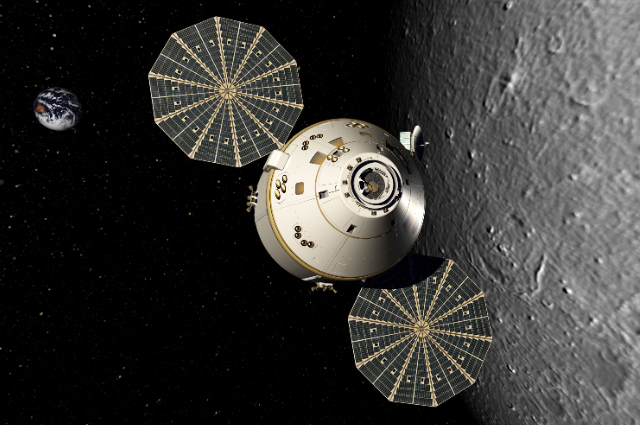
Artemis II, a lunar flyby mission and the first crewed flight beyond Earth's orbit since Apollo 17 in 1973, launched on April 1st , 2026. It follows the uncrewed flight Artemis I, launched in 2022, is the second flight of the Space Launch System (SLS), and the first crewed flight of the Orion Spacecraft, named “Integrity”.
In this lunar flyby, NASA is using a technology called AVATAR (A Virtual Astronaut Tissue Analog Response), which is essentially an organ chip. An organ chip is roughly the size of a USB and can potentially predict how humans respond to a variety of stresses, ie:- radiation or medical issues, pharmaceuticals. It is made with human cells, mainly bone marrow, as it is aby n ideal sample for diagnosing diseases and determig how well a person’s immune system reacts to treatment.
Main Impacts of AVATAR in the Artemis II Mission:
Studying human biology in deep space
AVATAR technology can be used to study the behaviour of human cells when unshielded by the Earth’s magnetic field, where exposure to cosmic radiation is larger. By using an organ chip, which contains human cells like bone marrow, scientists can observe how cells respond to the conditions of deep space, such as microgravity and radiation. This provides accurate information about cellular damage, along with DNA mutations and decreased cell function, which can be vital in understanding potential health crises like cancer or weakened immunity better than Earth- based studies.
Enabling personalized medicine for astronauts
The organ chip uses human cells like bone marrow to create a “biological avatar” of each astronaut. In doing so, researchers can observe how each individual reacts to deep space conditions. This allows scientists to create customized diets, medicines and preventive measures, and helps in predicting potential health risks for each astronaut depending on their experience in deep space.
Protecting the immune and blood system
A key area of study in the AVATAR research is bone marrow and it's reactions on the chips. Bone marrow is primarily concerned with the production of blood cells to carry oxygen throughout the body and help in defending the body against infections. In space, bone marrow can be damaged by radiation and leave the body unable to produce vital cells, weakening immunity and causing fatigue. By studying how the bone marrow cells react in the organ chips, it makes it easier for scientists to understand the damage caused to the bone marrow and form preventive measures against it. This is crucial as it can help during longer missions where there is no medical assistance from Earth.
Testing medical solutions safely
AVATAR technology allows scientists to test potential treatments and protective measures on organ chips instead of directly on astronauts. Researchers can introduce drugs or change conditions on the chips to see how cells respond to radiation and other stress factors. This helps identify effective medicines and strategies to reduce damage before applying them in real missions. As a result, it speeds up the development of space healthcare solutions while minimizing risks to astronauts.
In conclusion, AVATAR effects the future of deep space missions on the following ways:
- Simulating astronaut biology in space
- Enabling personalized healthcare
- Improving safety for deep-space missions
- Advancing both space medicine and Earth-based healthcare
Sources: