
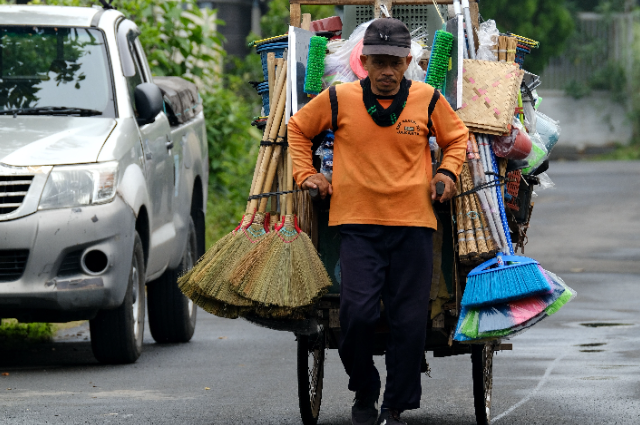
On every Diwali every year, we start cleaning our houses one month before only – cleaning every room, kitchen, drawing room, and every single thing. Some get their houses painted, some re-innovate them, and some buy a thing – house, accessories or any new vehicle. This practice has been carried on for several years because our ancestors believed that on every Diwali, goddess Lakshmi comes to every house, and she visits those houses which are well maintained, cleaned and believe in her; when she comes, the ‘Dhan’ and the ‘Lakshmi’ automatically come. This belief is carried till today from generation to generation. And this becomes the only time when the real earning is done by the ‘Kabadiwaalas’.
Kabadiwaala is a word used for those people who come from house to house, collect the waste, including waste newspapers, furniture, and similar things like this, measure it in Kgs and pay us the exact amount which comes on the meter. These things collected from us go to an area and are dumped together and are made ready to recycle them all together and turn them into a new product. There may be many things that we use today that are made up of those things together - the Kabad.
But the worst part is the people who come to our houses at the time of Diwali, collects these wastes and recycles them – indirectly if we see they are the one saving our environment by recycling them and we call the as The Kabadiwaalas…this is not with only these but with the people who clean washrooms either private or public, people who come to our house to wash utensils or clean the houses – we often name them with such words.
Everything which is named and used professionally came from something or was used in another way in early times. Like how early men used to strike two stones and burn the fire, which is now replaced with gas stoves and more induction, and this evolution will go on. Just the same way, the concept of 5Rs is introduced and derived indirectly from these Kabadaiwaalas.
The 5Rs stand for – Recycle , Reuse , Reduce , Rethink and Refuse. These Rs together form a very important meaning and lesson together – to reduce the waste collectively, and the waste which is already generated, try to recycle it and reuse it. These Rs are really helpful if used very carefully, but humans are such an off-minded sometimes that we don’t understand it and waste things, and when these things start filling our homes and taking up space unusually, we throw them away, or we give them to our own ‘Kabadiwaalas’. I think we trust these people more than these 5Rs because we know that these people will measure it in a way.
Before we were introduced to this circular economy of 5Rs, we Indians already introduced it through our own Kabadiwaalas. Today, these people earn and make money comparatively more than anyone else. It is considered the world's most efficient material recovery system. 4 million informal workers recover 60% of India's plastic waste, against a global average of 14%. Just like the Dabbawaalas in Mumbai, famous for selling dabbas of food from one place to another – it started with a single person and today has reached to a point where they sell it through FedEx – a company which is mostly used to courier things abroad.
A system of Kabadiwaalas and Dabbawaalas started on roads from a single person, on a bicycle, and with the help of such things, today has become such a big chain that moves all around India in every state. These people are the reason behind our modern approach to the 5Rs or many other things.
The kabadiwala economy is worth billions, yet it remains largely invisible in conversations about sustainability, urban development, and business. Working quietly behind the scenes, kabadiwalas form the backbone of India's recycling ecosystem, collecting, sorting, and redirecting waste back into the production cycle. Their work not only reduces landfill burden but also creates livelihoods for millions. As the world looks toward a more circular and sustainable future, recognising and supporting this informal network is no longer optional - it is essential. The kabadiwala may operate from a small corner of the street, but their impact reaches far beyond it, shaping a cleaner and more resource-efficient economy for all.
Worth billions yet rarely acknowledged, the kabadiwala economy is a testament to the power of informal networks. Every newspaper, plastic bottle, and cardboard box collected represents a step toward a more circular economy. As conversations around sustainability continue to grow, recognising and supporting these workers is essential to building a cleaner and more inclusive future.
References
- The Indian Express
- International Alliance of Waste Pickers
- Circle economy.com
- Wikpedia
. . .