
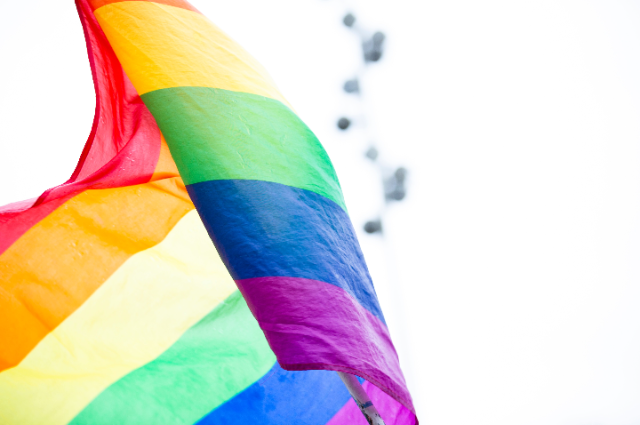
Whenever the month of June begins, there is a shift in the air. Colourful posters flutter in the wind, people begin posting online, and social media fills itself with gradients of colours. By this, I do not mean a simple rainbow, but a series of colours that today represent the identities, sexuality, and lives of millions of people.
Whenever the monsoon season used to arrive in June or July, many of us waited for one thing - the rainbow. We knew it would appear after the rain, and we loved watching it all across the sky. But the younger version of ourselves never imagined that one day, this same rainbow would become such an important cultural symbol.
Scientifically, a rainbow appears when light passes through water droplets and separates into a spectrum of visible colours. Similarly, the Pride rainbow came to represent the spectrum of human experiences and identities.
In the context of Pride, the rainbow was chosen intentionally by Gilbert Baker in 1978. Baker believed the rainbow was a natural and universal symbol - something that already existed in the sky and belonged to everyone. But before the Pride flag became globally recognised, another figure helped shape Pride into what it is today.
Brenda Howard, a bisexual activist often called the “Mother of Pride,” played a major role in transforming the word ‘Pride’ into public celebration. Following the 1969 Stonewall uprising at the Stonewall Inn in Greenwich Village, she helped organise commemorative events and contributed to the 1970 Christopher Street Liberation Day March in New York - widely recognised as the first Pride march.
Together, figures like Brenda Howard and Gilbert Baker shaped Pride in different ways - one helped give Pride a public form, while the other gave it a public language.
So what did the original eight colours of the Pride flag mean?
- Hot Pink — Sex
- Red — Life
- Orange — Healing
- Yellow — Sunlight
- Green — Nature
- Turquoise — Magic and Art
- Indigo — Serenity and Harmony
- Violet — Spirit
Hot pink fabric became difficult to source and was removed. Later, turquoise was also removed to make the number of stripes easier for display and manufacturing, and even the widely recognised six-colour rainbow flag emerged with the official colours: red, orange, yellow, green, blue and violet.
There is another lesser-known chapter in Pride history. Before the rainbow became the symbol of Pride, the pink triangle had been reclaimed by activists. Originally, it was a symbol used by the Nazi regime to identify gay prisoners in concentration camps. Later, LGBTQ+ communities reclaimed it and transformed it from a symbol of oppression into one of resistance and remembrance.
Today, these histories help us understand that the Pride flag is more than color. It carries stories of struggle, identity, courage, visibility, and community.
These individuals created symbols and spaces that helped people feel seen - especially those who have struggled to accept themselves or to speak openly with family, friends, or society. For a long time, many people were told they were wrong or needed to change. Pride challenged that idea by creating room for people to exist openly.
As humans, we often forget that people experience identity, emotion, and life differently. Acceptance does not require similarity - but only understanding.
In India, conversations around sexuality and identity continue to evolve. For many people, opening up about being bisexual, lesbian, pansexual, gay, transgender, or queer can still feel difficult because of social expectations and cultural pressures. Yet Pride events, marches, and communities do exist across many Indian cities and continue to grow every year.
The word “Pride” itself became a way of expressing self-acceptance - the idea that identity should not exist in shame but with dignity.
The rainbow that once felt like a childhood memory after rainfall has now become a symbol carried by millions. Not because of its beauty alone, but because of what it represents - courage, expression, history, and the freedom to exist. And maybe that is what Pride has always been:
Not asking for permission to belong, but recognising that belonging was always there, and perhaps that is what June also continues to bring every year: not only colour, but also courage, acceptance, and the freedom to exist as oneself.
Happy Pride Month !!!
References:
- Wikipedia
- LGBTQ+ Nation
- Grandmagazine .com