
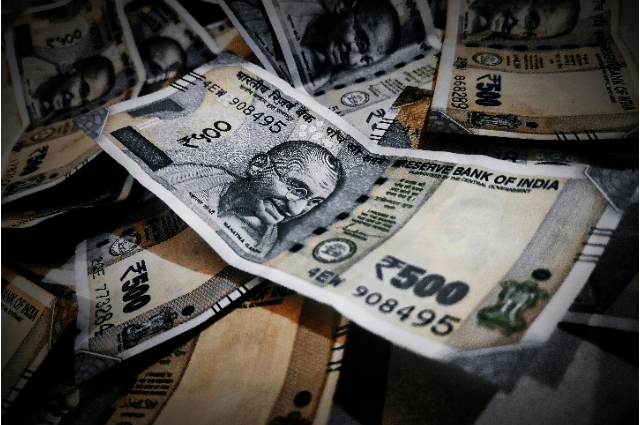
A year ago, ordering an imported lipstick, booking an international flight, or paying for a streaming subscription did not feel expensive enough to think twice about. Today, the same lifestyle quietly costs more - not because people suddenly became richer, but because the Indian rupee became weaker. The power of every country lies in its currency because, based on that, everything evolves and revolves.
In earlier times, everything had a value in exchange for other things and that was known as the barter system. People used to exchange rice for flour, fabric for grain and so on, but now in 2026, the economy runs on paper or written work. Notes are printed, and the goods and services are exchanged for it and their worth depends entirely on trust. In today's economy, where rupees slip from 85 to 95, that trust had become fragile once again.
Our country thinks that the value of rupees slipped overnight, but this is not true – there lies a lot of different economic or financial factors that affected the same. It was found out that the value of Indian rupees, that is rs 85 is shifted to Rs 95 against the US dollars. The main reason behind all this was firstly the wars happening around the world - these are slowly affecting every country's economy, and together it is affecting the currency rates.
Rising oil dependence and oil imports . geopolitical tensions, global uncertainty, and heavy pressure on the Indian middle class are somehow interlinked to each other. Today, fees a parent pays for their student's degree outside India, or the products we buy which are purely imported or any international flight charges we pay, contain a small rock of weaker rupee.
India imports nearly 85% of its crude oil requirements, and oil is traded globally in dollars. This means that whenever crude prices rise, India needs more dollars to pay its import bill. More demand for dollars automatically weakens the rupee further. Economists now describe this as a structural vulnerability rather than a temporary fluctuation. This crisis feels like happening suddenly, but it keeps happening through the slow house processes.
When a decrease in value or currency is seen from one time period to another, it is known as Depreciation. Just like earlier, to buy one dollar, India used to pay Rs 85, but today, to buy any product or to buy 1 dollar of the US, India has to pay Rs 95 because the Indian currency has depreciated. Now we need more rupees to buy dollars. RBI – Reserve Bank of India is held responsible for any such negative or positive changes happening in the Indian currency.
RBI sold dollars from foreign exchange reserves to stop the panic in financial markets, even though the fall was downward. But this isn’t something to worry about. Here is the catch: What makes the situation more concerning is that the rupee’s weakness is happening despite India remaining one of the world’s fastest-growing economies. If compared from earlier times with today, it is very easy to understand that India’s economy has shown a massive increase as compared to those times, but today, as the currency has fallen, it says all about the GDP and finance.
If we see it in the current status, the rupee slumped to a record low of 95.8 against the US dollar, making it Asia’s worst-performing currency in 2026.
India has never faced such a low rate in currency, but as I said, everything happening in the world affects the economy in some way. The combination of India’s structural oil dependency, capital flight, a strong dollar and geopolitical shocks is all hitting at the same time, thus affecting the GDP rate and finance too.
The weaker rupee is not just a financial statistic; it changes aspiration itself. The dream of a student studying abroad, buying beauty or clothing from high-end brands, and even the idea of a global lifestyle starts gaining weightage. Now is the time for India to look over the seriousness of things and currency, making the population of India understand its value at once.
India’s currency crisis is quiet precisely because it spreads silently - one payment, one café bill, one imported product, and one fuel hike at a time.
References :
- The economic times
- RBI
- The Times of India