
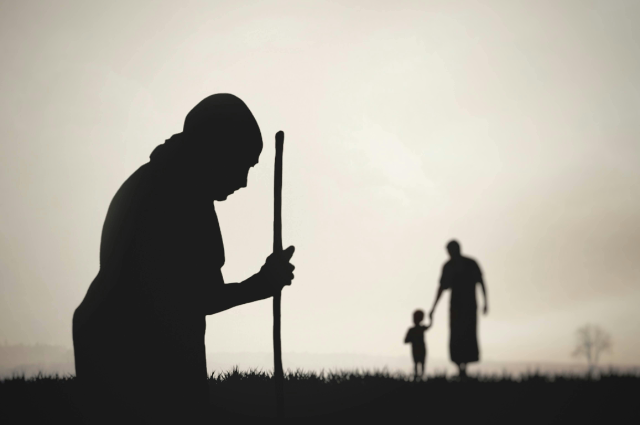
After getting independent, India made its own constitution in the year 1949. It included rights and laws made for every single person living in India; some rights were made to support them, and some laws to punish the people who have been working as a threat and unsupportive factor in our society. One of the most respected rights among all is the right to freedom. It tells us that every single human being has the right to freedom – freedom of speech, freedom to move freely and more. These rights were made for every gender and are applicable to every gender. But today, why isn’t this right respected at all? Why is this right violated?
On May 2, 2026, at Nasrapur village, Bhor taluka, Pune district, a deadly crime took place – again. A girl who came to Pune to enjoy her summer vacations at her grand place, who used to live in Nasarpur village, was sexually assaulted by a 65-year-old Bhimrao Kamble, a labourer with a history of sexual offence cases. He took the girl out in the cattle shed to show her calf and sexually assaulted her – the crime isn’t over yet – he smashed her head with a stone, and concealed her body under a heap of cow dung before fleeing.
It’s a shame that people like this exist so freely and are surrounded by us with the same lives as us. After the man was caught, the people found out that he had a very long history of sexually assaulting women. Police confirmed he had a prior record under the POCSO Act and was out on bail at the time of the crime.
A 4 year old children, either a girl or a boy, is considered very delicate and immature to everything happening around them, and that is why they are taken care of a lot. Then, how come a person can be so cruel to a girl who is just new to everything she is watching around her?
But this incident tells us something very important in today’s timeline - that danger is not always distant or unfamiliar. Sometimes, it exists within the very spaces we consider safe. Within neighbourhoods, routines, and people, we do not think twice about. The movie recently released on Disney + Hotstar, ‘Chiraiya’ highlights this same point that it is not a matter of a woman of the age of 25 or 4 years, it is a matter of how safe a woman is in her own place, which she calls home.
Home is said to be a place where you feel safe because you are surrounded by your people – that home can be a house, a neighbourhood or a person. If a woman starts doubting these things only, then how is she even safe?
As this incident took place, the people became uncontrollable with intense anger that they blocked the entire Satara -Pune highway and demanded a bigger punishment and are also raising a very important question – how is this man moving freely on the streets?
This is not the first time an incident with such cruelty is happening in Pune or India – many times it had taken place and one of the best examples of all is the ‘Nirbhaya Kaand’ – which made us feel like these type of people will stop themselves with such thinking of sexually assaulting wo and kids, but the rate of this kept on increasing every day or every year. A report has indicated that around 31,000+ rape cases are reported in India, but how many are actually solved and how many victims really get justice?
Today is the high time for our country and for every state to take this crime as a very serious crime and take action. If such cases keep on happening, then there is no point in valuing the constitutional rights or freedom or safety, because there is no freedom and safety for any single woman.
If a person can't openly move from one place to another, then what is the point of the laws we have made and for what ? to just mark it on the paper, not to follow it?
If we want India to stand out, then we need to take these crimes seriously and make these people realise what it actually means. This can only happen when we start punishing these people in a timely manner.
References :
- Aaj Tak news channel
- Inshorts news app
- Wikipedia – Pune rape history
- Statista – rape cases statistics