
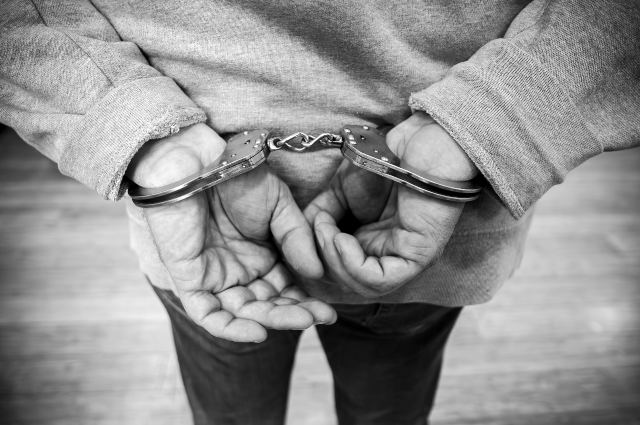
When India made the constitution , it also made a way to make people feel alive through the rights. rights for every thing - speech , sexuality and many more but one right which get over all is the right to freedom which says that every one living in India has a right to do anything of its own unless and untill it affects the country. but what happens when this or these rights are placed at a price of everything even your own life ?
Ajay Singh's story is not one of guilt, crime, or wrongdoing. Instead, it is a story of how a simple machine error, combined with human negligence, turned an ordinary citizen into a prisoner. His case has become a powerful reminder that while technology can make systems faster and more efficient, it can also cause devastating consequences when mistakes go unnoticed.
In today's world, technology is trusted in almost every aspect of life. From facial recognition systems and digital records to forensic testing machines used in criminal investigations, machines are often viewed as objective and reliable. Many people believe that technology cannot be biased or make careless mistakes the way humans do. However, Ajay Singh's experience shows that machines are only as reliable as the systems and people behind them.
The incident began when forensic testing was used as evidence in a criminal investigation. The results produced by a machine suggested that illegal substances were involved, leading authorities to take action against Ajay Singh. Based on this report, he was arrested and sent to jail. The machine's findings were treated as factual and trustworthy, leaving little room for doubt.
This whole thing became a nightmare for him like what a drastic change it was for a normal person to live a peaceful life one second, and the next he is in jail. Like any ordinary person, he had responsibilities, relationships, and plans for the future. All of that came to a sudden halt. The emotional shock of being accused, arrested, and imprisoned for something he had not done was immense.
Prison does not only take away a person's physical freedom. It also affects mental well-being, family relationships, and social standing. During those 57 days, Ajay had to face uncertainty, fear, and helplessness. His family also suffered alongside him. They had to deal with the stigma attached to his arrest, the emotional stress of separation, and the anxiety of not knowing when justice would prevail.
For many families, such situations can be financially devastating as well. A person who is unable to work cannot earn an income. Legal expenses begin to pile up. Everyday life becomes more difficult. Even after release, the damage to one's reputation often lingers.
What makes Ajay's case particularly troubling is that his imprisonment was not caused by deliberate wrongdoing but by an error in a system that people trusted. Later investigations revealed that the forensic findings used against him were incorrect. The machine had produced a faulty result, and the mistake had not been identified before action was taken.
By the time the truth emerged, Ajay had already spent 57 days in jail.
The revelation raised serious questions about accountability. If a machine makes a mistake, who is responsible? Is it the manufacturer who created the technology? The laboratory that failed to verify the results? The officials who relied entirely on a single report? Or is responsibility shared among all of them?
These questions are becoming increasingly important as technology plays a larger role in decision-making. Machines can process data quickly and perform tasks with remarkable accuracy, but they are not infallible. Technical malfunctions, software errors, poor maintenance, and human oversight can all contribute to incorrect outcomes.
The danger arises when people place blind faith in technology without proper verification. In criminal justice systems, where decisions can affect a person's liberty and future, such blind trust can be especially harmful. A single error can lead to wrongful arrests, unfair convictions, and irreversible damage to innocent lives.
Ajay Singh's case highlights the importance of checks and balances. Technology should assist human judgment, not replace it. Every forensic report, digital record, or machine-generated result should be carefully reviewed and validated before being used as the basis for legal action. Human oversight remains essential because machines cannot understand context, consequences, or ethics.
The case also sheds light on a broader issue within justice systems around the world. While technological advancements have improved efficiency, they have also introduced new challenges. Errors that once came from human judgment can now originate from algorithms, software systems, and automated processes. As societies become more dependent on technology, mechanisms for accountability become even more important.
Recognizing the injustice suffered by Ajay Singh, the court later acknowledged that his imprisonment resulted from failures within the system rather than any fault of his own. Compensation was awarded as a recognition of the violation of his rights. While this decision was significant, no amount of money can fully compensate for the emotional distress, lost time, and personal suffering experienced during those 57 days.
Freedom is difficult to measure. Its value often becomes apparent only when it is taken away. The days Ajay spent behind bars cannot be returned to him. The anxiety, humiliation, and uncertainty he endured cannot simply be erased.
Yet his story serves an important purpose.
It reminds us that justice is not only about punishing the guilty but also about protecting the innocent. It reminds us that technology, no matter how advanced, should never be beyond question. Most importantly, it reminds us that behind every legal case, report, and statistic is a human being whose life can be profoundly affected by a single mistake.
Ajay Singh's 57 days in jail were the result of an error that was not his own. His experience stands as a cautionary tale about the risks of unquestioned trust in machines and the importance of accountability in modern systems. As technology continues to shape the future of justice, his story encourages us to ensure that human rights, fairness, and careful scrutiny remain at the heart of every decision.
Because when a machine gets it wrong, it is often a human being who pays the price.
References:
- India Today
- Times of india
- Live Law
- The Indian Express