
Indian politics is known for its promises. Every political party, when it comes on the ground for the first time to finally begin with their performance and make people assure that they are going to do what they promised, is the time when the people should understand and know that they are going to get fooled, which, unintentionally or intentionally, turns out to be a fake promise.
As per the Election Commission of India , there are around 2800+ political parties registered in our country. Among these are some parties that have ruled for a long time, and some are on the way to becoming rulers in future. But the one thing that remains common in both these situations is the promises that are made to the people to gain their vote and get elected. But are these promises fulfilled, or are they just a line that is passed from one group of people to another ?
The reason behind the public supporting their favourite party is that they have expectations that wherever they or there surrounding is lacking behind will be covered up after the party comes into existence, and so the people vote them out. Every party makes promises and raises the level of expectations in people to support them in every way possible, but what happens when these promises are just said, not fulfilled ?
In September 2023 , a well-known party, the Bhartiya Janta Party ( BJP ) passed an amendment – women’s reservation bill in which 1 out of every 3 seats in Parliament and State Assemblies will be reserved for women but the twist happened when there was a condition to make it happen - it won't actually start until after a census is done and constituency boundaries are redrawn in short Delimitation. It basically means drawing or redrawing the boundaries of electoral constituency areas from which people vote for representatives. And so the reason was clearly stated and understood that it is time taking process which needs to be completed, and the whole bill was delayed , leaving the women and the public in hope again.
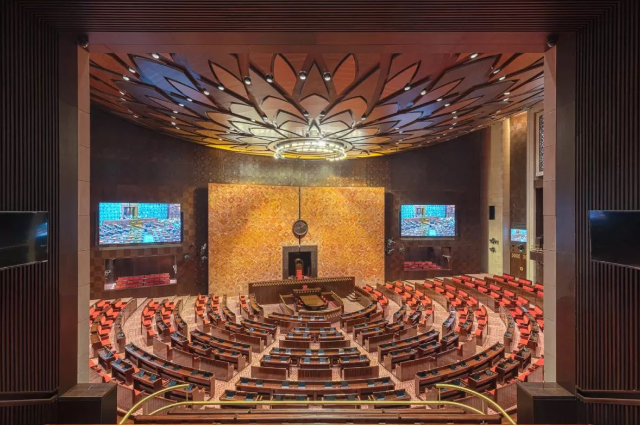
After delaying the whole process, the bill returned on 16 April 2026 with a package of 3 new bills by the BJP. The first bill proposed to expand the Lok Sabha from 543 seats to 815 seats, nearly 50% more MPs. This aligns with the seating capacity of the new Parliament building , the second bill said, Redraw all constituency boundaries using the 2011 Census data, not the fresh 2026 census that is currently being conducted and the third bill put up to Apply the same changes to Union Territories like Delhi and Puducherry. As it is said, if something big comes , it comes in a package. The reason the BJP gave behind launching these bills was that if the party increased the seats overall by 50 % and gave women’s their 1/3rd part in it without letting males leave their seats, which basically targeted one simple point that the seats of women would be added on top, not be replaced with men, a basic definition of gender inequality.
Critics pointed this out as a strategy, while the supporters said it is constitutionally necessary, but this all gave us a simple explanation that women’s reservation remains on paper, like always.
To pass the bill, it needed 2/3rd special majority, basically 360 seats overall. BJP has 293 NDA seats and earned 298 in favour and 230 votes against it. As the votes and amounts clearly tell us that the bill's requirements were not able to be met and was defeated on 17 April 2026 - the first time in over a decade that a government bill was defeated on the Lok Sabha floor.
Everything that happens in Indian politics, either good or bad, is affected by something or some factors which are surrounded by us.
The first and major factor is why use 2011 data when clear, fresh data is available right now ? The public says that the data from 2026 is new and fresh and is more accurate . The opposition argued that using 15-year-old data was logically flawed, especially since a fresh census had already commenced. Why use stale data when fresh data is weeks away?
Another important reason behind this happening was that there was no reservation for women who belonged to the OBC. Parties like the Samajwadi Party, the RJD Party, and many more supported and demanded this to happen, but were denied by the BJP, which made the public think twice about voting for the bill.
A more technical reason is that if Lok Sabha seats increase by 50%, the ratio between Lok Sabha and Rajya Sabha changes from 2.2:1 to 3.3:1. This means that even if the opposition has a two-thirds majority in Rajya Sabha, the government can override this if it has 56% of the seats in Lok Sabha during a joint sitting. The Rajya Sabha is where state governments have representation and a voice. Weakening it shifts power dramatically to whichever party controls the Lok Sabha, right now, the BJP.
After all these factors and failure of the bill , the BJP went on the cameras and said that the opponent betrayed the women of India, and the opposition counters that the government deliberately complicated the bill to avoid immediate implementation. It was basically what we say, the Blame Game, which happens every time when one is unable to meet the expectations of the public.
If seen closely , Indian women have one of the lowest rates in parliament globally and if these things that make women stand up for themselves or for others or give them authority, then it becomes generational.
Because when implementation is pushed to “after delimitation” or “after the next election cycle,” what it really means is
Not now. Maybe later.
References:
- PRS India – delimitation bill 2026
- Wikipedia – amendment of the Constitution
- PIB – Union Territories Law
- Economic Times – statistics of public agreement and disagreement