
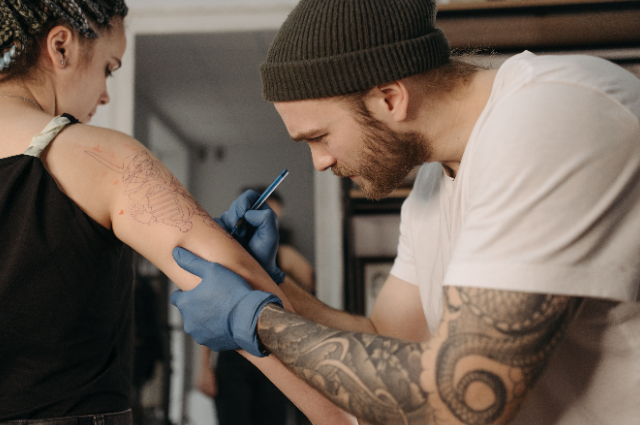
Today, tattoos are everywhere. They are no longer limited to sailors, bikers, or celebrities. Walk through any city, and you'll find students, professionals, athletes, parents, and even grandparents wearing tattoos that represent memories, beliefs, love, loss, or simply personal style. Social media has turned tattoo artists into global creators, and getting inked has become as much about self-expression as fashion. Yet, while millions proudly wear tattoos, very few know the name of the man who made modern tattooing possible- Samuel O'Reilly. His invention did not just improve the tattooing process; it laid the foundation for an industry that is now worth billions of dollars worldwide.
Before Samuel O'Reilly's invention, tattooing was a slow and physically demanding craft. Artists used hand-poking or hand-tapping techniques, repeatedly piercing the skin with ink-covered needles. Creating even a small design required patience, precision, and endurance. Larger tattoos could take several hours or multiple sittings, making the experience painful for clients and exhausting for artists. Despite these challenges, tattoos had existed for thousands of years across different cultures. Ancient Egyptians used them for religious and cultural purposes, Polynesian communities made them symbols of identity and family heritage, while Japanese tattooing developed into a sophisticated art form. By the nineteenth century, tattoos had become especially popular among sailors and soldiers who wore them as reminders of their journeys, loved ones, or achievements.
Samuel O'Reilly, an Irish-American tattoo artist working in New York City during the late 1800s, witnessed both the growing popularity of tattoos and the limitations of traditional methods. He understood that the biggest challenge was not creativity but efficiency. No matter how talented an artist was, hand tattooing restricted the number of people they could serve and the complexity of the artwork they could create. Looking for a better solution, O'Reilly found inspiration in an unlikely invention - Thomas Edison's electric stencil pen. Originally designed to create duplicate documents by punching tiny holes into paper, the device failed in the business world. O'Reilly, however, saw its hidden potential. He modified the machine so that instead of perforating paper, it could rapidly move needles in and out of the skin while depositing ink. In 1891, he patented the first electric tattoo machine, forever changing the future of tattooing.
The invention may sound simple today, but at the time it completely transformed the profession. Tattoo artists could work faster, produce cleaner lines, and experiment with larger and more detailed designs. Sessions became shorter, reducing physical strain for both the artist and the client. As tattooing became more efficient, it also became more affordable and accessible. More people began visiting tattoo studios, helping the profession grow beyond ports, military camps, and travelling circuses. O'Reilly's invention proved that technological innovation could preserve an art form while making it more practical for everyday use.
More than a century later, tattoo machines have evolved with quieter motors, wireless technology, disposable cartridges, and improved hygiene standards. Yet, the basic principle behind every modern tattoo machine still follows the concept O'Reilly introduced. His work reminds us that innovation does not always mean creating something entirely new. Sometimes it means recognising the potential in an existing idea and adapting it to solve a real-world problem.
The reality of tattoos today, however, is very different from what many people see online. Social media often presents tattooing as a trend or aesthetic choice, with flawless designs and perfectly edited videos. What is rarely shown is the commitment that comes with permanent body art. Tattoos require careful thought, skilled artists, proper aftercare, and an understanding that tastes and circumstances can change over time. A tattoo may represent freedom for one person, but regret for another if chosen impulsively. Laser removal treatments exist, but they are expensive, time-consuming, and often more painful than getting the tattoo itself. This reality is important, especially at a time when trends spread faster than thoughtful decisions.
At the same time, society's perception of tattoos has changed dramatically. Decades ago, visible tattoos could limit career opportunities or invite social judgment. Although acceptance has grown, especially in creative industries, fashion, sports, and entertainment, some professions and cultures still view tattoos conservatively. This means that while tattoos are increasingly common, they can still influence first impressions and professional experiences. Choosing to get tattooed remains a personal decision that carries both artistic freedom and social responsibility.
The tattoo industry itself has also experienced rapid growth, creating new opportunities and new challenges. Thousands of artists now build successful careers through online portfolios and international conventions, but increased demand has also led to untrained practitioners and unsafe tattooing environments in some places. Hygiene, sterilised equipment, and proper licensing are not optional—they are essential. A beautiful tattoo should never come at the cost of someone's health. In this sense, the success of the industry depends not only on creativity but also on professionalism and ethical practices.
Samuel O'Reilly probably never imagined that his invention would become the standard for an art form practised across nearly every country in the world. His goal was simply to improve the tattooing process, yet the result was far greater. Today, tattoos preserve memories of loved ones, celebrate cultural identity, mark life's milestones, support social movements, and help people reclaim ownership of their bodies after illness or trauma. They have become deeply personal stories written in ink rather than words.
The reality is that tattooing has never been just about decoration. For some, it is a symbol of survival after difficult experiences. For others, it is a tribute to family, heritage, or faith. Some people regret their tattoos, while others say they cannot imagine life without them. This wide range of experiences is what makes tattooing more than a passing trend—it is a reflection of human emotions, memories, and identity.
Samuel O'Reilly's name may not appear in everyday conversations, but his influence is impossible to overlook. Every buzzing tattoo machine in a studio today carries the legacy of his 1891 invention. While tattoo styles, technology, and public attitudes will continue to evolve, one thing is certain: without Samuel O'Reilly, modern tattooing would not exist in the form we know today. His story is a reminder that history is often shaped by people whose contributions quietly become part of everyday life. The millions of tattoos created each year are not just works of art—they are living proof that one person's innovation can leave a permanent mark on the world.
References :
- Wikipedia
- Britannica