
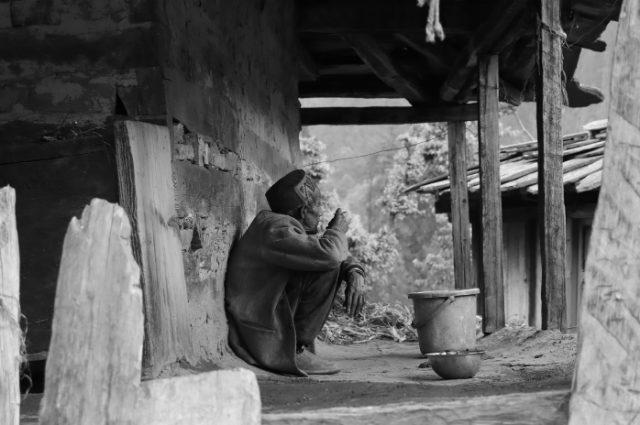
Jeetu Munda sits outside his hut in Dianali village, his hands trembling as he describes the day he carried his sister’s skeleton into the bank. ‘I didn’t understand why they wouldn’t give me the money,’ he says. ‘They kept saying, Bring the owner. So I did.’
Who Was Involved
Jeetu Munda, a 50-year-old tribal man from Dianali village in Odisha's Keonjhar district, was trying to withdraw ₹19,400 from the savings account of his elder sister, Kalra Munda (56), who had died on January 26, 2026.
Kalra had returned to her parental home after losing both her husband and her only son, and had opened a savings account at the Maliposi branch of Odisha Grameen Bank, regularly depositing money until her death.
Why It Happened
Kalra Munda left no official heirs, so the funds were legally considered to belong to her brother. However, bank employees required him to provide official proof of death — a certificate or other formal document.
Due to his illiteracy, Jeetu did not fully understand the requirement. According to his account, bank staff said rules demanded the one named on the paper show face in flesh. Letters meant nothing to him. Understanding even less. After weeks of running into stone walls, what came next sprouted from desperation: earth turned at night, bones lifted gently, then walked through daylight straight to the bank door. Taking these words literally, he dug up his sister's grave and brought her skeleton to the bank.
In his own words: "I went several times, but they wouldn't give me the money. They said, 'Let the owner come.'"
The Bank's Side
The bank stated that Munda returned in an inebriated condition, became disruptive, and placed the exhumed remains outside the branch while demanding the money. Police were called immediately. The bank denied ever demanding the physical presence of the account holder and said the issue arose from a lack of awareness about the claim settlement process.
What Happened After
The Chief Minister personally intervened, and district authorities reached the remote village to support the family. The Tahsildar coordinated with bank authorities to get the death certificate and legal heir certificate issued on the same day.
Jeetu Munda received the full amount of ₹19,402 (principal plus interest) the very next day. Additionally, the Indian Red Cross Society provided ₹20,000 to support funeral expenses for his sister.
The Neon Protocol
Besides handling money, Indian banks rely heavily on forms, signed documents, and online checks; methods all requiring basic reading and writing skills. Yet across tribal regions of Odisha, half the people lack these skills. Without literacy, daily life becomes harder, not just slower. It blocks access to basic financial literacy and social safety when it is needed most.
Without knowing much about death certificates, Jeetu struggled to show he was related to Kalra. Proof of brotherhood wasn’t something he grasped how to provide. The bank offered no guidance, only a demand that surprised him: bring the owner.
He followed the instructions exactly, which triggered an alarm. The broken system, unused to such compliance, reacted not out of malice but from sheer surprise, facing, for the first time, a person who did what was asked, no matter the demand.
A Price Tag on Mourning
Hardly any person living in a town gets this process done hassle-free. In places like Dianali, it’s indifferent; it’s harder to obtain death certificates. Kalra didn’t know he needed to register the death because when someone dies at home in tribal regions, families simply aren’t made aware that a certificate is necessary. If anyone tries to get one, they are met with hindrances. The paperwork is often in unfamiliar languages, like Odia or English, making it impossible for the rearward clan to overcome the tall barrier.
That day, Jeetu walked into the bank feeling more helpless than ever. Instead of offering help, they threw demands at him like stones.
The Illusion of Access
Then what is the authenticity of "financial inclusion" if people are barred from the system? The expression itself lives on, even when people are blocked out. The concept sounds welcoming, but it is really set up to create barriers. When a lot of people are excluded from something, the term begins to look more like window dressing than what's really going on, and the words persist anyway.
Broader Impact
The District Administration acknowledged the incident stemmed from a "lack of banking awareness" in the remote village, but made clear it would not be overlooked. Officials issued instructions to local administrative officers to be more sensitive and proactive in delivering banking services to people in far-flung areas. A detailed inquiry is also underway to determine if any administrative negligence contributed to the situation.
This story is ultimately a reflection of how badly India's rural tribal communities are underserved by the banking and administrative system. An illiterate man was left so desperate and confused that he resorted to digging up his sister's grave — something no one should ever have to do.
Where Was Anyone Watching?
Here it comes. Someone wonders why nobody stepped in until things got desperate. The bank gave him forms in English. Paperwork about inheriting money arrived without translation. Rules say help must be clear, but officials never offered an interpreter. A cousin later deciphered the paper for him. Until assistance is uplifted, another Jeetu will dig up another grave. Not out of madness—but because the system left him no other choice.
CITATIONS: