
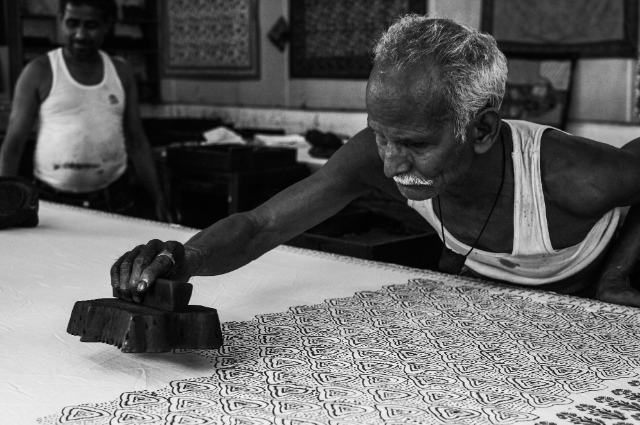
A ₹500 Zara top hits shelves for ₹500. A hand-block-printed kurta from a Rajasthan artisan cluster commands ₹2,500. The instinctive reaction? Handmade is pricey. But flip the lens: Why does Zara's machine-made efficiency make human craft look like luxury excess? Out here, it’s less about charm and more about what machines made unfair. Price tags got twisted long ago, so handwork now just looks expensive, even when the real value got drained by factory rules.
The Machinery of "Cheap"
Speed keeps it alive. From rough drawing to shelf in just over a week, powered by quick turns. This seamless flow pushes production across factories in Spain and Turkey, where pieces move fast. One step leads to another without pause, and each location manages its own materials from start to finish. Work keeps going day after day, with operations staying close under one roof. Parts come together quickly—speed matters most here. Each year brings twelve thousand fresh additions. Costs drop thanks to large-scale production and buying cloth in vast quantities; economies of scale cause costs to plummet. Bulk procurement slashes material prices, while machines handle the cutting and stitching tasks. Some machines stitch faster than any person ever could—one thousand clothes each hour, just one line.
Hidden within this efficiency is labour arbitrage. Zara sources from factories in Bangladesh and India, where factory staff are paid around ₹8,000 to ₹12,000 each month. Most work every day, routinely logging more than sixty hours weekly while receiving nothing extra for the added time. Regional rules force production decisions—and the damage piles up through pollution, leaving quick-made clothing in their wake. Each year, the world throws away 92 million tons of clothes and fabrics. Much of it ends up in landfills. Across it all, visible impacts are only part of the story. Chasing what’s hot right now? That price tag in India from Zara feels light, yet not quite cheap. Hidden beneath sits something else entirely.
The Unseen Ledger of Handmade
A single kurta made by hand in Rajasthan might sell for two thousand five hundred rupees. Yet the fabric alone - grown nearby without chemicals - runs three to four hundred per meter, far more than plastic-heavy cloth. Carving just one of the wooden stamps needs two or three full days. Learning how to do it right? That takes ten years, something machines still fail at.
A single kurta takes up to a full day of printing, dyeing, and then stitching. Sold by FabIndia for ₹2,500, the craftsperson keeps only ₹800 to ₹1,200 once agents skim off 10–20% and shipping eats more. Rainy months stop work entirely, sometimes for weeks on end - no pay, no safety net either. Earnings shrink so low that they land near half of what people in factories pull down. Handwork without machines means every hour spent is money lost. Time ends up costing everything.
Bagru Village Block Printing Case Study
Deep in Rajasthan’s Bagru region, more than 150 small workshops keep a centuries-old craft alive by making Sanganeri-print kurtas for companies such as FabIndia. Each piece begins with materials costing around ₹450, followed by roughly fifteen hours of hand printing, dyeing, and sewing. Though sold at nearly ₹2,800, only about ₹1,000 reaches the maker after passing through traders and logistics. While big names profit, those shaping every pattern see little. The gap between effort and earnings sits quietly visible.
Picture fast fashion instead: workers are paid fifty to eighty rupees, fabric costs around one hundred twenty, adding up to roughly two hundred fifty before stores raise the price. What makes Bagru more expensive lies in untouched craftsmanship - built by hand, without factory backing.
The Money Trail and Ghost Labour in Luxury Clothes
Profits flow elsewhere. The maker receives little. Though FabIndia prides itself on direct procurement, much of the sale value supports brand presence, transport networks, and storefront operations. Export intermediaries deepen the gap. For a garment sold at five thousand rupees, labelled high-end and stitched by hand, craft workers see only twelve hundred to eighteen hundred. Markup layers build fast when Western labels market such items abroad under themes of rarity meant for image-driven platforms.
Hidden work emerges. Craftspeople fade into background roles within a market that treats tradition like decor. Urban buyers collect identity through purchases, unaware of who made them. Support trails behind: government spending favours fashion exports over traditional weaving. A gap widens between effort and recognition. Figures come from official reports, yet the imbalance remains untouched.
The Shopper's Mirror
Most people say they care about ethical shopping when asked online. Still, cheap clothes pull harder than ideals do. A lower price tricks the mind into seeing value where there may be none. Behind that bargain often lie polluted rivers and tired hands working too long. Many state green choices matter, yet their closets tell a different story. What feels good now usually beats what lasts longer. Habits shape actions more than beliefs do.
Stop a moment. Would fifteen hours of work feel fair for one thousand rupees? Then why accept less for the hands shaping Bagru prints? What we call "handmade" often reveals how much we rely on low-cost labour—built on efforts that never grow easier, just harder to see.
Most things made by hand aren’t fancy. What we call normal now is mass production's theft of care, so handmade feels rare. Try growing skilled work with tools like shared digital weaving machines or group shipping networks. Costs start to match. Without that, true extravagance is just not caring at all.
Works Cited
- “Disrupting Exploitative Supply Chains: Comparing Two Approaches Enabling India’s Artisans - Capria Ventures.” Capria Ventures, 8 July 2014, capria.vc. Accessed 29 Apr. 2026.
- IAS GYAN. “IAS GYAN.” Iasgyan.in, 2024, www.iasgyan.in. Accessed 29 Apr. 2026.
- Irshad, Ahrar. “Zara.” Scribd, 2026, www.scribd.com. Accessed 29 Apr. 2026.
- Mohan, Rohini. “For Bengaluru’s Garment Hub Workers, the Minimum Wage Is Actually the Maximum Wage.” Scroll.in, 19 Apr. 2017,
- THE ETHNIC PRINTING CLUSTERS -SANGANER, BAGRU and BARMER: UNEP. “International Day of Zero Waste 2025.” UNEP - UN Environment Programme, 2025, www.unep.org