
Tuesday, May 12, 2026, brought sudden news from the National Testing Agency (NTA), disrupting more than two million anxious homes. The NEET UG 2026 test, administered earlier on May 3 stood annulled without delay. Whispers about leaked questions began in Rajasthan, later spreading through informal chat forums and tutoring hubs. Because of these concerns, officials acknowledged flaws serious enough to void the entire effort. Rather than defending the results, authorities stepped back, calling them untrustworthy. Investigation duties shifted quickly to the Central Bureau of Investigation under government direction.
The Leak That Unspooled an Exam
On the night of May 2, around 11 PM, a student from Sikar studying in Kerala sent a file labelled as a question collection to their parent in Sikar. That parent grew cautious upon receiving it. Instead of silence, they chose to report: first at the local Udyog Nagar outpost, then through an electronic letter sent directly to exam authorities. Rumours spread quickly, with others claiming to have seen similar files, and the same patterns began to emerge in coaching circles and WhatsApp groups.
Within two days, identical copies of a practice set containing 410 questions surfaced across multiple groups. Reports suggest this material had been circulating for up to a month before the exam, spreading through areas like Sikar, suburban Jaipur, and village tutoring centres.
Officials have noted that around 120 questions in the leaked set closely matched the actual NEET Chemistry section, raising concerns about the integrity of the exam. The pre-existence of such a large portion of the question set has fuelled fears that the test was compromised and that some candidates may have gained an unfair advantage.
On May 6 and into the next day, digital conversations along with informal posts about identical answer materials began spreading fast. These shared references pointed toward a flaw in the protection of NEET UG 2026, as screenshots, snippets, and “answer key” discussions all referenced the same mysterious question set. A message arrived at NTA containing a document resembling stolen content. By May 11, the case escalated: central investigative units took over, shifting the probe from local police to a nationwide inquiry.
On May 10, Rajasthan Police’s Special Operations Group (SOG) opened a formal investigation, arresting 13 people from Sikar and nearby areas by May 12. The CBI, meanwhile, registered an FIR on Tuesday, May 11, charging criminal conspiracy, cheating, theft, destruction of evidence, and corruption. The agency is now raiding premises, interrogating suspects, and monitoring digital networks where the alleged “guess paper” and other documents were shared.
The Hidden Pain of Students
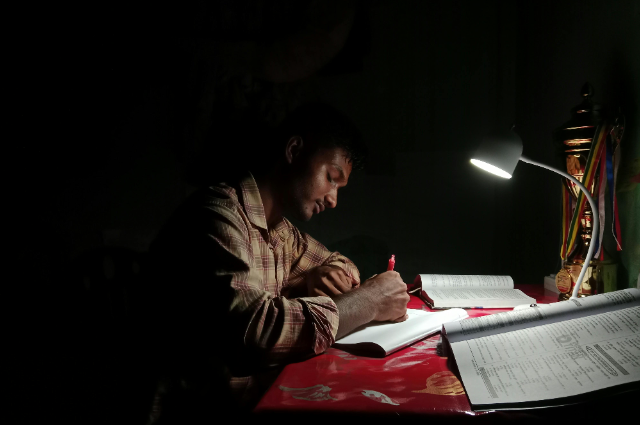
For many aspirants, the cancellation is not a “fair correction” but a second-degree trauma layered atop months, often years, of sacrifice. Ananya, a Class 12 repeater from Ludhiana, described two years of dawn-to-dusk study now crammed into a 40-day rush. "Two years of hard work feel wasted," she said, a sentiment shared by students in Pune, Bhopal, and Trivandrum, who had already moved on from exam stress.
The emotional impact is severe. Parents report students breaking into tears the moment they hear the word “cancelled,” collapsing in front of phones and laptops, where just a day earlier they were confidently discussing “paper difficulty” and “expected scores.” Some speak of panic attacks, insomnia, and a sudden inability to focus, as the brain struggles to reconcile the stability of a finished exam with the vertigo of a rerun. For others, the shock slips into a depressive spiral, marked by withdrawal from family conversations and a sense of fatalism about whether any amount of effort can truly protect them from systemic failures.
Coaching centres in Delhi and Kota are now holding emergency counselling sessions instead of classes. Some students doubt if medicine is still worth the mental toll, while others lose motivation entirely.
Money, Exploitation, and the Coaching Centre Nexus
Investigations reveal a profit-driven cheating network behind the leak. The "guess paper" wasn’t just a leaked document; rather, it was allegedly compiled by a Haryana-based gang, handwritten, scanned, and distributed as PDFs through WhatsApp groups and paid coaching networks. Some reports suggest students paid lakhs of rupees for premium "question banks" and "answer keys," driven by fear that elite coaching centres held the key to exam success. For honest students, trust is shattered. A Jaipur student told NDTV: "We don’t even know if those who paid will face consequences or if the system will protect them during counselling."
The Legal Battlefield Over NEET UG 2026
The cancellation has sparked a wave of legal action. While the Centre’s decision to involve the CBI highlights the severity of the breach, aspirants aren’t just seeking punishment; they want accountability and compensation.
Legal experts note that India’s laws don’t permit a single "class action suit" for 22 lakh students to sue the NTA for damages, but alternative legal routes exist. Public Interest Litigations (PILs) under Articles 32 and 226 of the Constitution are being filed to demand accountability and systemic reforms. Some petitions seek to compel the NTA to disclose investigation details, timelines, and measures to prevent future leaks.
Lawyers in a Supreme Court petition have demanded that the NTA be replaced by a judicially supervised body to conduct the fresh exam, citing the agency’s repeated failures as proof of lost credibility. The key legal question now is whether the judiciary will treat this as a simple administrative mistake or as a breach of the fundamental right to a fair and transparent examination.
Policy Fixes: Beyond the Re Exam Date
While the re-exam has been scheduled for June 21, policy experts warn that the real test lies ahead. The NTA has already announced that no new registration or additional fees will be required, and that original candidature details and exam centre preferences from May 2026 will carry forward. However, experts stress that superficial logistics fixes are not enough.
A forensic audit of the entire question paper pipeline, from topic allocation to final printing, is essential, along with stricter role compartmentalization, time-stamped digital logs, and independent parallel paper sets prepared by separate committees. While the CBI’s monitoring of social media and encrypted platforms is a welcome step, experts argue for a permanent digital forensics cell within the NTA to trace leaks back to their source. Current FIR provisions cover criminal conspiracy and cheating, but there’s a demand to classify exam leaks as aggravated offences under UGC or NEP frameworks, with harsher penalties for those involved.
Voices from the Fringes: Rural Aspirants, Parents, and Coaches
The fury and anxiety are not evenly distributed. Rural candidates, who often travel long distances for exams, now face extra costs and uncertainty for a second trip. Many rely on public transport and fixed admission dates, so delays can ruin their plans.
Parents, meanwhile, are torn between rage and resignation. Some demand that candidates be allowed to challenge the agency legally, while others quietly wonder if they should abandon NEET altogether and push their children toward other career paths. “We’ve spent lakhs on coaching, hostels, and even air-conditioned rooms during the exam,” said a mother from Rajasthan, “and now we’re being told our child’s future is up for revote.”
Coaching centre owners, too, are caught in the crossfire. Some argue that the “blame on coaching hubs” is a convenient scapegoat, noting that handwritten papers and WhatsApp-based leaks emanate from a vast, informal network that no single institute can fully control. Yet, others concede that the ecosystem has become predatory, with some centres exploiting fear to sell “sure-fire” question banks.
Coaching centre owners are also caught in the middle. Some argue that blaming coaching hubs is unfair, as leaks spread through informal networks beyond their control. Others admit the system has turned predatory, with some centres selling "sure-fire" question banks by exploiting fear.
The Human Cost of a Systemic Failure
The NEET UG 2026 cancellation is not just a story of one exam gone wrong; it is a symptom of a testing system that has repeatedly failed its most vulnerable stakeholders. The NTA’s decision to reconduct the exam, while technically correcting the error, does not erase the months of psychological strain, the financial burden, or the shaken belief in meritocracy.
Students such as Ananya and others are now living in a liminal zone: they are neither “safe” with a result nor “free” to move on. They are left asking whether the doctor of tomorrow will be identified by their ability to solve physics equations—or by the length of their WhatsApp group contacts.
For the policy makers, the choice is stark: they can treat NEET UG 2026 as yet another “administrative hiccup” and move on, or they can use this crisis as a catalyst for a thorough overhaul of the nation’s entrance testing machinery. The health of the system and the future of 22 lakh aspirants depend on that decision.
References:
- National Testing Agency. (2026, May 12). NEET (UG) 2026 — Decision on the examination of 3 May 2026 [Official statement]. S3waas. https://cdnbbsr.s3waas.gov.in
- NDTV. (2026, May 11). NEET‑UG 2026 cancelled: No re‑registration needed, NTA to announce fresh exam date. NDTV Education. https://www.ndtv.com
- NDTV. (2026, May 12). NEET‑UG 2026 paper leak: CBI books accused under criminal conspiracy, evidence destruction. NDTV Education. https://www.ndtv.com
- The Times of India. (2026, May 11: The Times of India. (2026, May 10). NEET‑UG 2026 paper leak suspicion deepens as SOG probes claims of 600‑mark question set. The Times of India Education. https://timesofindia.indiatimes.com
- The Times of India. (2026, May 12: Supreme Court and Parliamentary panel coverage. (2026, May 18). Parliamentary panel to review NEET‑UG 2026 paper leak probe. Facebook post (Official Gulistan‑News archive). https://www.facebook.com