
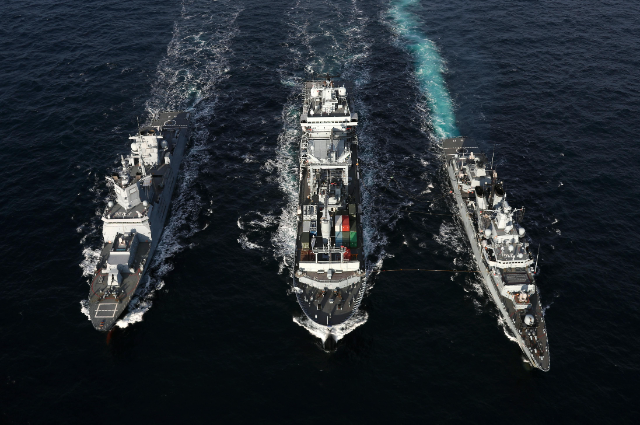
Sharma Uncle heats his electric press at 7 AM under the peepal tree in Patna. “Diesel mehenga ho gaya, bhaiyya,” he muttered, eyeing the power meter. No coal iron anymore - it’s all electricity, and 60% of India’s Grid runs on coal and gas. When crude spikes because tankers are struck at Hormuz, his bill jumps. The istri wala has no choice: shirt press goes from rupees 8 to rupees 10. One narrow strait, 3000 kilometers away, decides if he eats Dal or just roti tonight.
In Noida, however, Ravi checks his phone at 6:15 AM. Crude oil up 12%. Hormuz tensions escalate. He's just an HR executive, but his day also runs on oil. The plastic bucket in his bathroom, the LPG geyser, the CNG auto to office, the AC and the diesel generator at work - all tied to that barrel. If Hormuz chokes, his auto fares rise, his company freezes travel, and his team misses deadlines. In short, from Sharma uncle’s press to Ravi’s laptop, the very same drop of oil runs through us all.
Player One: Strait of Hormuz
This strait of 35 to 60 miles (55 to 95 kilometers) in width separates Iran (north) from the Musandam Enclave in Oman on the Arabian Peninsula (south). It holds both economic and military importance as it is the only sea-linking channel through which more than 20% of global oil and liquified natural gas exports pass through it.
Its history is rich indeed, with the following seven times that the Strait of Hormuz has been at the centre of geopolitical conflicts:
- In the year of 1507, Portuguese explorers captured the Strait of Hormuz while sailing around Africa to reach India. They enriched themselves on trade from this point for a century until they were driven out by Abbas I, Shah of Persia’s powerful Safavid Dynasty in 1622. The English provided them with Naval power in exchange for lucrative trading contracts with the Safavids.
- In 1908, when oil was discovered in Iran, the British played a leading role in exploiting the resource. The company that later became BP started as the Anglo-Persian Oil Company, which won a lopsided deal in 1933 to control Iran’s oil exports. However, in 1951, Iranian Prime Minister Mohammad Mossadegh announced that Iran was nationalising its oil industry, earning the ire of the British, creating the second major back and forth, due to which, in the end, an agreement took place that split oil profits evenly between Iran and Western oil companies.
- U.S. Diplomatic Relations with Iran were severed after the 1979 Iranian Revolution, which expanded from then onwards to the Iran-Iraq “Tanker” war from 1984 to 1988. Both nations attacked each other’s oil installations and shipping, prompting international navies to re-flag and escort oil tankers.
- In April 1988, following the mining of a US warship, the US Navy retaliated, destroying Iranian oil platforms and sinking multiple Iranian naval vessels in the largest surface combat since WWII under Operation Praying Mantis.
- Amid hostilities in July 1988, the US Navy cruiser USS Vincennes shot down a commercial Iranian passenger flight over the strait, killing 290 people.
- In 2008, heightened tensions over Iran’s nuclear program led to a series of escalating altercations between the US Navy and Iranian Revolutionary Guard speedboats.
- During 2011-2012, in response to new sanctions against its oil exports, Iran threatened to close the strait, prompting the deployment of international strike groups and Western vessels to safeguard the passage.
- A series of mysterious attacks on international oil tankers occurred near the strait in 2019. It was accompanied by Iran’s seizure of British and foreign-flagged vessels.
However, the war that we’ll be diving deep on will be the 2026 one, where, if looking from a surface level looks like joint US- Israeli strikes on Iranian infrastructure and Iran deploying choked off selective transit that eventually led to global energy spikes and massive naval standoffs.
Player Two: Donald Trump
The US president Donald Trump is navigating one of the most turbulent stretches of his second term, with major flashpoints across foreign policy, the economy, and domestic politics all demanding his attention simultaneously. To begin with, one has to analyse the foundation of his foreign and economic policies, which heavily relied upon protectionist tariff regimes. The tariffs, whose story goes way back to April 2025, that initiated an intense global trade war in tandem with the military conflict with Iran, led to the resulting domestic spikes in global fuel and fertiliser prices. This severely exacerbated the financial strain on the US economy to the point that the administration was forced to temporarily loosen secondary sanctions on Russian oil to stabilise global energy.
In other words, Trump authorised joint US-Israeli military actions against Iran. Following the latter’s subsequent blockade of the Strait, the current POTUS initially downplayed the domestic impact, claiming the US was insulated due to high domestic oil production. However, to combat domestic gasoline price surges (which jumped nearly 19% to over $3.50 a gallon), he authorised the release of 172 million barrels from the Strategic Petroleum Reserve. He flatly rejected Iran's implementation of a shipping toll in the international waterway and pushed for Pakistan-brokered peace negotiations to end the war.
His motives can be answered into two different categories - the first one focuses strictly on geopolitics, which involves the dismantling of Iranian regional influence while honouring the security alliance with Israel, and maintaining absolute U.S. hegemony over international shipping lanes without bowing to unilateral toll systems. The other reason can easily be labelled as personal or rather political, where he wants to deflect economic criticisms from struggling economic sectors like the Midwest farmers being hit by his trade wars, for instance, and presenting a strong "America First" military posture ahead of domestic political cycles, while desperately trying to stabilise inflation before it derailed the U.S. economy.
Player Three: Benjamin Netanyahu
The current Israeli Prime Minister is the primary military catalyst alongside the U.S. He coordinated and executed the heavy pre-emptive and retaliatory airstrikes against Iranian nuclear facilities and military assets. One can argue that the geopolitical reason for his to do such actions can be attributed to the eradication of what Israel views as an existential threat, that is, none other than Iran's nuclear program, severing itself as the "Axis of Resistance" (Tehran's funding and arming of regional proxy groups like Hezbollah and Hamas). It is only when diving deep that one can find the real, personal/political reason behind securing his domestic legacy as the ultimate protector of Israel. Historically, projecting overwhelming military strength during regional crises has served as a powerful tool for Netanyahu to consolidate domestic political support and maintain his coalition government during times of intense domestic polarisation.
India’s Position
India finds itself in a highly precarious position as currently, it is not only acting as the military instigator but also as one of the crisis's primary economic casualties. Yes, India has zero military contributions in the creation of the crisis; it is the ginormous economic footprint only that has shaped how the crisis played out.
It starts with India being a vital trading partner to both the Middle East and the Global South, with New Delhi negotiating for separate, backdoor "special transit arrangements" successfully. This has led Iran to allow partial, safer passage of Indian-flagged vessels through the blockaded strait. Not only that, to bypass the blockade’s chokehold, India capitalised heavily on temporarily loosened sanctions by Washington so that they can aggressively scale up its procurement of Russian and Atlantic Basin crude oil. Lastly, with India’s strategic investments in the Chabahar Port of Iran so that it can bypass Pakistan to access Central Asia, being ground to a functional halt, leaving India strategically hamstrung due to its proximity towards the conflict zone.
The Impact? Severe shock structures that were triggered across the Indian economy, such as:
| Impact Area | Specific Consequences for India |
| Industrial Slowdown & Layoffs | Shortages in crude oil and LPG (critical feedstocks) have caused operational paralysis in the manufacturing, fertiliser, civil aviation, and power generation sectors, leading to localised corporate layoffs. |
| Port & Shipping Congestion | Indian shipping is in crisis management. The Mundra Port in Gujarat has experienced vessel arrival delays of up to 49 days, while the JNPT/Mumbai Port saw outbound departure delays skyrocket by 118%. |
| Macroeconomic Strain | The surging global cost of crude has heavily inflated India's import bill. This has triggered intense domestic inflationary pressures, depleted foreign exchange reserves, and put immense downward pressure on the Indian Rupee. |
| Export Shocks | Downstream export-oriented industries—specifically textiles, engineering goods, chemicals, agricultural products (like seasonal mango exports), and the gems/jewellery sector—face halted supply chains and surging maritime insurance war premiums. |
The impact can be best understood in the summary point of “the Energy Lifeline Shock”, as 90% of Liquefied Petroleum Gas (LPG) and 50% of crude oil of our nation is heavily reliant upon the Strait of Hormuz. This is further deepened by the fact that, unlike crude oil, there are no strategic reserves for LPG in India.
Solutions to this crisis
To insulate itself from the catastrophic shipping toll and naval blockade in the Strait of Hormuz, India must urgently transition from crisis management to a deep structural overhaul. In other words, by leveraging a regionally diversified sustainable energy framework, as well as overhauling its strategic reserves and executing sharp foreign policy pivots, India can protect its economy from Middle Eastern chokepoints.
With the immediate ideas that can reduce India’s 88% dependence on foreign crude and its vulnerability to LPG shocks, the nation must roll out localised, decentralised renewable energy platforms tailored to regional geography. North and Central India can do so by scaling Compressed BioGas (CBG) by paddy straw, stubble and sugarcane bagasse in order to transform the agricultural belt into an energy producer that directly replaces petroleum-derived PNG and commercial LPG. Not only that, they replace the diesel agricultural pumps with solar-powered irrigation. After all, the Prime Minister's mid-2026 directive to slash chemical fertiliser usage by 50% must be paired with expanding local bio-fertiliser plants, cutting down the massive amounts of natural gas required to manufacture synthetic urea.
For Western India, they can capitalise on the vast, arid landscapes of Rajasthan and Gujarat for grid-scale solar and green hydrogen production. They can also direct the surplus solar generation towards the localised water desalination plants in order to reduce the power sector's water constraints, and route it into green hydrogen production to decarbonise heavy downstream industries. South India, using the vast coastlines of Tamil Nadu and Andhra Pradesh for offshore wind farms, coupled with the Western Ghats for Pumped Hydro Storage (PHS) in order to provide round-the-clock baseload power. They can rapidly scale the electrification of public transit and regional railways and interconnect southern wind surpluses with battery storage systems to insulate the manufacturing and IT hubs of Bengaluru, Chennai, and Hyderabad from industrial grid failures caused by fuel shortages.
Eastern India can then utilise the water networks of Northeast as well as the industrial biomass of Odisha, Jharkhand and West Bengal by developing run-of-the-river small hydro projects to avoid ecological disruption while providing continuous rural power. Converting local coal-fired thermal plants to co-fire with agricultural biomass pellets reduces immediate coal and gas fuel dependencies. Lastly, with our islands, we have to dismantle the expensive, high-risk supply chains that ship diesel to India's islands by building isolated, self-sustaining green microgrids by deploying solar-plus-battery storage arrays on every major island, alongside Ocean Thermal Energy Conversion (OTEC) and wave energy pilots in the deep waters of the Andaman Sea.
With these regional changes, we can also add some severe altercations to strategic reserves like accelerating the Strategic Petroleum Reserves Phase II with Inland redundancy while establishing its Phase III caverns in landlocked, neutral and geographically stable states like Chhattisgarh, all the while mandating a strategic Gas and LPG Reserve.
The last solution idea can be simply achieved with India re-engineering its posture of diplomacy to reduce dependence on the Persian Gulf by firstly formalising the “Non-Hormuz Atlantic and Russian Arctic Pipeline” through locking in long-term fixed price supplies with Russia, West Africa and Latin America. It can also leverage the Chabahar-INSTC Bypass with the aid of Oman and Pakistan to demilitarise the port. To ensure holistic growth, the Indian Navy must expand its independent maritime convoy escort operations (Operation Sankalp) outside the Persian Gulf. By refusing to formally join Western military coalitions while actively policing the Arabian Sea, India can protect its "special transit arrangements" with Iran, ensuring Indian-flagged merchant vessels are afforded safe passage through international waters.
A chokehold on this single 35-to-60-mile-wide artery instantly disrupts the daily lives of over 1.4 billion people. When geopolitics and protectionist tariffs collide thousands of miles away, the shockwaves are immediately felt in Indian ports, factories, and household kitchens. Ultimately, navigating the 2026 Hormuz crisis requires India to pivot from passive damage control to bold, structural self-reliance. By aggressively diversifying its energy geography and decoupling its macroeconomy from a singular, hyper-vulnerable chokepoint, India can ensure that its domestic growth, industrial future, and everyday citizens are permanently shielded from the crossfire of global conflict.
Citations
- Strait of Hormuz | Map, Importance, Conflict and Closure, Control, Oil, & Facts | Britannica
- The Strait of Hormuz: A Timeline of Tensions | HISTORY
- Fox threw its support behind Trump's policies devastating American farms | Media Matters for America
- The War in Iran Will Raise Fuel Prices and Costs Throughout the Economy - Centre for American Progress
- How Iran Blocking the Strait of Hormuz Affects the U.S. - FactCheck.org
- Strait of Hormuz toll: Iran's power grab or a negotiating card?
- Israel and the United States Are Planting a Harvest of Chaos in Iran
- The United States-Iran Conflict: Economic Implications on India – NUS Institute of South Asian Studies (ISAS)
- Standstill in Running Waters: Overview of the Impact of the Strait of Hormuz Closure on India | Article | Chambers and Partners