
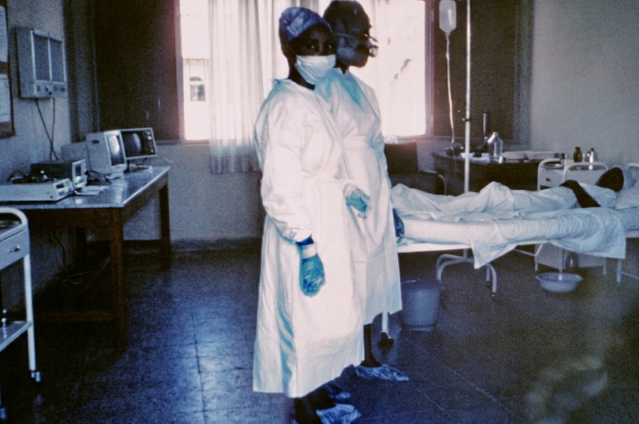
Imagine this scene to understand the topic for today’s article:- Generators died around 2 in the morning, and the quiet after becomes heavier than anything else. Fans would stop, and lights would go out. Then comes the breathing from the far ward.
A doctor, fixing an IV for this boy named Kofi, whose mother held the medical professional’s wrist when everything shut down. She did not have much strength left, but it felt desperate anyway, referring to the headlamp that showed blood near his mouth. Nurses sometimes mentioned that the look where the eyes would go flat, and the skin looked horribly damp. The promise-making stops once the doctor notices it. Outside, the rain had turned the road into mud. Trucks could not get through till light. The last one had already left earlier with bags in the back.
The doctor, eventually, you finally realise that Ebola does not really come from reading about it. It shows up when a glove tears or you stand close during a cough. Or when you decide at night whether to step back inside. Now, step back in.
This, unfortunately, is one of the many tales of the active and severe outbreak of Ebola that is unfolding in Central Africa. It has caused the World Health Organisation (WHO) to officially declare it a Public Health Emergency of International Concern (PHEIC). The crisis is highly challenging because it is driven by the Bundibugyo strain, a rarer variant of the virus for which there are no approved specific vaccines or therapeutics.
What is Ebola and Its Types?
Ebola Disease is a severe, frequently fatal illness in humans caused by orthoebolaviruses (members of the Filoviridae family). The virus is transmitted to people from wild animals (like fruit bats) and spreads through human-to-human transmission via direct contact with the blood, secretions, or bodily fluids of infected individuals. There are six identified species of the virus, four of which cause disease in humans:
- Ebola virus (Zaire ebolavirus): Historically, the deadliest and most common strain. It has an average case fatality rate of around 60% to 90%. Highly effective vaccines (like Ervebo) exist only for this strain.
- Sudan virus (Sudan ebolavirus): Caused major outbreaks in Sudan and Uganda (most recently in late 2022). Fatality rates average around 50%.
- Bundibugyo virus (Bundibugyo ebolavirus): The strain driving the current active outbreak. Discovered in 2007, it has a historically lower but still severe fatality rate (around 25% to 50%). Crucially, Zaire ebolavirus vaccines do not protect against it.
- Taï Forest virus: Extremely rare, with only one human case ever documented (the patient survived).
- Beston & Bombali viruses: The other two species; they are found in animals (pigs/monkeys/bats) but have not been shown to cause illness in humans.
History of Ebola (Timeline)
The virus showed up back in 1976 in two places at once, one near the river in what is now the DRC and another spot in Sudan. After that, it stayed quiet for a really long stretch, maybe fifteen years with no cases at all. That part is actually quite easy to miss in comparison to when people talk about how it spreads now.
Then, around 2007, a different strain popped up in Uganda for the first time. It was called Bundibugyo, and over a hundred people were sick in that district. The numbers were not huge, but it was something new. Later, the really big one hit in 2014 across Guinea, Liberia, and Sierra Leone. That epidemic went into cities, which had not happened before, and the deaths added up fast. This is due to the fact that historically, Bundibugyo and Sudan strain outbreaks have been largely contained within isolated, rural forested zones. The active crisis represents a dangerous shift because the virus has successfully bridged the gap into densely populated urban and semi-urban centres.
There was also this long outbreak in eastern DRC that dragged on for almost two years starting in 2018. It killed over two thousand people, and there was fighting in the area at the same time. It seems like things just kept getting more complicated with movement across borders. Now it looks like another one is starting in Ituri and reaching into Uganda by 2026. There is no vaccine ready right away, so that might be why it feels different. The whole pattern with urban areas is sort of shifting. The urban threat is primarily driven by three factors:
The first one can easily be attributed to the capital of Uganda, Kampala, alongside the neighbouring district of Wakiso, with already registered confirmed cases. It is a high-density trade hub of millions of people. Unlike a remote village where a contact tracer can physically map an entire community, a single infected individual in an urban transit centre or crowded market can expose hundreds of untraceable strangers in a matter of hours.
Expanding on the issue, the border between eastern DRC (Ituri and North Kivu) and western Uganda is heavily trafficked by informal traders, miners, and agricultural workers. While official Points of Entry (PoEs) feature health screenings, there are hundreds of unmonitored, informal dirt tracks crossing the border. Sick individuals seeking better healthcare options frequently cross these informal borders undetected, seeding new clusters directly into urban transit networks.
Lastly, because early "dry" symptoms of the Bundibugyo strain perfectly mimic endemic urban diseases like malaria, typhoid, or severe seasonal flu, infected individuals frequently navigate multiple crowded public transport vehicles and private community clinics before anyone suspects Ebola. This vastly inflates the number of high-risk exposures.
Causes of the Active Outbreak
An Ebola outbreak starts when a person comes into contact with the bodily fluids of an infected fruit bat or non-human primate, like chimps or monkeys. However, there were specific reasons why this illness quickly turned into a regional crisis. First, a healthcare worker who had the disease died in Bunia, DRC, in late April. They then brought the body to Mongbwalu for a funeral, which involved touching the deceased—a practice that really boosted the virus's spread. To make matters worse, the vaccine didn't work against the Bundibugyo strain of the virus. Health workers couldn't use their usual method of vaccinating contacts to halt the outbreak. And let's not forget, this is all happening in a conflict zone with lots of rebel groups. These attacks make contact tracing dangerous and have led to assaults on treatment centres. So, it's a complex mess of cultural practices, unavailable treatments, and war.
Clinical Symptoms and Incubation Stages
From day 2 to 21, after you get the Ebola virus, you won't show any symptoms, but that doesn't mean everything's fine. The virus is busy copying itself within your immune cells, and you can't give it to anyone yet. Once those 2 to 21 days (with an average around 8-10) are up, things change fast.
Ebola starts super abruptly, and at first, it looks like just another illness, such as malaria, typhoid, or the flu. This early phase includes that classic duo: really high fever (often above 38.3°C or 101°F), plus extreme fatigue that's hard to shake. It hits your joints and muscles too, causing intense pain. You'll probably also deal with a killer headache and a sore throat that feels raw.
By days 4 to 7 of being sick or even longer, Ebola ramps up to its most dangerous phase. The virus goes full-on destructive, wrecking your insides and boosting inflammation everywhere. This shift makes Ebola way more contagious, coming with some terrifying symptoms people call the "wet" phase. Severe watery diarrhoea, non-stop vomiting, and intense stomach pain signal gastrointestinal rupture, leading to big fluid losses and quick dehydration. Next, organ failure happens when the virus assaults the kidneys and the liver, making it hard for them to remove toxins. Confusion or severe restlessness may follow. For about half of patients, the "hemorrhagic phase" means blood clotting fails. This brings internal and external bleeding, seen through bruising, red eyes, bloody gums, and blood in vomit and poop. If the virus is fatal, people usually die within 6 to 16 days from that first sign, typically due to hypovolemic shock – the cardiovascular system collapses because of all the fluid lost.
How Health Workers Perform Contact Tracing
When a patient tests positive for Ebola at a treatment centre, the first move is to interview them—or their family if the patient can't be contacted due to illness. During this chat, health workers create a detailed timeline of everyone the patient was close to from the start of their sickness. Next up, they track down all those names and sort the contacts into risk levels. People who touched the patient's bodily fluids, shared beds, or handled their used clothes and sheets are labelled high-risk. For low-risk folks, it's just being in the same room or having casual, non-fluid contact.
To execute the 21 Days of Active Monitoring, community health workers visit contacts daily. They've got assigned lists and check each contact every day for 21 days. This covers the virus's longest incubation period. During these visits, workers take temperatures and watch for early symptoms, like headaches or sore throats. If a worker finds a fever or the person feels off, they're labelled a "suspected case." The tracer then calls in a special transport team to move the person to an isolation ward right away. This stops them from spreading the virus within their home.
The Reality of Tracing in the Fields
Contact tracing seems simple enough, but it gets way more complicated in places like the eastern Democratic Republic of the Congo or Uganda's border areas. There, it runs into serious issues. A big problem is mass displacement - As rebels stir up conflict in Ituri and North Kivu, thousands flee. So a contact tracer might track someone down only to have them disappear to another camp by the next day.
Deep-seated mistrust from decades of violence doesn't help either. Community members often doubt outsiders, especially those in biohazard gear. Because of this, some families hide their sick or quietly bury loved ones at night, avoiding official care.
On top of that, security risks make things dangerous. With armed groups all over, contact tracers need protection just to do their jobs. At times, the area gets too unsafe for them to work at all, letting the disease run wild and unchecked.
Country Impact & Statistics
The World Health Organisation (WHO) and CDC drastically cleaned up and downsized the initial raw data to align with verified clinical laboratory results.
Impact on the Democratic Republic of the Congo (DRC)
The DRC is bearing the absolute brunt of the virus, compounding an already catastrophic humanitarian timeline where 27 million citizens face acute food insecurity.
- Confirmed Cases: 321
- Suspected/Probable Cases: 116
- Confirmed Deaths: 48 (with over 240 suspected community deaths being actively investigated)
- The Healthcare Crisis: Roughly 20% of the recorded case-patients are frontline healthcare workers. At least four doctors/nurses died in early clusters due to gaps in Infection Prevention and Control (IPC) infrastructure, threatening to collapse local clinical capacity
Impact on Uganda
Uganda has been pulled directly into the outbreak because of intense regional mobility and cross-border trade networks.
- Confirmed Cases: 11 (including cases in the capital city of Kampala)
- Confirmed Deaths: 1 (plus 1 probable death)
- Border Restrictions: Uganda has taken the drastic measure of shutting portions of its land border with the DRC to stem the tide of high-risk migration, separating families and stymying local trade markets.
How the World is Responding & International Aid
Because of the 2026 FIFA World Cup and increased travel, global health groups and Western countries are acting fast to avoid a big panic. They're focusing on domestic and border protections. In the U.S., the CDC is serious about keeping things under control. They require anyone coming from the DRC, Uganda, or South Sudan in the last 21 days to land at special airports for extra checks. CDC leaders even called for more staff volunteers to help at the borders.
It's not just the U.S.; neighbouring countries are stepping up too. South Sudan, Burundi, and Ethiopia have put their major airports on high alert. They set up screening and quarantine areas at entry points. Also, financial and humanitarian aid is quickly turning from plans into actual help on the ground. International aid is becoming real, not just what's in textbooks anymore. The United States (Dept. of State / USAID) alone has donated $162 Million (Along with $350M to OCHA regional allocations) to finance personal protective equipment (PPE) shipments, establish a 40-bed emergency care facility through Samaritan's Purse, and support UNICEF's water and sanitation improvements in 48 local health zones.
The second key player in this situation is the Pandemic Fund, with $220.6 Million in donations for swift grant funding to enhance cross-border monitoring, upgrade regional laboratory testing assets, and fund localised contact-tracing. Then comes the
World Bank Group, with the “Existing Portfolio Drawdown”, using the "Crisis Response Toolkit," to enable the DRC government to promptly reallocate current funds for paying frontline health workers and deploying epidemiologists. Lastly, we have the CEPI (Coalition for Epidemic Preparedness Innovations), who have given
$50 Million in swift allocation to Moderna to accelerate preclinical development and Phase 1 human trials for a new mRNA vaccine candidate specific to Bundibugyo. Humanitarian NGOs like the International Rescue Committee (IRC) and International Medical Corps (IMC) have physically deployed rapid response teams to set up isolation tents, distribute chlorine disinfectants, and run radio broadcasts in 10 local languages to counter medical misinformation.
Citations
- Ebola disease
- IsraAID launches Ebola response in Uganda & DRC - IsraAID
- Ebola Disease Outbreak in the Democratic Republic of the Congo and Uganda | HAN | CDC
- Ebola outbreak in DRC: What to know and how to help | The IRC
- The Ebola outbreak started weeks ago, officials say. Here's a timeline of what we know | PBS News
- https://reliefweb.int
- Ebola Outbreak, DRC and Region, Situation Report #5, June 2, 2026 - Democratic Republic of the Congo | ReliefWeb
- https://www.cidrap.umn.edu