

At 6 in the morning, Raju pushes his vegetable cart through Dadar market when his phone suddenly buzzes with a voice note in Marathi from a WhatsApp bot, telling him that tomato prices in Vashi APMC are down by ₹3 today. He adjusts his rates before the first customer arrives. While this was happening, around the same time in Koramangala, Priya asked her smart speaker for a 7-minute HIIT workout. The AI coach recalled her knee injury from last week and swapped burpees for modified squats without her asking.
In Kochi, a 68-year-old Meenakshi Amma would open her phone camera at 6:10 in the morning, where the app reads her handwritten glucose log out loud and flags that yesterday’s reading was high. In return, a Malayalam text would pop up on her son’s phone, stating the blood sugar level while giving a reminder to call her back after a few minutes. In short, by 6: 30 in the morning, a farmer in Punjab, a startup founder in Bengaluru, and a grandmother in Kerala have all used AI, but with different names and aspects such as “the price check,” “my workout,” or “the sugar app.”
Now, as we are in the middle of 2026, Artificial Intelligence isn’t a lab experiment or a tech CEO’s keynote. It has penetrated the auto driver’s life by using live traffic prediction to skip a jam, the Class 10 student in Bhopal who daily asks ChatGPT to explain photosynthesis in Hindi, as well as the ASHA worker whose app translates a Bhojpuri symptom into a triage code for the PHC doctor. The importance of AI lies not in how simply powerful it is, but rather in how invisible it has become. It has woven into the daily decisions of people who never signed up to be “tech users.” From mandis to metros, from classrooms to clinics, AI is now the default assistant for daily life. This article explores how that happened, who it’s helping, who it’s leaving behind, and what it means when the most important technology of our era is also the one we notice the least.
Artificial Intelligence: An Overview
Artificial Intelligence (AI) is a technology that enables machines and computers to perform tasks that typically require human intelligence. It allows systems to learn from data, recognise patterns, and make decisions to solve complex problems.
- Simulates human intelligence through learning and reasoning.
- Processes large amounts of data to identify patterns and insights.
- Continuously improves performance using experience and feedback.
Artificial Intelligence (AI) can be classified in two main ways - either by capabilities or by functionalities, and each of them offers a different perspective on how AI systems evolve and operate.
By capabilities, AI can be further divided and labelled as follows:
- Narrow AI (Weak AI): This refers to the AI that is specialised in a single task, such as voice assistants (Siri, Alexa) or recommendation engines. It cannot perform outside its predefined scope and lacks general reasoning abilities.
- General AI (Strong AI): This refers to the theoretical AI that can be used to perform any intellectual task a human can, as they possess the ability to learn and adapt across domains. This remains unrealised but is the goal of advanced AI research.
- Superintelligence (Super AI): A speculative form of AI where they surpass human intelligence across all interdisciplinary aspects, including creativity, decision-making, and emotional understanding. This one most of the time raises significant ethical and control concerns.
By functionality, AI consists of the following types other than the three:
- Reactive Machines: It is the most basic type of AI that responds only to current inputs without memory. Examples include IBM’s Deep Blue and early Google AlphaGo.
- Limited Memory AI: This type of AI uses past data for short-term decision-making. It is the most common in self-driving cars and chatbots that remember recent interactions.
- Theory of Mind AI: Currently in the stage of development, it is aimed at understanding human emotions, beliefs, and intentions for more natural interactions.
- Self-Aware AI: A hypothetical AI that has consciousness as well as self-awareness; it is capable of independent goals and moral reasoning.
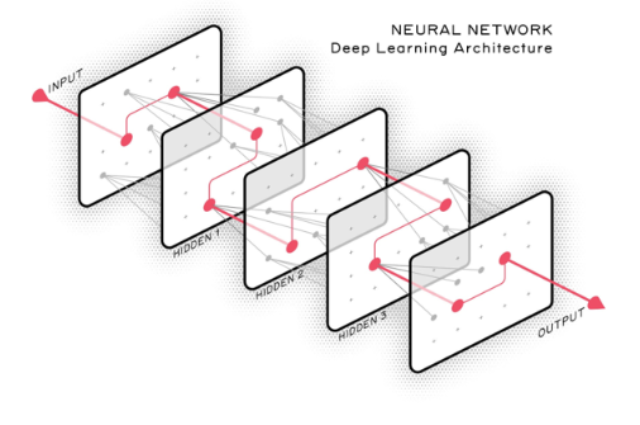
Another aspect when covering AI is that modern AI, specifically deep learning, operates as a highly complex statistical pattern-matching engine rather than a sentient, conscious entity. The operational stack relies on a few fundamental layers. The first layer involves the embeddings and ingestion of data, as AI cannot process words or raw pixels directly. Here, the incoming information is broken down into numerical tokens and mapped into high-dimensional geometric shapes, a.k.a. embeddings. Words with similar contextual meanings sit closer to each other inside the mathematical map.
The second layer is called neural network training. To understand this better, think of a neural network as billions of microscopic mathematical dials. During training, the system makes a prediction, measures how incorrect it was against real-world data, and uses an algorithm called backpropagation to adjust those dials. With exposure to over trillions of data points, the system optimises its internal pathways.
The next layer involves modern generative systems relying heavily on the Transformer layout, whose primary tool is the Self-Attention mechanism, which allows the model to look at an entire body of text simultaneously and calculate how different words relate to each other regardless of physical distance. This is how it instantly knows whether the word “fly” means an insect or an action based purely on context clues.
The last layer involves inference, where once the network’s dials are fixed, it enters execution mode. When given a prompt, it runs calculations to generate the most statistically probable next token, building out text, images, or code piece by piece.
AI: Timeline and Evolution
The journey of Artificial Intelligence (AI) has moved from hard-coded logic to fluid, pattern-seeking networks.
Foundations & Symbolic AI (1950s–1970s)
The term was coined at the Dartmouth Workshop in 1956. Here, AI began as an exploration of rule-based systems. Alan Turing introduced the Turing Test, and programmers built early expert systems meant to map human logic using rigid, hand-coded “if-then” statements.
The AI Winters & Neural Renaissance (1970s–1990s)
As early optimism collapsed under heavy computational bottlenecks, research funding dried up twice, causing the “AI Winters.” However, the discovery of effective backpropagation (error-correction math) kept subsurface research alive, culminating in IBM’s Deep Blue defeating grandmaster Garry Kasparov at chess in 1997.
The Deep Learning Boom (2000s–2010s)
With the arrival of internet-scale data (such as the ImageNet database in 2012)and highly parallel consumer GPUs, machine learning pivoted completely. Instead of humans teaching code the rules, deep neural networks began discovering complex features on their own, highlighted by AlphaGo’s historic victory over human champions in 2016.
The Generative Era & The Agentic Shift (2020–2026)
Large Language Models (LLMs) transformed AI into an interactive layer for language, media, and code. The current landscape has scaled beyond simple chat boxes into Agentic AI—autonomous systems capable of multi-step reasoning, self-correction, tool integration, and massive state-backed execution grids.
The Impact of AI: Global vs. India
Global Impact
Worldwide, AI has rewritten the boundaries of knowledge work, significantly accelerating developer output, compressing administrative overhead, and transforming automated scientific research. A distinct geopolitical blueprint has emerged: while Silicon Valley drives venture commercialisation and Beijing targets techno-statism, the Global South—anchored tightly by India’s lead at the India–AI Impact Summit 2026—is actively pioneering open-source, affordable, and highly inclusive digital public goods.
Regional Impact on India
India’s AI strategy is deeply decentralised through the nationwide ₹10,300-crore IndiaAI Mission, intentionally deploying compute resources and localised models across specific geographic zones.
To start with Southern India, it is anchored by tier 1 tech hubs like Bengaluru, Hyderabad and Thiruvananthapuram. The region leads the charge in core software architectures and deep-tech startups. Milestones focus heavily on commercial infrastructure, securing massive multi-billion rupee MoUs for AI-ready data centre parks (such as Telangana’s 1 GW hyper-scale clusters) alongside enterprise workforce skilling. In the Northern ones like Delhi-NCR, Uttar Pradesh and Rajasthan, it focuses heavily on implementing AI within public welfare networks. The Central Government’s BHASHINI platform is a core driver here, enabling AI real-time translation across 22 regional languages to give rural communities direct, voice-driven access to judicial and welfare programs.
The next region, the Western corridor, is centred around Mumbai and Gujarat’s GIFT City. It dominates in AI deployment in the financial sectors—ranging from automated fraud detection engines to high-frequency trading compliance. Concurrently, manufacturing zones in Maharashtra leverage industrial computer vision to automate supply chains and quality checks. In the East, however, states like Odisha and West Bengal are leveraging AI like the North to manage large-scale civic logistics and public transport dispatch systems, but they have expanded it to industrial automation inside mining and metallurgical plants to maximise raw resource output safely.
Spotlighted recently by the Regional AI Impact Conference in Shillong, the North-East state, a.k.a the Ashtalakshmi states, are utilising AI to leapfrog historical infrastructure gaps. Notable deployments include 5G-enabled telemedicine networks in remote terrains, drone-assisted precision farming platforms (like AgSpert in Assam), and linguistic archiving AI models built to protect more than 200 distinct tribal dialects.
Lastly, in the Central region, which crosses Madhya Pradesh and Chhattisgarh, the impact relies on localised citizen platforms. A key example includes voice-powered chatbots like “Kisan e-Mitra,” which fluently parse regional rural dialects to answer millions of queries regarding state agricultural schemes and market crop valuations.
AI: Subjective vs. Objective
AI performance varies drastically based on whether a task requires definitive logical verification or interpretive creativity.
| Dimension | Objective AI | Subjective AI |
| Core Concept | Solves deterministic tasks governed by clear mathematical laws or binary factual truths | Simulates qualitative tasks involving tone, artistic style, perspective, and human context. |
| Primary Use Cases | Code syntax error debugging, medical scan tumour classifications, data sorting, mathematical operations. | Creative copywriting, open-ended brainstorming, artistic synthesis, conversational text mimicry. |
| Major Strengths | Absolute consistency, lack of hallucinations, mathematically verifiable accuracy. | Immense linguistic flexibility, cross-disciplinary contextual synthesis, rapid stylistic adaptation. |
| Core Failure Mode | Collapses completely when rules are poorly defined, or training inputs are chaotic. | Prone to confident fabrications (hallucinations), cultural biases, and lacks genuine emotional understanding. |
The Jagged Edges of AI
The “jagged edge” of AI represents the boundary where AI excels at scale, speed and pattern recognition, but human judgement, strategy and contextual understanding remain essential. In other words, the jagged edge refers to the uneven performance of AI systems, particularly generative AI and large language models (LLMs), which can be superhuman in some tasks like coding, research, or predictive modelling, yet struggle with basic reasoning, common sense, or multi-step problem-solving.
This unevenness means that AI is highly effective within its capabilities but can degrade performance when applied beyond these boundaries. Organisations, therefore, must recognise these limitations in order to stop overtrusting AI outputs. Here, three dominant patterns emerge:
- Humans in the Loop: AI runs continuously while humans monitor exceptions. It is mostly used in budget and buying allocation.
- Humans in the Loop: AI generates options while humans curate and decide. It is mostly used in creative and messaging work.
- System Design Focus: Humans define evaluation criteria, feedback mechanisms and constraints to prevent AI from solely optimising for short-term measurable outcomes like click-through rates.
Operational vs. Strategic Boundary
AI is transforming execution by making tasks like data processing, creative generation and optimisation faster and cheaper, collapsing traditional execution advantages. However, strategy remains human-driven by handling ambiguity, trade-offs, narrative framing, and risk decisions, which are the areas where judgment, context, and stakeholder alignment are critical. Hence, the most valuable operators are now system designers, not just executors, creating loops where AI generates options, humans evaluate them, and feedback refines the system.
As we move through 2026, the narrative of Artificial Intelligence has shifted from the wonder of “what it can do” to the quiet utility of “how it helps.” We have transcended the era of AI as a novelty or a specialised tool for the elite, entering a phase where it functions as a pervasive, invisible layer of our daily infrastructure. The journey from the rigid logic of the mid-20th century to the fluid, agentic systems of today has fundamentally altered the relationship between human intent and machine execution. By embedding itself into the rhythm of the mandi, the classroom, and the clinic, AI has proven that its true power lies not in the complexity of its neural networks, but in its ability to democratize access to information and efficiency.
However, this transition brings a necessary maturity to our understanding of the technology. Recognising the “jagged edges” of AI—where superhuman pattern recognition meets fragile, non-human reasoning—is now a critical life skill. We have learned that while AI is an unparalleled engine for execution, it is not a substitute for judgment. The future belongs to the “system designers”: those who treat AI not as a replacement for human intellect, but as a lever to be managed, curated, and constrained. Ultimately, the most successful integration of AI is marked by its own invisibility. When technology fades into the background, it stops being a hurdle and becomes an enabler, allowing a farmer, a founder, or a grandmother to navigate their day with more clarity and agency than ever before. We are no longer living in a world “powered by AI”—we are living in a world where AI has become the invisible language through which we solve the problems of daily life.
Citations:
- What is Artificial Intelligence (AI) - GeeksforGeeks
- Navigating the Jagged Technological Frontier: Field Experimental Evidence of the Effects of Artificial Intelligence on Knowledge Worker Productivity and Quality - Working Paper - Faculty & Research - Harvard Business School
- Medium
- [Solved] Where was the Regional Artificial Intelligence Impact Confer
- Discovering AI’s jagged frontier — and what we’ve learned since
- https://www.indiatoday.in
- Press Release Page | Press Information Bureau
- What is the jagged AI frontier? | MIT Sloan
- Where AI Ends, and Strategy Begins · Nyyon