
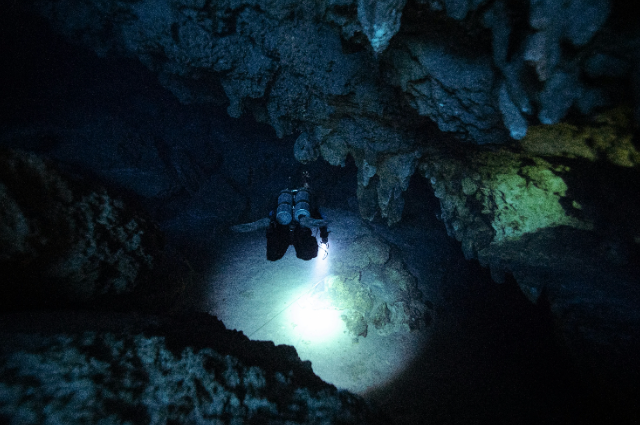
For the article today, I want you to feel this scenario: the submersible lights are now cut on at 3,000 meters, and the ocean stops being water. Above you, think about the monsoon clouds drowning in Mumbai. Down here, you realise that it hasn't rained in a million years. What you see is just pitch black, cold and pressure that would crush a car like foil, when suddenly, you feel the first flash of a jellyfish that is pulsing blue, like a living galaxy.
Then you will feel another one, and again comes another one. By 3,500 meters, the body will now be floating through a constellation of creatures no human had names for yet. Your job is simple: log to the methane seeps for a climate survey, but you won’t remember that part. Rather, you’ll recall the pilot whispering, “Look,” pointing to the silt floor where a field of white crabs swarmed around a hydrothermal vent, alive in a place that should have been dead.
No sunlight. No plants. Just chemistry, heat, and a whole ecosystem running on rules we didn’t write. That’s when it hit me: we live on a blue planet, but we only know the skin of it. The deep sea is 95% of Earth’s living space. It regulates our monsoons, buries our carbon, grows half the oxygen we breathe through microbes we can’t see. Your painkiller might come from a sponge at 2,000 meters. Your future antibiotic might be swimming past my window right now. We explore space for wonder. We explore the deep sea because we have to. Every storm, every breath, every bite of fish traces back to that dark world. We just don’t visit it often. So we dive. Not just to see what’s down there — but to understand why the surface world we love can’t exist without it.
Therefore, the deep, in simpler words, is the Earth’s largest as well as most mysterious biome. While it covers over 60% of the planet's surface, we humans have better maps of the surface of Mars than our own ocean floor. Far from a barren void, the deep ocean is a complex, hyper-specialised engine that keeps our planet habitable.
The Deep Sea & Why It Keeps Us Alive
The “deep sea” technically starts where the sunlight fades, i.e. around 200 meters (656 feet) down. Beyond this point, the ocean provides over 90% of all liveable space on Earth. Its critical global importance lies in its three key functions:
- The Planet’s Ultimate Heat Sink: The ocean has absorbed over 90% of the excess heat generated by human-induced greenhouse gas emissions.
- The Carbon Pump: It sequesters roughly 25% to 30% of global carbon dioxide (CO2) emissions. Dead organisms and organic matter sink to the abyssal plains in a process called "marine snow," locking carbon away for millennia.
- Medical Frontiers: Deep-sea microbes and organisms surviving in extreme conditions have unique chemical compounds. Enzymes isolated from hydrothermal vent bacteria are vital for PCR testing, cancer treatments, and advanced antibiotics.
The main importance of deep-sea environments can also be aesthetic, as it possesses several unique habitats such as:
- Hydrothermal Vents: Emit mineral-rich, superheated water, supporting chemosynthetic communities
- Cold Seeps: Release hydrocarbon-rich fluids, providing energy for specialised organisms
- Abyssal Seamounts and Plains: Host diverse microbial and animal communities, often on polymetallic nodules formed over millions of years
To understand this better, one has to analyse the layers of the water body and its inhabitants - after all, the ocean is divided into five distinct vertical zones based on depth, light penetration, and pressure:
| Zone | Depth Range | Environmental Conditions | Representative Fauna |
| Epipelagic (Sunlight Zone) | 0 – 200m | Abundant light; active photosynthesis; variable temperatures | Tuna, Dolphins, Great White Sharks, Coral Reefs, Sea Turtles. |
| Mesopelagic (Twilight Zone) | 200m – 1,000m | Dim light; no photosynthesis; rapid temperature drop (thermocline). | Lanternfish, Bristlemouths, Cuttlefish, Firefly Squid. |
| Bathypelagic (Midnight Zone) | 1,000m – 4,000m | Absolute darkness; pitch black; constant temperature around 4°C. | Anglerfish, Gulper Eels, Vampire Squid, Fangtooth Fish. |
| Abyssopelagic (Abyssal Plain) | 4,000m – 6,000m | Freezing temperatures; crushing pressure; seafloor covered in mineral nodules. | Tripod Fish, Giant Isopods, Dumbo Octopuses, Abyssal Sea Cucumbers. |
| Hadalpelagic (The Trenches) | 6,000m – 11,000m | Extreme deep trenches; pressure up to 8 tons per square inch. | Mariana Snailfish, Supergiant Amphipods, specialised barophilic microbes. |
Are Deep-Sea Creatures “Real Monsters”
Pop culture loves to depict deep-sea animals as the terrifying leviathans with massive fangs, grotesque shapes and glowing eyes. However, if you look at their environment, beautiful examples of evolutionary survival.
- The Myth of Giant Teeth: Animals like the Fangtooth or Gulper Eel look terrifying because of their disproportionately massive jaws and teeth. In reality, food is incredibly scarce in the deep. When an animal encounters a meal, it must trap and swallow it, even if the prey is larger than itself.
- The Reality of Size: While "deep-sea gigantism" exists in invertebrates (like the Giant Isopod or Giant Squid), most deep-sea fish are surprisingly small. The average deep-sea anglerfish is no bigger than a teacup or a tennis ball.
- Bioluminescence: Over 75% of deep-sea creatures generate their own light. They use it as a flashlight, a silent language to find mates, or a trap to lure food.
- Squishy Bodies: They don't get crushed by the weight of the water because their bodies are mostly water and gelatinous tissue. They lack air-filled spaces (like the swim bladders found in shallow-water fish) that would collapse under pressure.
The Environmental Crisis: Out of the Dark and Into Danger
In recent years, deep-sea creatures have become increasingly visible to the public. With massive die offs, rare sightings, and exploratory footage have brought this world into focus. This visibility is a warning sign of profound environmental disruption.
Deep-Sea Mining (DSM)
Industrial consortia are targeting the abyssal plains to mine polymetallic nodules: potato-sized rocks that are rich in nickel, manganese, cobalt and copper are being extracted for green tech batteries. In other words, the threat lies in the heavy machinery that is scraping the seafloor, destroying the fragile benthic ecosystems that took millions of years to form.
This is because the mining kicks up massive underwater sediment plumes that travel hundreds of kilometres, choking filter-feeding animals in the twilight and midnight zones, blocking what little light exists.
Ocean Carbon Capture Geoengineering
Desperate to curb global warming, scientists and companies are currently injecting liquid CO2 directly into the deep sea or rather, exploring “ocean iron fertilisation”. The threat lies in artificially shifting carbon to the deep sea, which accelerates deep-ocean acidification, lowering the pH of the water. This makes it impossible for deep-sea organisms to maintain their cell structures/shells, risking ecological collapse at the base of the food web.
Warming and Deoxygenation
Climate change is slowing down global ocean currents. Warmer surface waters hold less oxygen and prevent nutrients from mixing downwards. This creates widening "oxygen minimum zones" in the deep sea, effectively suffocating deep-water species or forcing them out of their natural habitats into shallower waters where they are exposed and vulnerable.
International Key Players
The battle over the deep sea is a massive geopolitical chess match centred around the International Seabed Authority (ISA), which is the UN body responsible for the regulation of international waters, a.k.a “The Area.”
| The Pro-Mining Coalition (China, Russia, Nauru) | The Moratorium Block (Germany, France, Canada, Pacific Nations) | The High Seas Treaty (BBN) |
| • China holds the maximum number of active ISA exploration contracts and dominates the processing of critical minerals. | • More than 25 countries are demanding a precautionary pause or ban on deep-sea mining. | • After securing over 60 ratifications, the landmark High Seas Treaty entered into force in January 2026. |
| • Small island states like Nauru have invoked legal clauses forcing the ISA to consider commercial mining applications, acting alongside Western mining corporations (e.g., The Metals Company). | • They argue that we know too little about the ecological fallout to risk extraction. | • It allows for the creation of Marine Protected Areas (MPAs) in international waters, setting up a direct legal clash with deep-sea mining interests. |
India’s Position: Local Practices & Foreign Policy Friction
India is attempting a difficult balancing act, trying to champion ocean conservation while simultaneously securing deep-sea minerals to fuel its green transition and compete with China.
| Local Practices & Ambitions | The Foreign Policy Gap & Treaty Failures |
| • India launched its ambitious Deep Ocean Mission (DOM) with an allocated budget of over ₹4,077 crore. | • The BBNJ Ratification Lag: India signed the historic High Seas (BBNJ) Treaty in September 2024. However, as of mid-2026, India has still not ratified the treaty. This delay weakens India's standing as a leader of the Global South, signalling to the international community that its resource extraction ambitions take priority over binding ocean conservation. |
| • The flagship project is MATSYA-6000, an indigenous manned submersible designed to take three scientists down 6,000 meters into the Central Indian Ocean Basin. | • Geopolitical Traps: India's ocean foreign policy is deeply reactionary, driven by fear of Chinese maritime dominance in the Indian Ocean. In its race to match China's deep-sea exploration footprints, New Delhi has soft-pedalled environmental caution at the ISA, ignoring domestic scientific warnings about disrupting the Indian Ocean's fragile thermal structure. |
| • The goal is to explore India's allocated 75,000 square kilometres for polymetallic nodules. |
Regional Impacts Across India
The health of the deep directly governs the weather and economies of the subcontinent. Deep-ocean disruptions are triggering localised ecological crises across every zone of India:
| Regions | States Covered: |
| The Coastal & Island Regions | Lakshadweep Islands: a. Low-lying coral atolls under immediate threat b. Deep-sea acidification dissolves structural foundations of coral reefs c. Shifts in deep-water currents disrupt regional upwelling, causing a massive drop in pelagic tuna population (economy of islanders’) |
Andaman and Nicobar Islands: a. Deep exploration - shocks fragile, endemic deep-water marine life b. Recent surveys by the Centre for Marine Living Resources and Ecology (CMLRE) discovered dozens of potential new species here that are under threat before they can even be named. |
| Peninsular & Mainland India | South India: a. Unregulated, deep bottom-trawling practices by commercial fleets smashed shallow benthic habitats. b. Changes in the deep-ocean conveyor belt are altering sea-surface temperatures. c. Marine heatwaves and severe collapse of traditional fisheries of mackerel and sardine. |
West India: a. Arabian Sea warms faster than almost any body of water, creating massive hypoxic (zero-oxygen) dead zones in deeper columns. b. Deep-sea creatures are being driven to coasts. c. Shifting marine energy is generating hyper-intensified cyclonic storms hitting Mumbai and Gujarat coastlines. |
East India: a. Bay of Bengal is plagued by massive agricultural runoff, creating deep-water dead zones. b. Exploratory deep-sea mining process in nearby Indian Ocean basin mitigated to the north, choking out the local deep-sea fan systems and destabilising coastal fishing security for millions. |
| Landlocked Regions | North & Northeast India: a. The Indian monsoon is powered entirely by the thermal engine of the Indian Ocean. b. Disruption to deep-water temperature regulation throws off weather patterns, causing extreme cloudbursts in Himachal Pradesh and Uttarakhand c. Severe, erratic flooding along the Brahmaputra in Assam. |
Central India: a. Massive carbon footprint from coal mining and heavy industrial belts in tribal heartlands feeds global atmospheric CO2 loop. b. The deep sea bears the burden of absorbing pollution, leading to an invisible marine crisis. c. Circles back to destabilise mainland India’s agricultural stability via weather disruptions. |
Citations
- PIB Deep Ocean Mission & Subsystems Profile
- ISRO Samudrayaan Project Development Overview
- Wikipedia: Matsya 6000
- WRI Explainer: High Seas Treaty Enters Into Force
- European Commission: UN High Seas Treaty Enforcement News
- UNTC BBNJ Agreement Depositary Status
- High Seas Alliance Ratification Tracker
- Wikipedia: High Seas Treaty