
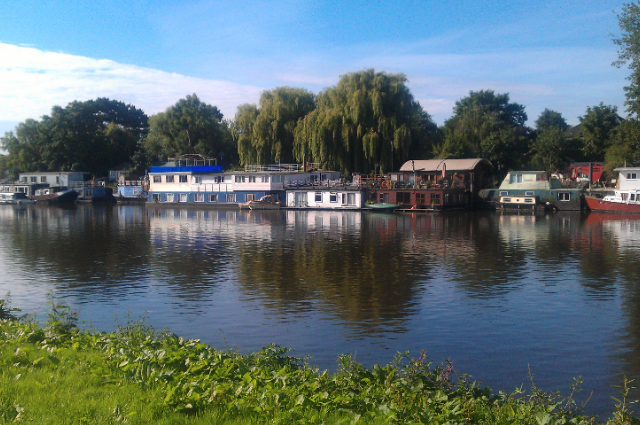
In the mid twentieth century, the River Thames in London was declared biologically dead. It was not a metaphor or an exaggeration. The water contained so little oxygen and such high levels of pollution that aquatic life could no longer survive. Fish had disappeared. The river that once defined a city had turned into a flowing grave of industrial waste and untreated sewage.
What made this situation remarkable was not just the scale of the damage, but what happened next. Over the next few decades, the Thames would become one of the cleanest urban rivers in the world. This transformation was not sudden. It was the result of policy, science, public pressure, and a collective willingness to correct past mistakes.
This is the real story of how a dying river forced a city to rethink its relationship with nature and rebuild it from the ground up.
The Slow Death of a River
The decline of the Thames did not happen overnight. During the Industrial Revolution, London became one of the fastest-growing cities in the world. Factories lined the riverbanks, discharging chemicals, heavy metals, and waste directly into the water. At the same time, the city’s sewage system was inadequate for its rapidly growing population.
By the eighteen fifties, the situation had already reached alarming levels. The Great Stink of 1858, when the smell of the polluted river became unbearable, forced the British Parliament to finally acknowledge the problem. Temporary measures were introduced, including the construction of a basic sewage system.
However, as industries expanded in the twentieth century, pollution worsened again. By the nineteen fifties, the river was declared biologically dead. It had lost its ability to support life.
A Turning Point
Declaring the Thames dead was a shocking moment, but it also became a turning point. Scientists, environmentalists, and policymakers began to push for long-term solutions. The realisation was clear. Economic growth without environmental responsibility had consequences that could no longer be ignored.
In the nineteen sixties and seventies, stricter regulations were introduced to control industrial discharge. Wastewater treatment facilities were upgraded. Monitoring systems were established to track pollution levels.
For the first time, the focus shifted from short-term fixes to sustainable management.
Science Meets Policy
One of the most important aspects of the Thames revival was the collaboration between scientists and policymakers. Environmental research played a key role in understanding the sources of pollution and identifying eƯective solutions.
Oxygen levels, chemical composition, and biodiversity indicators were carefully monitored. This data helped authorities make informed decisions and measure progress over time.
Investment in infrastructure was equally important. Modern sewage treatment plants were built to ensure that waste was properly processed before entering the river. These facilities significantly reduced the amount of harmful substances in the water.
The Return of Life
The most visible sign of recovery came with the return of aquatic life. Fish species that had disappeared for decades began to reappear. Today, the Thames supports more than one hundred species of fish, along with birds, seals, and even dolphins.
This revival was not just an environmental success. It was a psychological one. It showed that damage, even on a large scale, could be reversed with consistent eƯort.
The river, once considered beyond saving, became a symbol of resilience. Public Participation and Awareness
While government policies and scientific eƯorts were crucial, public participation played an equally important role. Awareness campaigns educated citizens about pollution and encouraged responsible behaviour.
Communities became more involved in conservation eƯorts. Clean-up drives, educational programs, and local initiatives helped build a sense of ownership.
People began to see the river not as a dumping ground, but as a shared resource that needed protection.
Lessons for the World
The story of the Thames is not just about one river in one city. It oƯers valuable lessons for countries around the world, especially those facing similar challenges.
First, it highlights the importance of early intervention. Environmental damage becomes more diƯicult and expensive to reverse over time.
Second, it shows that policy and enforcement are essential. Without strict regulations, industries often prioritise profit over sustainability.
Third, it demonstrates the power of collaboration. Governments, scientists, and citizens must work together to achieve lasting change.
A Reflection for Developing Nations
Countries like India, which are experiencing rapid urbanisation and industrial growth, can learn from this example. Rivers such as the Ganga and Yamuna face significant pollution challenges, similar to what the Thames experienced in the past.
The Thames revival proves that improvement is possible. However, it requires long-term commitment, investment, and public cooperation.
It also requires a shift in mindset. Economic development and environmental protection must go hand in hand.
The Cost of Neglect and the Value of Action
The story of the Thames is a reminder that neglect has consequences. For decades, the river was treated as a convenient waste disposal system. The result was environmental collapse.
At the same time, it is also a story of hope. It shows that action, even if delayed, can make a diƯerence.
The cost of restoration was high, both financially and in terms of eƯort. But the benefits far outweighed the investment. A cleaner river improved public health, boosted tourism, and enhanced the quality of life.
The revival of the Thames is a powerful real-life story of failure, realisation, and recovery. It challenges the assumption that environmental damage is irreversible.
More importantly, it emphasises responsibility. The health of natural resources depends on the choices made by individuals, communities, and governments.
Today, the Thames flows not as a symbol of pollution, but as a testament to what can be achieved when a society chooses to act.
It is a reminder that even when something seems beyond saving, change is still possible.
And sometimes, saving a river can help a city breathe again.