
Author’s Note:
If parts of this feel unfamiliar, that is expected.
And if you find yourself unsettled by what you recognize, sit with it.
Some stories are not meant to comfort.
Only to remain.
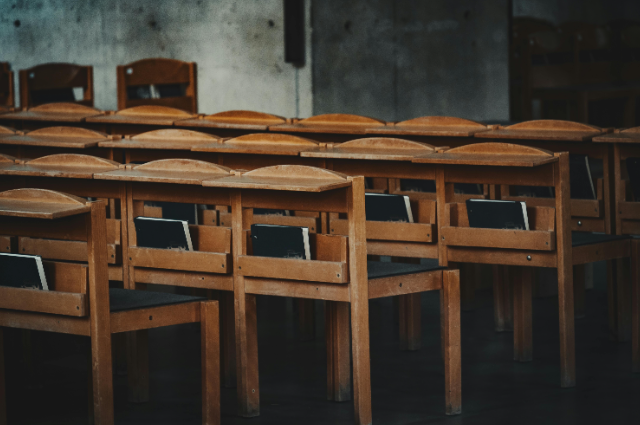
The hierarchy of an Indian classroom isn't decided by grades; it’s decided by where you stand. Some are the pulse of the class. Others are the walls—witnesses who never intrude but hold the room together. And beneath that silent order, school buzzes on in its ordinary chaos:
The frenzy of exam season.
Last-minute homework sagas.
The smell of rain on damp uniforms.
Chalk dust was sprayed on a blackboard.
And yet, this belonging comes at a cost:
A disastrous exam.
An empty seat where a friend should be.
An incompetent mentor.
A teacher who treats a misplaced comma as a moral failing.
When the farewell eve arrives, nostalgia floods the corridors as students bid their last goodbye under the toll of the final bell.
It's the only time the ringing sound of the gong doesn't bring relief or riddance from the maths teacher, but rather an unspoken lump in the throat.
The Lunch Box
A nine-year-old sat by her desk, etching doodles into the wooden platform. The lunch-hour breeze drifted through the casement, while algebraic equations lay undisturbed on the blackboard.
As she watched everyone absorbed in gossip, she wondered if she would ever find someone to sit by her side.
While others bustled through the corridors to reunite with their allies, those thirty minutes, for her, were a dreaded vacuum — more nerve-racking than the stout Maths tutor. She studied her peers and tried to initiate conversations.
But friendship is a two-way street.
And she?
She was at a dead end.
Staring through the window, she whispered to herself:
Maybe friends are not for everyone.
Maybe I need to like myself first.
The Last Seat
On a brittle winter morning, savouring salt-crusted peanuts wrapped in a newspaper cone, she boarded the bus and leapt towards the first seat.
As she waved at her father, who was dressed as usual in his torn sweater and white kufi, she asked the older girls, “Kya mein yaha par baith sakti hoon?”
They tilted their heads and threw their bags onto the seats, pointing towards the back. The bus pulled past the flickering lamppost, and her father ran alongside it, yelling through the frosted glass:
“Bus ko roko! Give her a seat, she might fall!”
What followed was a clash of words and an agonised father. In a split-second, the windows were shut and the bus set off.
The next day, she noticed a grey pin pressed into her usual seat before she sat down and gently asked, “Is this yours? ”
They glanced at her in contempt.
And she didn't know what it meant.
The Crowd
Elementary school was a group of well-knit cliques. She began picking up their tones, their accents, their body language—everything that felt lesser and lesser like her.
With neatly plaited braids and a crisply ironed uniform, she greeted everyone warmly enough to earn a seat at the table and was convinced that — if you cannot find a place in a crowd, the flaw must lie within you.
Rehearsing relevant dialogues and abbreviations became the routine.
And yet, most of her time was spent in the last row of the bus, next to a grimy water bucket and a mop.
The Inkpot
On a chilly November night, she stayed up until dawn crafting handwritten cards and poems for her friends.
And when the clock ticked noon, she handed them the gifts—flowers and a soft white paper spelling out lovely adjectives for each letter of their names on the occasion of Friendship Day.
At the end of the break, there were giggles all around. She turned to see them clutching a crinkled brown paper. The ink was smudged, moist in tilted letters as it read:
F - Failure
A - Animal
R - Rude
I - Immature
D - Daunting
A - Arrogant”
It was her name.
Spelt correctly for the first time that day.
The real strife came during sports blocks and excursions. She spent so much time observing others that she forgot she had a voice of her own, something that had dried up in disuse. In logs and fragments, she started recording her existence.
Days designed for togetherness had a unique way of exposing absence.
The Manual
Location: Basheerbagh Stadium
The twenty-acre stadium is a desert.
She spent the hour alone tracing patterns in the dust:
A heart.
A bird.
A desert.
Ten trips to the loo.
And three books in the bag to carry:
one for when she's empty,
one for when better,
and one for when bored.
She leaned onto the Quran in her hand, in the hope that God would one day bring her a friend who would choose to sit by her side at lunch every day.
And back in the food court, she used to spend the time staring at the limping brown sparrow on the window pane.
It tapped at the broken wood, and in the same rhythm, Farida tapped back.
After the Last Bell
Farewell, eve arrived. She watched warm hugs and camera flashes fill the room—a dance of belonging she hadn't learned the steps to.
As the crowd moved towards the after-party, she followed for a few paces—habitual and hesitant—until she caught her reflection in a window.
She looked like an uncalled passenger on a cruise: someone there to hold the camera, but never the memory.
Jotting down in her journal, she asked herself:
Why would I grieve the loss of a bond I never had?
How can I mourn a connection that never existed in the first place?
As the music played, she went up the stairs to her classroom. The doodles on the desk felt rough under her fingers. She rubbed at them, and the graphite stayed on her skin as she took the lift to search for her parents.
Near the gate, a stray dog was lying on the ground. He looked up at her for a moment and stayed still as she ran her hand over his fur once more before standing up.
The breeze brushed past her face. It felt as warm as it did when she first joined school.
The Two-wheeler
Walking past the gate, she noticed her father. He was waiting for her on the scooter, his eyes squinting in frantic search. She waved at him. He waved back.
As she leapt onto the saddle and leaned her forehead against his back, the rough wool of his sweater scratched her cheek as she traced the torn holes and held him tighter.
He didn’t ask about the party or the people inside; he just reached back and revved the engine as he patted her hand and muttered “Koi baat nahi beti”.
She stole one last glimpse of that musty old building. A smile. A relief.
The cruise had then sailed on.
The lamppost stopped flickering.
The sparrow lifted into the night.
And somewhere between the dock and the dark,
She stopped being the uncalled passenger.