
A Real Journey of Passion, Courage, and Creation:
Some stories don’t begin with fireworks. They begin quietly—with coffee cups, half-finished conversations, and a table full of strangers who didn’t yet know that something extraordinary was about to start.
This one began in a small café in Kolkata. Ten Strangers, One Table. It was a regular Sunday afternoon. The ceiling fan hummed lazily, the smell of roasted beans lingered in the air, and ten people sat around a long wooden table that had seen generations of laptop meetings before them. An engineer. A doctor. A data analyst. A corporate leader. A business owner. A designer. A mother. A dreamer: different backgrounds, same spark— writing.
No one came expecting anything historic. They just wanted to talk about themselves, their books and stories—not the kind that make headlines, but the kind that make them known to each other.
Shoumik De, an engineer-turned-author, quiet at first, broke the ice. ‘So… what’s everyone working on?’
That’s all it took. Within minutes, the air was filled with ideas—mystery plots, half-built characters, poetic fragments, laughter. Someone spilt coffee. Someone else cracked a bad pun. Nobody cared. By evening, one thought hung in the air, almost like a dare.
One among them suggested, ‘Why don’t we create something together?’
And just like that, the idea refused to go away. The Writers’ Retreat, one of its kind, something someone has probably never heard of, at least sitting in Kolkata. As fast as the idea was grabbed, even faster was the location decided: North Bengal (the first love of all Bengalis).
Many a time, people make plans—even long-time friends think of trips like the good old days—, but due to everyone’s busy schedules, things don’t happen as planned. But this trip did happen. Here too some people dropped out at last moment due to unavoidable circumstances, so the group that eventually made it to the retreat was eight passionate writers: Dr. Amritendu Mukherjee, calm and endlessly patient; Angandeep Chatterjee, a QA manager who carried a notebook full of strange story ideas; Souvik Chakraborty, a data analyst by day and the creative head of Cox Studio by night; Shoumik De, our go-to techie and unofficial audio troubleshooter; Tulika Majumdar, a sharp corporate leader with a sharper sense of humour; Tanusree Biswas, who ran her own design company and somehow looked put together even after a night train; Anushila Chakrabarti, a dog lover, working mother, and the heart of the group; and Shakil Ahmed, a businessman—brave on paper but terrified of heights.
The Journey —From Sealdah to the Hills:
They met at Sealdah Railway Station one chilly January evening. Platform chaos all around—vendors yelling, whistles blowing, the smell of cutlets and chai in the air. Dr. Amritendu handed out sandwiches. Tulika was already teasing Souvik for carrying a neck pillow “the size of a life raft.
“Bhai, are we going to write or migrate?” she laughed.
The train pulled out, metal groaning against the tracks, and something shifted. Slowly, almost unnoticed, the city loosened its grip on them. Conversations softened. Laughter came easier. Homemade snacks were opened and passed around like offerings at a festival. Stories followed—first rejections, abandoned drafts, poems buried deep in phone notes, finally given a voice.
By the time they reached New Jalpaiguri the next morning, they were no longer strangers. Something had already begun.
But God had different plans to test their patience and perseverance. The road, of course, had not been told about the plan.
Fog, Fear, and a group of wonderfully chaotic People:
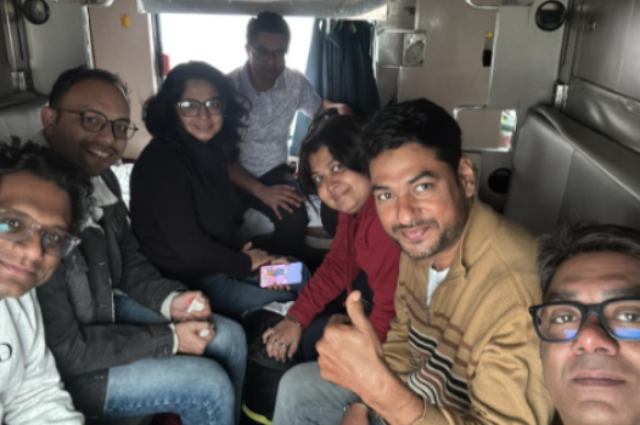
They hired a car from NJP, stuffed their bags in, and began climbing the winding hills. The air turned sharp and thin. Fog blanketed the road.
This was when Shakil’s fear began to show. He sat in the middle seat, hands gripping his knees, refusing to glance outside.
‘Uff, these drivers—they go too close to the edge!’ he said for the tenth time.
‘We’re fine,’ laughed Tanusree, turning around. ‘You’re in the middle. Relax.’
‘I’m not scared!’ he declared, a little too loudly. ‘Just saying—maybe the driver could honk more?’
Every sharp turn made him talk faster, almost to fill the silence. Tulika, sitting by the window, smirked. ‘You guys are continuously blabbering. How much you talk—I can’t even sleep!’ she mock-scolded, pulling her shawl tighter.
The group burst into laughter.
The car broke down two bends later.
Fog rolled in thick. The driver stepped out to check the engine. The temperature dipped, and someone’s teeth started chattering—not from fear this time.
Now, instead of panic, Angandeep began humming an old Bengali song. Souvik joined in. Tulika recorded it on her phone, laughing in the background. Tanusree was already taking photos. Not selfies — the fog, the road, the driver's silhouette bent over the bonnet.
"This is going in a story," she said matter-of-factly, as if a broken-down car on a mountain road in January was simply material. Maybe for her, everything was.
Nobody moved to fix anything. Outside, the fog had eaten the road whole. Inside the car, nobody mentioned it. Dr. Amritendu, calm as ever, had opened his laptop in the back seat and was quietly clearing a stack of MRI reports — Apollo Hospital's radiology queue apparently indifferent to mountain fog and broken engines. A writer on holiday. A radiologist is always on call.
Arrival—Where Silence Speaks:
They reached Icchegaon just a little before dark, tired and nearly out of patience. Luckily, they could witness Mount Kanchenjunga—the queen of the hills—getting soaked in warm orange sunlight before going to rest. This time, she wasn’t playing her usual high game.
The homestay was simple—wooden walls, a warm kitchen, and one cosy hall with fairy lights and a crackling fireplace. The mountain air smelled of pine and distant frost.
They dropped their bags, exhausted. The first thing they did was call their loved ones back in the city to inform them of their well-being and safe arrival.
A quick phone call, an excited video call to show Mount Kanchenjunga to a loving wife, a mother, and a child at home. The child's face lit a small screen. A wife leaned in to see the mountain. For a moment, Kanchenjunga belonged to more than eight people.
No big welcome drink, no formal introductions—just a long table, steaming tea, and silence, the comfortable kind.
Later that evening, when everyone had showered and changed into sweaters, Amritendu lifted his cup.
‘To new friends,’ he said. ‘And new stories.’
Others joined in.
The evening began with a long stretch of photoshoots—selfies, group photos, solos, and medleys. They talked their hearts out like old friends from a long time ago.
As the evening unfolded, conversation moved the way the train had — unhurried, stopping at small things, carrying more than it looked like it could. They spoke about fear, about routines that suffocate creativity, about the quiet pride of seeing their names under a story title, and the sleepless nights filled with anxiety before submitting a manuscript to publishers.
They mocked themselves, pulled each other’s legs, and chatted their hearts out, and all the ladies laughed so loudly that the host peeked in and said politely, ‘Dinner is ready, ma’am.’
After dinner, they gathered with their own drafted and published stories for a storytelling session. Work had brought them here—but nights like these were for something else. Because for them, it was never just work. It was love, it was passion, for their untold stories, for their writing to find a new page.
The night deepened as their stories unfolded. The room grew quieter, heavier—filled not with silence, but truth.
Tulika began, reading a passage from her new story, D for Dark. Her voice steady, her words lingering in the air. Then came Amritendu—known for his mastery of locked-room mysteries—reading from his newly launched book, the kind that pulls you in and doesn’t let go. Tanusree followed, narrating her story of social drama and the chaos surrounding it.
Before Shoumik started reading, he apologised in advance — said it was rough, said it probably didn't make sense, said he wasn't sure it belonged in the anthology at all. Then he read it. It was quiet, precise, and a little devastating. Nobody said it was rough. Tulika just looked at him and said, "Stop apologising for your work." He didn't argue. But he smiled the way people do when they've been seen.
Angandeep had been quiet most of the evening. Not withdrawn — just watching, the way people do when they're storing something. His notebook had been open since the train, but nobody had seen him write in it. He'd laughed at all the right moments, refilled people's cups without being asked, and said very little about his own work. "It's just a draft," he'd said, twice, when someone asked. When it was his turn, he almost passed. Almost.
And then he started.
Something shifted. The room stilled. Conversations faded, breaths slowed. There was pin-drop silence—no whispers, no movement—just his voice carrying the weight of his story. Every twist, every turn landed with quiet precision.
When he finished, no one spoke for a moment. And then it came—the applause. Not loud at first, but full. Real. His writing, his plots, his twists—someone quietly said Dan Brown. Angandeep looked at the floor. His cheeks turned red, but not due to the cold.
In that moment, everyone knew—they weren’t just witnessing a reading. They were witnessing potential unfolding right in front of them.
Long after the others had drifted toward sleep, Anushila stayed by the fire.
It wasn't insomnia. It was a habit — the particular alertness of someone who had learned to find silence only after everyone else had gone to bed. A working mother's silence. Earned in small hours, between the last task of the night and the first one of the morning.
She opened her notebook — not to write, just to read what she'd already written. A story about a woman who loves deeply and loses quietly. Nobody had asked if it was autobiographical. She was glad.
Souvik came out for water at some point, found her there, and said nothing. Just sat across from her for a few minutes, both of them watching the fire do what fires do.
Before he went back in, he said, "Your story is the one I'll think about longest."
She didn't reply. But she wrote that down.
The Creation—When Darkness Took Shape:
The next morning, sunlight slid through the mist. Birds called from somewhere unseen. The mountains were quiet, as if listening.
As always, it began with laughter—sunrise photos, candid clicks, and warm cups of special Darjeeling tea cradled between cold fingers. And then Shakil, who had spent the previous evening gripping his knees on a mountain road, cleared his throat with the particular gravity of a man about to say something important.
He looked out at Kanchenjunga, still half-wrapped in morning cloud, and began:
Ye wadia khamosh hain,
par inki baat suno,
Jo toota tha kahin andar,
yahan aakar judo.
Nobody laughed. Someone pulled their shawl tighter.
He tried another, this time with a grin, aimed directly at Tulika:
"Likhnewale likhte hain dil ka dard bada,
Par jo general manager ban jaaye — woh dard alag hi hota hai."
The laughter came back. Tulika threw a napkin at him.
Shakil Ahmed — brave enough to write villains, terrified of a hill road, and the only one who could make Kanchenjunga feel like a backdrop to a punchline.
And then, a surprise guest arrived.
A small dog from the homestay wandered in, uninvited yet completely at home, weaving through their feet, asking for nothing but a little affection. Shoumik and Anushila lit up instantly. Dog lovers, pet parents—this was a piece of home they didn’t know they needed. For a few moments, the hills disappeared, and in that soft fur and playful presence, they found their own little worlds again—the ones they had left behind.
But like all pauses, it was brief.
After breakfast, the serious business started. Eight authors sat with notebooks and laptops, surrounded by the smell of coffee and damp wood.
The chatter slowed. The work began. Ideas collided—thrillers, ghost stories, psychological breakdowns, social darkness that wasn’t supernatural but very real.
Eventually, one word echoed louder than the others: darkness.
‘Let’s explore what it means for each of us,’ Souvik suggested.
‘It doesn’t have to be horror,’ added Tanusree. ‘Darkness can live inside a person, too.’
‘That’s what makes it human,’ said Anushila softly.
By the end of that day, their theme had found them.
A Day in the Hills:
Morning writing sessions turned into late-afternoon debates. The living room was filled with the rhythm of typing and occasional groans of frustration. Tulika walked in once, balancing two cups of black tea.
‘Whoever finishes a paragraph before I do gets one,’ she teased.
Shakil, trying not to look out the window down the slope, focused fiercely on his story about corporate employees haunted by their own choices.
‘I don’t need inspiration from the view,’ he mumbled.
‘You mean you don’t want to see the view?’ Shoumik teased.
At night, they sat by the fire, reading snippets aloud. It wasn’t a competition—it was communion. Some pieces made them laugh till their ribs hurt. Others left the room quietly for long minutes. Somewhere in those moments, the book began writing itself.
Beyond a Book
In the lull between sessions, the conversations turned bigger. ‘What if this isn’t just about one book?’ Souvik said that evening.
‘What do you mean?’ Tulika asked.
‘I mean—there are so many writers in Kolkata working alone. What if we built something that connects them?’
The idea sat in the room the way Kanchenjunga had on the drive up — somewhere behind the clouds, clearly large. By the time they returned home, the retreat had morphed into something bigger: a community. Not an organisation, not a brand—just a shared space for words.
The first-ever Kolkata Literary Society took its first baby step from this discussion.
Back to the City:
Coming back was harder than leaving. The office chairs felt colder, the inboxes fuller. But the rhythm of Icchegaon stayed with them. Nights turned into writing marathons. Google Docs blinked with new edits. Calls stretched past midnight—arguments about phrasing, tone, and punctuation.
Each of the authors struggled, juggling their busy schedules to meet the deadline—completing one story each based on the ‘dark’ theme decided at Icchegaon, alongside office and personal commitments.
Real collaboration isn’t glamorous; it’s messy, tiring, and beautiful.
The Launch: “As the Hills Go Dark”
Now the eight stories were ready, laid out like pieces of their heart—but the real struggle was only beginning. Turning them into an anthology was not as simple as it had once sounded.
Tulika stepped forward, taking the responsibility of finding a publisher, setting up meetings, and holding the scattered pieces together. One conversation led to another, and finally, a publisher was chosen. It felt like a milestone—until the next challenge arrived.
The cover. The face of their dream. And the editing that would shape every word they had poured themselves into.
Ideas flooded in. Everyone had something to offer—some brought AI-generated designs, some sketched their thoughts on notepads, each one carrying a piece of their imagination. But nothing felt right. Nothing felt complete.
Days turned into discussions, discussions into disagreements, and still, the answer remained just out of reach.
Then began the search—the quiet hope of finding someone who could truly see what they were trying to create. And finally, they did. A designer who didn’t just listen, but understood.
Her design didn’t just look right—it felt right. It carried their vision, their darkness, their dream. They were lucky—she was also an editor and proofreader, and she did her best to ease their struggles, to gently shape and heal the chaos within their words.
And in that moment, everything slowly started falling into place.
Because getting a book published isn’t just a process—it’s like building the perfect plate at a buffet. There are countless choices in front of you, but only a few truly belong to your story. And when they finally pick the right ones, they don’t just create a book—they create something that feels like all eight of them.
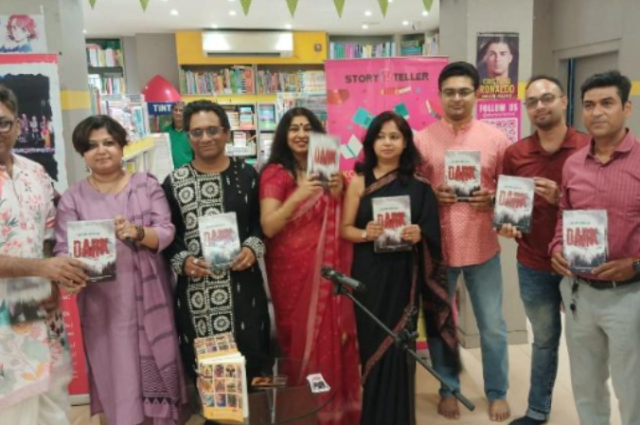
The anthology was published by Ukiyo Publishing. Eight stories, eight slices of darkness, one heart.
Three months ago, this book existed only as a dare someone made over coffee. Now it had a spine, a weight, and their names on the cover.
On the humid and hot evening of April 25, 2026, the launch felt almost surreal. The air in Kolkata was heavy—sweaty and tense with heat—but inside, these eight energetic authors carried with them a cool breeze from the hills of the Himalayas.
The same people who had once taken a foggy road to a tiny homestay were now standing on a stage, holding a book with their names on it. When the first copy was unwrapped, Shakil—ironically—was speechless for the first time in months.
Tulika leaned toward him and whispered, ‘Scared of heights again?’
He grinned. ‘This one’s worth the fall.’
The audience laughed, but behind the humour, each one of them knew what that moment meant. It wasn’t just a book. It was proof that eight people with full lives and full inboxes had made an Anthology. That was the whole argument, and it needed no footnotes.
Amid that crowd, they took the opportunity to announce their new baby—their vision for writers across Kolkata: The Kolkata Literary Society (KLS).
What Stays
The hills did go dark that winter.
And when they came back — to the noise, the deadlines, the ordinary weight of their lives — nobody made a speech about it. There was no need. The book existed. Their names were on it. Somewhere in Icchegaon, a fireplace had heard things they hadn't said out loud before, and the mountains, indifferent as mountains are, had kept none of it.
But Shakil still texts too late at night. Tulika still teases. Someone still shares a draft before it's ready, still apologises for it, and someone else still says don't.
That's all. That's enough.