
For most children, school is supposed to be the safest place after home. Parents send them off every morning believing that if their child falls sick, someone will notice. Someone will care. Someone will call.
For the family of eight-year-old Ayush Kumar Nath, that trust has now turned into grief.
The Class 3 student from Kolkata's Bansdroni area died in May 2026 after spending eleven days in a coma. What has made the incident deeply disturbing is not just the loss itself, but the allegations surrounding what happened inside the school before he collapsed.
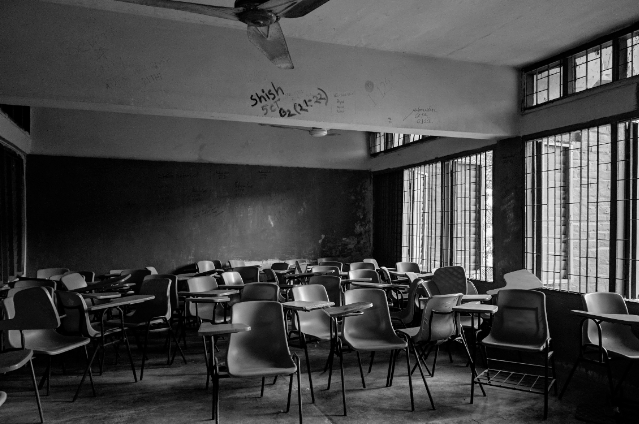
According to his family, Ayush had complained to his class teacher during the first period that he was feeling unwell because of the extreme heat. He reportedly asked to go home. Instead, his request was allegedly denied, and he was told to sit quietly at the back of the classroom with his head resting on the desk.
His father later alleged that the child remained in that condition for several periods in a corner where there was no working fan. No parent was informed. No medical attention was reportedly arranged. No one, according to the family's claims, stopped to ask whether the boy's condition was getting worse.
By the time school ended around noon, Ayush was carrying his schoolbag downstairs when he suddenly collapsed. The fall caused a severe head injury and a massive brain haemorrhage.
Doctors fought to save him, but after eleven days in a coma at SSKM Hospital, the eight-year-old passed away.
The tragedy sparked protests outside Maharishi Vidya Mandir in Kolkata, with angry parents demanding answers and accountability. Following a complaint filed by the family, Kolkata Police began investigating the matter and questioned multiple people, including the class teacher and the school principal.
But beyond the legal case, the incident has raised uncomfortable questions that extend far beyond one school.
Many Indians grew up hearing phrases like "keep your head down," "sit quietly," or "wait until the period ends" whenever they complained of discomfort in class. Sometimes these instructions were harmless. Sometimes they became habits. And habits can turn dangerous when genuine signs of illness are mistaken for excuses or misbehaviour.
Children often struggle to explain what they are feeling. They depend on adults to recognise when something is wrong. That responsibility becomes even more important during severe heatwaves, when dehydration and heat-related illnesses can worsen rapidly.
No marksheet, attendance record, or classroom discipline is more important than a child's health. A student asking for help should never become an inconvenience.
As investigations continue, Ayush's death has left many parents asking a painful question: if a child says they are not feeling well, are schools truly listening?
Because sometimes, what appears to be an ordinary complaint can become the last cry for help.
References
- The Indian Express – https://indianexpress.com
- India Today – https://www.indiatoday.in
- The Telegraph India – https://www.telegraphindia.com
- Anandabazar Patrika – https://www.anandabazar.com
- Kolkata Police – https://kolkatapolice.gov.in