
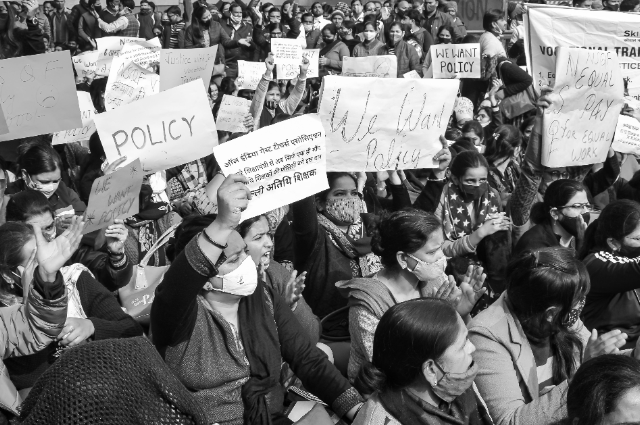
For weeks, the protests had been growing outside Jantar Mantar. What started as anger over the 2026 NEET UG controversy gradually turned into a larger student movement, with young protesters demanding answers from the government and accountability from those responsible.
Then, on July 25, 2026, Union Education Minister Dharmendra Pradhan resigned. For the protesters, the resignation was more than a change in the Cabinet. It was seen as proof that sustained public pressure could force the government to respond.
The protests were mainly centred around allegations surrounding the NEET UG paper leak and complaints about irregularities in CBSE evaluation and marking. Students and their supporters argued that problems in a major national examination can affect much more than a single result. For students preparing for medical entrance examinations, one disputed paper or one unfair evaluation can mean losing an entire academic year.
That frustration brought young people to the streets.
At Jantar Mantar, protesters used the word “Cockroach” as the name of their campaign. The unusual name quickly became associated with their demonstrations, posters and social media activity. Their message was straightforward: students should not have to pay the price for failures in an examination system they have no control over.
The protests continued for weeks, keeping the issue in public discussion even as other political stories competed for attention.
The movement also received attention because of Sonam Wangchuk, who had earlier undertaken a 26-day hunger strike in support of demands connected with the issue. His decision to end the hunger strike became controversial among protesters and supporters. Some questioned whether stopping the protest weakened their position.
Wangchuk later defended his decision, saying that he did not want protesters to face legal consequences and that protecting people involved in the movement was more important than continuing the hunger strike indefinitely.
That disagreement did not end the wider movement.
Student groups continued raising their demands, including compensation for affected students and protection from legal action against protesters. Even after Pradhan's resignation, discussions between the government and the protest group CJP continued because several demands had not yet been settled.
The resignation itself also became a political issue.
The government described Pradhan's resignation as voluntary and indicated that stronger measures would be introduced to prevent examination paper leaks in the future. Opposition parties, particularly the Congress, presented the development differently. They described it as a victory for students and an example of young people forcing the government to acknowledge their concerns.
The difference in how the resignation was described is important.
For the government, it was a decision taken as part of administrative responsibility. For the opposition and many protesters, it represented something much bigger: a minister stepping down after sustained pressure from students.
Either way, the resignation has put the examination system back under the spotlight. India conducts some of the world's largest competitive examinations. Every year, millions of students spend months or even years preparing for entrance and recruitment tests. They attend coaching classes, study late into the night, take mock tests and compete for a limited number of seats.
Because of that scale, the credibility of an examination matters enormously. When allegations of a paper leak or marking irregularity emerge, the damage is not limited to the examination authority. Students begin questioning whether their effort was worth anything. Parents start worrying about whether their children's results can be trusted. Coaching institutes and colleges are affected as well.
There is also a financial side to the problem.
Many families spend significant amounts of money on coaching, study material, travel and examination fees. A student who loses an academic year because of an examination controversy may have to spend another year preparing. For families with limited resources, that can be a serious burden.
This is why examination transparency has become such a sensitive issue among young Indians. The Jantar Mantar protests were therefore not simply about one minister or one examination. They reflected a wider frustration among students who feel that the system expects them to perform perfectly while institutions are rarely held to the same standard.
The protesters' remaining demands show that the resignation has not automatically solved the problem. They are still seeking compensation and assurances that students involved in the demonstrations will not face legal action. Talks are continuing, meaning the movement has entered a different stage rather than simply ending with the minister's resignation.
The government has also promised stricter laws against examination paper leaks. Whether those measures actually prevent future incidents will matter more than the political statements made during the protests.
Students are unlikely to be satisfied with promises alone. They want to know how examination papers will be protected, how suspicious activity will be investigated, who will be held responsible when a leak occurs and what happens to students when an examination has to be cancelled or conducted again.
Those are practical questions, and they cannot be answered simply by changing the person sitting in a minister's office.
Still, the resignation carries political significance.
It is unusual for a student movement to remain strong enough to keep national attention focused on an examination controversy for several weeks. It is even more unusual when the movement is followed by the resignation of a Union minister.
That is why political parties are already interpreting the development according to their own interests. Congress has called it a victory for student power, while the government has emphasised administrative responsibility and future reforms.
For the protesters, however, the bigger question is what happens next.
A resignation can become a symbolic victory, but it does not repair a damaged examination system by itself. Students who believe they were affected still need answers. Those who lost time or money may want compensation. And future candidates need confidence that the next examination they sit for will be fair.
The events of the past few weeks have also shown how quickly an issue that begins inside examination centres can become a national political question.
For young people preparing for competitive examinations, marks and ranks are not just numbers. They can determine college admissions, career choices and sometimes the direction of an entire family.
That is why the anger at Jantar Mantar found such a strong response.
The resignation of Dharmendra Pradhan may eventually be remembered as the biggest political consequence of the 2026 examination controversy. But whether it becomes the beginning of meaningful reform or simply another chapter in India's long list of examination disputes will depend on what happens after the protests leave the headlines.
For now, one thing is clear: the students who stood at Jantar Mantar did not simply ask for a better result. They demanded that the system responsible for their future be answerable to them.
References:
- Reuters, Modi's education minister quits as jubilant Indian youth protesters claim victory, end protest — https://www.reuters.com
- Hindustan Times, Dharmendra Pradhan resigns as education minister amid massive paper leak protests — https://www.hindustantimes.com.
- The Indian Express, Dharmendra Pradhan resigns amid massive student protests — https://indianexpress.com
- NDTV, Paper Leak To Education Minister's Resignation: A Timeline Of CJP Protest — https://www.ndtv.com
- Times of India, How the NEET UG 2026 paper leak snowballed into Dharmendra Pradhan's resignation — https://timesofindia.indiatimes.com