
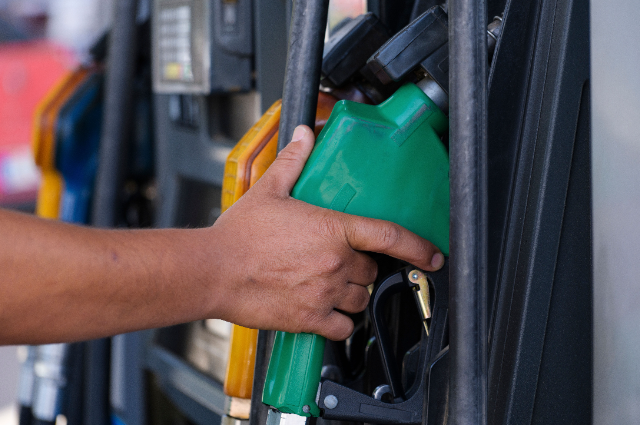
At first glance, E100 looks like the cheaper fuel. If petrol is selling for a higher price per litre and ethanol is available for less, the calculation seems simple. Pay less at the fuel station, put the fuel in the tank and save money.
There is just one problem. A litre of fuel is not the same thing as a kilometre of driving. What really matters to a car owner is how much money it takes to travel a certain distance. That is where the E100 versus petrol comparison becomes more interesting.
E100 means fuel containing essentially 100 per cent ethanol, although the exact specification can vary depending on the fuel standard and market. Ethanol can be produced from crops and other biological materials, and India has been increasing its use of ethanol in petrol as part of its effort to reduce crude oil imports and increase the use of domestically produced fuel.
But ethanol has one major disadvantage when you look at mileage. It contains less energy per litre than petrol. That doesn't mean an ethanol-powered car is going to suddenly stop performing properly. In an engine designed or calibrated to use ethanol, the fuel can work perfectly well. The issue is that the engine generally needs to burn a larger quantity of ethanol to produce the same amount of useful energy.
That is why two cars travelling the same distance can use noticeably different amounts of fuel. Imagine a car that gives 20 kilometres per litre on petrol. A driver covering 100 kilometres would need roughly five litres.
Now imagine that the same vehicle, under comparable conditions, uses more E100 because of ethanol's lower energy density. If its effective mileage fell to around 15 kilometres per litre, the same 100-kilometre journey would require about 6.7 litres.
The exact mileage difference will depend on the engine, fuel system, driving conditions and vehicle calibration, so this should not be treated as a universal figure. But the basic calculation remains the same.
The cheaper litre does not necessarily mean the cheaper journey. This is something Brazil has been dealing with for years.
Brazil is one of the world's biggest ethanol producers and has a long history of using sugarcane ethanol as a transport fuel. Flex-fuel vehicles are common there, allowing drivers to use petrol, ethanol or a mixture of the two.
Because Brazilian motorists have had to compare these fuels for decades, a simple rule became familiar: don't look only at the price displayed on the pump. Look at how much distance the fuel gives you.
The same thinking is becoming more relevant as India moves towards higher ethanol use. For years, Indian petrol stations have sold petrol containing increasing levels of ethanol. E10 and E20 are very different from E100. E20 contains up to 20 per cent ethanol by volume, while E100 is essentially ethanol fuel.
That distinction matters.
A vehicle designed and tested for a particular ethanol blend may not behave in the same way when supplied with a much higher ethanol concentration. Fuel compatibility, engine calibration, materials used in the fuel system and manufacturer specifications all become important.
This is why the conversation around ethanol cannot simply be reduced to "ethanol is cheaper, therefore ethanol is better." There are other reasons governments are interested in it.
India imports a large share of the crude oil it consumes. Increasing domestic ethanol production can reduce the amount of petrol that needs to be produced from imported crude. Ethanol can also be made from agricultural feedstocks, creating another market for farmers and sugar producers.
Those are genuine advantages. But the driver sitting inside a car is usually asking a much smaller question.
"How much is this trip going to cost me?"
Suppose petrol costs ₹100 per litre and a particular car gives 20 km per litre. The fuel cost works out to roughly ₹5 per kilometre. Now suppose E100 costs ₹70 per litre. That looks dramatically cheaper at the pump.
But if the same car effectively manages only 14 km per litre on E100, the calculation changes. The cost becomes about ₹5 per kilometre again.
The driver hasn't saved much despite paying considerably less for every litre. And if the mileage difference becomes larger, E100 could actually become more expensive per kilometre.
This is why fuel economy is often more useful than the headline price. There is another factor that people sometimes forget: driving conditions.
Mileage figures printed in brochures are usually measured under controlled testing conditions. Real roads are much less predictable. Traffic jams, air conditioning, frequent braking, high speeds, tyre pressure, road conditions and driving habits can all affect consumption.
A car that returns 20 km per litre on a relatively clear road might deliver much less in heavy city traffic. If a different fuel also causes a reduction in mileage, the financial difference becomes even easier to notice.
Vehicle design matters too.
A modern flex-fuel vehicle can be calibrated specifically to handle different ethanol concentrations. Such a vehicle is not the same as taking an ordinary petrol car and simply filling it with a much higher ethanol blend.
Ethanol also has different properties from petrol. It has a higher octane rating, which can be useful for engines designed to take advantage of it. At the same time, its lower energy content means more fuel is generally required to deliver the same amount of energy.
So the question isn't whether ethanol is "good" or "bad." The better question is whether the vehicle, fuel price and mileage make financial sense together.
For example, a driver who travels 1,500 kilometres every month might initially focus on the price difference between two fuels. But what actually matters is the total number of litres consumed over those 1,500 kilometres.
If a fuel saves ₹20 per litre but makes the vehicle consume significantly more litres, part of that apparent saving disappears. This is also why comparing E100 directly with petrol without considering the vehicle can be misleading.
One engine may be designed to make better use of ethanol than another. One car may have a much larger difference in mileage. Another may have fuel-system limitations. Two drivers can therefore get completely different results from the same fuel.
For India, this becomes especially important as ethanol blending continues to expand. The country's ethanol policy is not based only on what individual motorists pay at the pump. It is connected to a much larger economic calculation involving crude oil imports, agricultural production, fuel security and emissions.
That larger calculation can make ethanol attractive to the country even when an individual driver does not see an immediate saving. For consumers, however, the simplest habit is also the most useful one.
Stop comparing fuel prices only by the litre. Compare the cost of travelling 100 kilometres. If petrol costs ₹100 per litre and your car travels 20 kilometres on one litre, that 100-kilometre journey costs about ₹500 in fuel.
If E100 costs ₹70 per litre but the car travels only 14 kilometres per litre, the same journey requires roughly 7.1 litres and costs around ₹500. The numbers can change from one vehicle to another, but the principle doesn't.
A cheaper litre is not automatically cheaper transportation.
E100 may have an important role in India's future fuel mix. It can support domestic production, reduce some dependence on imported petroleum and create demand for agricultural feedstocks. But whether it saves money for a particular driver is a completely different question.
That is the part that tends to disappear when fuel prices are compared at the pump. People don't buy petrol or ethanol because they particularly want a litre of liquid sitting in their tank. They buy it because they want to travel.
And when the real question is "What will it cost me to drive 100 kilometres?", the cheapest fuel per litre may not always be the cheapest fuel to use.
References:
- International Energy Agency (IEA), information and analysis on biofuels, ethanol and transport energy: https://www.iea.org
- Ministry of Petroleum and Natural Gas, Government of India, information on ethanol blending and India's fuel policy: https://mopng.gov.in
- U.S. Department of Energy Alternative Fuels Data Centre, technical information on ethanol fuel properties and energy content: https://afdc.energy.gov
- U.S. Department of Energy, Alternative Fuels Data Centre, ethanol vehicle and fuel information: https://afdc.energy.gov/fuels/ethanol-basics
- UNICA, Brazilian Sugarcane Industry Association, information on sugarcane ethanol and Brazil's ethanol industry: https://unica.com.br
- Government of India, Ministry of Petroleum and Natural Gas, Ethanol Blended Petrol Programme: https://mopng.gov.in/en/page/10