
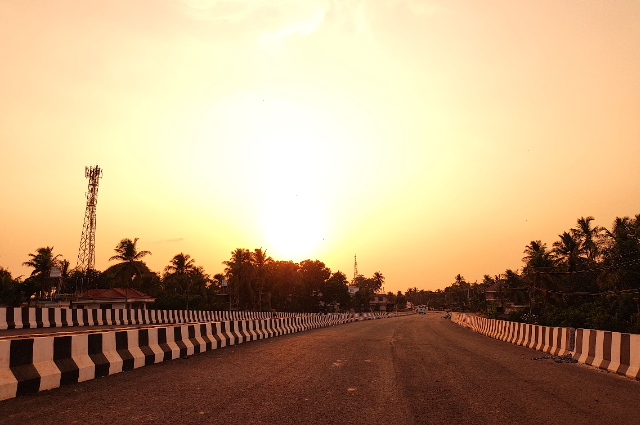
Thousands of farmers gathered at the Shambhu border and marched towards Delhi Kisan Gha under the ‘Desh Bachao ' banner to protest the proposed INDIA – US Trade deal, which could adversely affect the farming community. Security has been tightened at Delhi’s borders, with barricades and traffic restrictions in place as the situation is monitored by the authorities.
It is organised under the banner ‘DESH BACHAO MORCHA’, a coalition of farmer groups, where the protesters were marching to oppose a proposed INDIA – US Trade agreement. Haryana police showed up in force to intercept hundreds of farmers on Tuesday to prevent them from gathering at New Delhi’s kisan ghat. Police erected multi-layer barricades along the Amritsar-Delhi National Highway at Shambhu and Khanauri borders, mirroring the heavy blockades seen during the February 2024 DELHI CHALO -2 protests over a legal guarantee for minimum support price.
Meanwhile, the talks between farmer leaders and the Haryana government at the Sha border have yielded fresh assurances, with the state promising to facilitate a meeting with the centre within a week to 10 days and to take up the issue of detained farmer leaders. Security remains tight across Haryana border points, with prohibitory orders under section 163 of Bharatiya Nyaya Sanhita BNS still in force.
Haryana minister Shyam Singh Rana on Monday said that the state government had received the charter of demands and is submitted by farmers' unions and will be forwarded to the appropriate authorities for consideration. The issue concerning farmer leader Gurnam Singh Chaduni would be taken to the chief minister Nayab Singh Saini and will be resolved by the evening, he also assured the same. Delhi police have advised commuters to avoid several roads in the vicinity of the protest site due to the farmers' demonstration. The affected routes include Velodrome Road, Rajghat DTC Depot Road, Rajghat bypass road, nearby connecting roads around the protest venue and Satyagraha Marg.
The purpose of this trade deal is that the agreement aims to increase trade between the two countries by reducing import–export tariffs and making it easier for companies to access each other’s markets. The broader goal is to raise bilateral trade between India and the US to $500 billion within the next few years. That is why farmer organisations strongly opposed the proposed INDIA – US Trade deal, alleging harm to the country’s agricultural sector by opening the door to cheaper imports and hurting domestic farm incomes. They claimed that the agreement as it would adversely affect mainly agricultural labourers
livestock rearers, small traders and micro enterprises and also farmers.
According to the protestors, the deal is not only on agriculture but extends to sectors such as dairy, industry, digital trade, e-commerce, government procurement, intellectual property rights and services. They fear that if the import duties on US agricultural products are lowered, then the goods will enter the Indian market at lower prices. It could also make it difficult for Indian farmers growing maize, soya bean, pulses, dairy products, apples and other crops to get fair prices for their production. They also argue with the American farmers, as they receive heavy government subsidies which allow them to export their products at lower costs, putting Indian farmers at a competitive disadvantage and threatening their incomes.
This trade deal includes: if the agreement goes through, India may reduce import duties on certain American goods. This could give US agricultural products, energy resources, such as LNG and some industrial goods easier access to the Indian market. Rules governing the import of certain products such as medical equipment may be simplified.
In return, the US may offer better market access to Indian products such as textiles, gems, and jewellery, engineering goods and pharmaceuticals. Import duties on some Indian products could be reduced, and certain rules and formalities may be eased to help Indian companies do business more easily in the US market.
The government says that the centre maintains that agriculture is a sensitive sector for India and that farmers' interests will not be compromised. The farmers interests will remain at the top priority in any agreement where sensitive sectors like dairy will be protected and that of India will be agreed to only to a balanced deal which serves it’s national interest and the current status of the India – US Trade deal is India and the United States are negotiating the first phase of a bilateral trade agreement. There were several rounds of talks which have already taken place between the two countries but have not yet been settled. Both sides are thinking of concluding it to follow at a later stage.
Haryana and Delhi police heavily restricted borders and detained farmer leaders like GURNAM SINGH CHARUNI, as thousands of farmers tried to march to Delhi kisan ghat. This action followed the massive youth-led COCKROACH JANTA PARTY (CJP) over exam paper leaks, compounding capital unrest.
Haryana police sealed the Shambhu border, placing cement blocks and barricades on the Ghaggar river bridge. The chief of Bharatiya Kisan Union was detained in Kurukshetra, alongside other preventive detention near border points by Delhi and Haryana police.
References:-