
What is zero?
Zero means nothing or no amount; it is just more than nothing – it is a real number we can use in mathematics. Zero has two main jobs – first, it acts as a placeholder in numbers like ( 102, 305, 1007). Without zero, we wouldn’t know if a number is a hundred or ten. The second zero is a number on its own. Ex: 7+0=7, 0×5=0, 10-0=10). The importance of zero in mathematics is huge because it forms the base for dividing numbers, understanding negative numbers and writing huge or small numbers like ( 1000, 0.001). Its role is the base for counting, calculation and even computers today. Zero is also a form of binary code which powers computers, smartphones and AI.
It can change the world and has real-life importance: TIMES, MARKS, ETC.
INDIA GAVE THE WORLD ZERO, AND EUROPE SPENT THE CENTURIES REFUSING IT.
The journey of zero from India to the cornerstone of modern technology is a remarkable story of cross -cultural exchange.
India's concept of zero.
Arab scholars refined the system.
European merchants embrace the revolution to revolutionise global commerce.
India – In the 4th century BCE, the earliest use of space in the position of number systems.
It was BRAHMAGUPTA – a 7th-century mathematician and astronomer from Rajasthan, who formally defined zero as a number instead of a placeholder by writing some arithmetic rules in the book BRAHMASPHUTASIDDHANTA, which is known as (THE CORRECTLY ESTABLISHED DOCTRINE OF BRAHMA ), which can be a title of a maths book in modern technology. The arithmetic rules are: zero + a number = a number, zero – a number = a number and zero × a number = a number.
But division by zero is undefined, which was his wrong rule. As he was doing maths with zero as a number, testing what happens if we divide.
Our next mathematician is Aryabhatta, who is famous for astronomy and algebra, as zero is very important because x0=0. It helps the amount to increase and decrease. But he used zero as a symbol, not a leap.
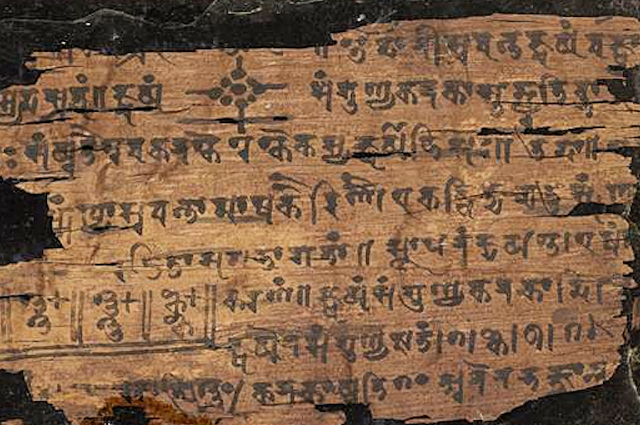
But from the Bakhshali manuscript, they found that in Pakistan, in 1881, they used zero as a dot symbol. Still, zero is a placeholder rather than a number, but it was showing the concept in Indian culture well before Brahmagupta formalised it.
Then it travelled to the Persian mathematician Al - Khwarizmi.
Where we get the word ALGORITHM, which many of them do not know, but it was prompted by the Indian numeral system in the 9th century. The Arabic word for zero was sifr, meaning empty. He is known as the father of algebra, and is islamic golden age in Baghdad, and developed the Arabic numeric system with the number zero, called sift. The transmission of the zero concepts from India to Europe was expedited by the Latin translation of Al–Khwarizmi's seminal work ( Algoritmo de numero indonum) in the 12th century.
This translation served as a pivotal conduit connecting the mathematical legacies of ancient India with the Arab world and subsequently with Europe. This served as the foundation for the wider adoption of the zero concepts, which Arab traders also helped to facilitate.
Next in our historical journey is FIBONACCI, also known as Leonardo da Pisa, who carried the torch of (0) and the Hindu-Arabic decimal system of Al – Khwarizmi and brought it to Europe. Fibonacci learned about (0) and decimal mathematics from Arab traders he met while accompanying his father on merchant tours in Tunisia. Immediately, he realised the superiority of the decimal system compared to the previously used Roman numbers. This new type of mathematics spread to the rest of Europe through his book Liber Abaci ( Book of calculation ), published in 1202.
Then, fast forward to the late 19th century and early 20th century and here Nikola Tesla, who laid the basis for the electronic and ultimately the digital age. His innovation includes wireless technology and other ideas that had not been deciphered until now. Like Al – Khwarizmi and Fibonacci is the spirit of the best Mediterranean traditions, Tesla was a boundary breaker in many respects.
The evolution of zero culminates in its central role in today’s digital world. In the binary system, which forms the basis of modern computing, digits 0 and 1 represent one bit. This seems by simple binary language that has led to the formation of bytes, kilobytes, megabytes, terabytes and beyond. Shaping the digital landscape was an experience today.
The number zero stands as a reminder that science and spirituality have the potential to change the world. When zero (0) came into the world, it was represented as ‘O’; later, they got separated.
Zero is a pillar of the AI era because a high voltage is interpreted as (1) and a low voltage is interpreted as (0)
It is an unshakable pillar upon which the entire digital universe and thus modern AI is built.
References:-