
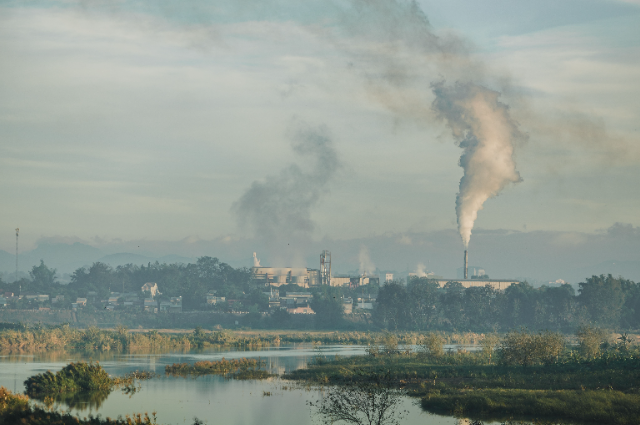
India ranks 176th out of 177 countries in the Global Environmental Performance Index (EPI) with a low score of 22.46 out of 100. It ranks last among all eight South Asian nations and is second from the bottom globally, ahead of Laos.
The environmental performance index 20 Environmental Performance Index (EPI) by Yale University has been releasing the ranks based on environmental performance across multiple indicators. It assesses 177 countries using 47 indicators across 12 environmental issues. But Estonia ranked 1st with a score of 74.79; it has remained among the five worst countries in the EPI since 2022. It performed poorly in environmental health, air quality, and biodiversity, but better in climate change (130th), waste management, and sanitation (141st). But the government, through the Ministry of Environment and Climate Change (MoEFCC), earlier asked about the methodology, stating that some indicators whi, which are based on unscientific methods and assumptions. The purpose of the EPI is required, as the index measures countries' performance based on control, environmental health, ecosystem vitality, biodiversity conservation and other parameters. It faced challenges in reconciling economic development with energy access and environmental sustainability.
Despite its low ranking, the index records improving areas over the past decade. The climate change 130th position has been improved by 13.98 points over the decade as it shows the progress on spreading renewable energy, improves efficiency on energy and implementing regulations on climate change, 141st rank in waste management which progresses in municipal trash management and swachh Bharat mission and also in sanitation as it expanses the infrastructure of sanitation and improving the access of toilets which contributes positively. It also ranked last among the eighth South Asian countries assessed, behind Bhutan, Nepal, Sri Lanka, Pakistan, Afghanistan, Maldives and Bangladesh.
The per- capita emissions of India remain relatively low but also face an acute development v/s pollution tension, as millions of people were gaining access to modern energy services but only at the price of serious urban air pollution and later spikes in greenhouse gas emissions. Despite ranking at the bottom, India alrecorded and improvement over the decades under the measure of the index of 10-year change; metrics show the core was 10-year. The reasons for which India ranked low in the EPI are:
Poor air quality – one of the weakest areas. It ranks near the bottom on fine particulate matter exposure, ozone and other pollutants, which affect human health. Despite the national clean air programme, reports showed that more than RS. 16,000 crore in air quality, which has shown little or no improvement; some measures showed that sometimes it had slipped over the decade. Environmental health overall sits near the global floor, underscoring the human cost of pollution.
Weak ecosystem – biodiversity and protecting the habitat forms another weakness; it scores low for species protection, scoring low for terrestrial biome protection and key biodiversity area coverage. Tree cover loss is highly flagged as negative; protected area effectiveness shows mixed results, but overall effectiveness ranks among the lowest.
Coal dependence – as India performed low ranking in EPI 2026, due to coal ce athe s climate change performance index have its heavy reliance on coal for over 70% of its electric generation, a lack of formal phase out timeline and rising absophase-outsions driven by the expansion of energy needs. As coal remains affordable and secures domestic resources, which guarantees national energy security and is also needful for industrial growth and household consumption.
India ranks as the world’s third-largest greenhouse gas emitter, with numbers significantly rising over the years. Evaluation indexes shows pothe sitive momentum duindices show of pollutant growth which is going slowly down relatively to economic output, highlights a transition driven by historical per capita baseline and massive clean energy expansion. India's nationally determined contributions include reducing emissions intensity by 3-35% by 2030, compared to 2005, by GDP.
In 2024, India registered the largest absolute increase in greenhouse gas emissions due to rapid industrialisation, urbanisation, and population growth contributing to the increase in emissions. The main contributors to emissions are transportation, industrial activities, coal based electricity generation. But now they are significantly lower on a per capita basis compared to developed countries like the US and EU nations, and the country is now investing in renewable energy, particularly solar and wind, to reduce dependency on fossil fuels. It has slowly improved in recent tracking via the Global Carbon Project, which shows annual emissions increased compared to historic peaks.
Lastly, India will increase investment in renewable energy output, the energy efficiency sector and related technological innovation to encourage renewable energy consumption. It’s ten year trajectory across various development and economic highlights incremental, cumulative gains from modest starting points rather than sharp, steep drops. This slow upward movement reflects structural persistence in addressing systemic challenges over a prolonged period.
References: