
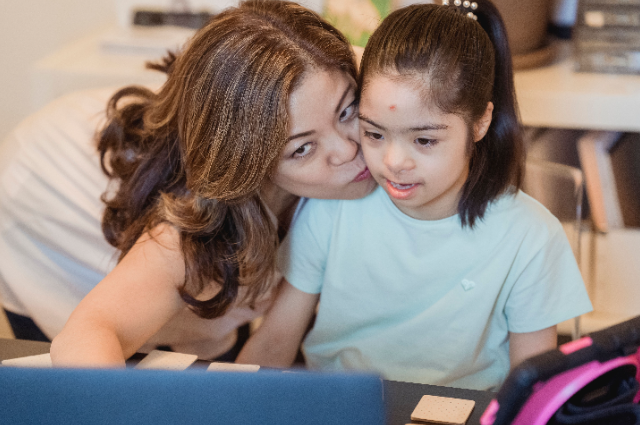
]Down Syndrome – also known as trisomy 21 – a genetic condition caused by an extra full or partial copy of chromosome 21. It affects brain and physical development, resulting in intellectual disability, distinct physical features and varying medical challenges. Early interventions and supportive therapies help individuals lead healthy, fulfilling lives. A person diagnosed with Down syndrome has an extra copy of chromosome 21, which means their cells contain 47 chromosomes in total instead of 46. This changes the way their brain and body develop. Most people have 23 pairs of chromosomes within each cell in their body for a total of 46. The term
‘syndrome’ refers to a set of symptoms that tend to happen together. The parents of the affected individual are usually genetically normal. The incidence of the syndrome increases with the age of mothers, from less than 0.1% for 20 year old mother’s to 3% for those of age 45. It is believed to occur by chance. Three different genetic forms have been identified. The most common is TRISOMY 21 (involves an extra copy of chromosome 21 in all cells. The extra chromosome is provided at conception as the egg and sperm combine. TRANSLOCATION DOWN SYNDROME –involves attachment of extra chromosome 21 material. In 1 -2% of cases, the addition of chromosomes occurs in the embryo stage and affects some of the cells in the body, known as MOSAIC DOWN SYNDROME. It can be identified during pregnancy by prenatal screening, followed by diagnostic testing or after birth by direct observation and genetic testing. Since the introduction of screening, Down syndrome pregnancies are often aborted, with rates varying from 50% to 80%, depending on maternal age and gestational age. It happens due to a random error in cell division, resulting in an extra copy of chromosome 21, either full or partial.
Symptoms:
Each person with Down syndrome is an individual. Problems with intellect and development are usually mild to moderate. Some people are healthy, while others have serious health issues such as heart problems that are present at birth.
Children and adults with Down syndrome have distinct facial and body features. Some of the common features: small head, short neck, small rounded neck, etc.
Infants with Down syndrome may be average size, but typically they grow slowly and remain shorter than other children the same age.
Development Delays:
Children with Down syndrome take longer to reach developmental milestones, such as sitting, talking and walking. Occupational therapy, physical therapy and speech and language therapy can help improve physical functioning and speech.
Intellectual Disability:
Most children with Down syndrome have mild to moderate cognitive impairment. This means that they have problems with memory, learning new things, focusing, thinking or making decisions that affect their everyday life. Language and speech are delayed.
Early intervention and special education services can help children and teens with Down syndrome reach their full potential. Services for adults with Down syndrome can help support living a full life.
Down syndrome is usually diagnosed before or at birth.
Hearing and vision disorders occur in more than half of people with Down syndrome. There is no cause of Down syndrome. Education and proper care have been shown to provide a better quality of life. Some children with Down syndrome are educated in typical school classes, while others require more specialised education.
Some individuals with Down syndrome graduate from high school, and a few attend post-secondary education. Regular screening for health issues common in Down syndrome is recommended throughout the person’s life.
Down syndrome – The law India has but never enforced for Down syndrome.
The primary law of India for Down syndrome is the RIGHTS OF PERSONS WITH DISABILITIES (RPWD) Act, 2016. It is officially classified under INTELLECTUAL DISABILITY.
RPWD ACT failure – state governments and local authorities deny disability certificates to people with Down syndrome. It is not explicitly named as ‘specified disability’ in the Act's schedule.
Why does the law fail?
The biggest hurdle to these laws making a meaningful impact is the lack of bureaucratic accountability. State-level disability boards are often underfunded or do not meet regularly, and there is severe widespread ignorance of disability rights among law enforcement, local administrators and educators.
The stark contrast between rigorous prenatal screening policies abroad and the struggle to enforce foundational civil protections locally highlights the complex, fragmented state of global disability inclusion.
The core human element – the 99% self-reported happiness among people with Down syndrome – remains a profound recurring counterweight to medicalised perspectives.
The ICELAND PARADOX:
Prenatal screening is frequently cited for its high rate of genetic screening. Pregnant women are routinely offered combined tests for chromosomal abnormalities.
Eradication v/s inclusion – when a prenatal test indicates Down syndrome, a near–total majority of expectant mothers choose to terminate the pregnancy. This has practically ‘eradicated’ Down syndrome births in the country.
Sparking global debate over whether this reflects preventive healthcare or the selective elimination of certain lives.
Societal impact: Advocates argue that this creates an environment that indirectly discourages these pregnancies and fails to acknowledge the high quality of life that individuals with Down syndrome experience.
References: