
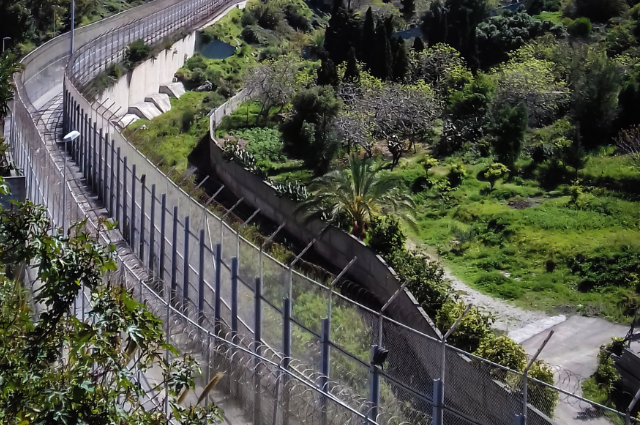
Morocco’s initial silence during the massive late July 2026 border surge into Spain’s Ceuta enclave mattered because it fuelled suspicions that Rabat was tacitly permitting or weaponising migration to pressure Madrid over a controversial Spanish Supreme Court ruling and bordering geopolitical tensions. On 30th July 2026, an estimated 80,000 young men illegally crossed the border fr to the Spanish autonomous city of Ceuta in North Africa; smaller numbers were trying to cross to Melilla, another Spanish autonomous city around 400 km (250 miles) away along the Mediterranean coastline. But both of the cities are located on the North Coast of Africa. On the Moroccan side of the border, with Spain’s Ceuta enclave, all family members were standing for hours in the heat, holding the photos of their missing ones above their heads. Between July 30 and August 1, approx. 72,000 migrants, most of them Moroccans but also from Sub- Saharan Africa, crossed into Ceuta, one of the enclaves. It was the largest migration event in the recent history of Europe.
The cause of Moroccan migration to Spain is due to dissatisfaction with the country’s economy, politics, governance and public services, that is the reason, why may Moroccans tried to leave the country as they did it. A survey in the year 2024 founded 35% of Moroccans tried to emigrate from the country, with 45% explaining economic reasons as the main factor, 18% citing education, and 15% citing corruption. In 2025, youth unemployment was 40% due to high levels of inequality. Between 2019 and 2022, inequality and poverty increased. But in September and October 2025, large-scale youth protests took place over public services. Its politics are dominated by its king, and freedom of expression and protests were restricted.
2021 border incident – the main precedent for the 2026 crisis was the 2021 May border incident – around 8,000 people entered Ceuta, over the border in between two days, mostly by swimming, and among them were numerous unaccompanied minors. It followed a diplomatic crisis triggering Spain’s hospitalisation of Brahim Ghali, secretary of the Polisario Front, as both of them were treated in hospital due to COVID 19, due to which Spain did not issue prior notice to Morocco. This initially limited the response of Moroccan security forces, which was widely interpreted in Spain as diplomatic pressure, and later exposed the limits of Ceuta’s reception capacity and Spain’s dependence on Moroccan border cooperation. On 31st July, the Spanish government declared that 40,000 to 49,000 migrants entered Ceuta within an hour, following several days of sustained arrivals. But the BBC separately estimates around 49,000 arrivals in 24 hours. Due to the speed and disorder of the crossings, the figures were considered provisional and subject to revision. Some arrived by sea, some by land. Analysts spoke with the New York Times, as the reason for the migration surge is still unclear, so the government may be scorned by Spain’s overtures to Algeria and amid reports that Mo authorities are actively encouraging the crossing. It results in dozens of deaths from drowning and stampedes at border barriers, leaving thousands sleeping in public parks, streets, etc. The initial reports cited 18 to 19 deaths through updates from local and regional authorities, which indicates the overall death toll is climbing past 70 as bodies are found along the coast. The cause of death was drowning during dangerous swims around the Tarajal breakwater and crushing from stampedes at the border fences. By 2nd August, at least 72 deaths are confirmed. Spanish Prime Minister Pedro Sanchez is facing a trouble in growing criticism from EU ( European Union) interior ministers, as they need to meet for discussion of the last week’s mass crossing into the territory of Ceuta, which has reignited the debate over migration. More than 60,000 people crossed into the North African enclave on Thursday and Friday, explaining a humanitarian emergency, and most of them died in various ways. But most of those who have entered have been returned to Morocco on Saturday, since the situation was incomplete. Several governments are calling for a tougher approach as the events in Ceuta have again exposed divisions within the EU's migration policy.
Italian prime minister Giorgia Meloni, among others, announced that Italy can introduce temporary air and sea border controls with Spain, but Sanchez rejected the offer by explaining the principles of solidarity that will bind us together. Italy decided to suspend Schengen for a month, which was backed by Finland and Denmark, and the Czech Republic said for suspending Spain’s membership. Nearly 1400 minors boys and girls are still there. After Italy, France also came in touch with Spain at the Morocco border, as President Emmanuel Macron said that Paris also stands by and is also ready via the European border and coast guard agency, but earlier, French interior minister Laurent Nunez spoke of tightening its border with Spain after developments. He also announced the activation of the rapid intervention border force and gave instructions to take control at the Spanish border. Following a mass migrant crossing and security crisis at an enclave in Ceuta, which involved tens of thousands of arrivals, both Spain and Morocco agreed to accelerate bilateral returns, and Spain began installing a 500-meter floating barrier along the maritime border.
References:-