
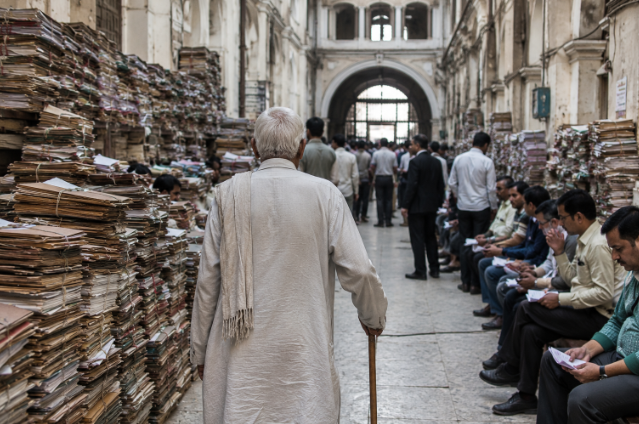
The recent conviction of eighty-four-year-old Deep Rai in Bihar’s Vaishali district reads less like a triumph of the rule of law and more like a cruel bureaucratic joke. Stemming from a November 1992 neighbourhood dispute involving broken glass and a subsequent physical altercation, the case lumbered through the Indian judicial system for thirty-three agonising years. A chargesheet was filed in 1993, charges were framed in 1999, and the verdict finally materialised in 2026. By the time the gavel fell, four of the co-accused had already passed away, escaping human justice altogether. Rai, now a frail octogenarian, faces incarceration for an act committed when he was middle-aged. This staggering delay begs a critical reevaluation of what constitutes justice. When the victims are forced to wait an entire generation for closure, and the accused lives decades under the paralysing shadow of unresolved litigation, the ultimate verdict is stripped of its corrective or deterrent value. Neither side truly wins; both are merely exhausted by a mechanism that operates with a frightening detachment from the human lifespan.
Deep Rai’s ordeal is not an isolated anomaly but a terrifyingly common manifestation of India’s chronic judicial backlog. According to the National Judicial Data Grid, the pendency of cases in Indian courts has frequently breached the forty to fifty-million mark over the last few years, a staggering statistic that translates to millions of lifetimes suspended in legal purgatory. The phrase "the process is the punishment" has become a literal reality for the masses. National Crime Records Bureau (NCRB) data consistently highlights that over seventy per cent of India's prison population comprises undertrials—people who have not been convicted of any crime but are too poor to afford bail or legal representation. They languish behind bars for years, sometimes longer than the maximum sentence they would have served had they been convicted. The systemic failure is so profound that it normalises the deprivation of fundamental liberties, turning the constitutional promise of a speedy trial into a hollow platitude for the economically disadvantaged.
To truly understand the depths of this systemic abyss, one must look at extreme historical precedents that prove Deep Rai's situation is a systemic feature rather than a simple bureaucratic bug. Consider the tragic, well-documented case of Machal Lalung, a man from Assam who was arrested in 1951 for "causing grievous hurt." Lalung spent an incomprehensible fifty-four years in judicial custody as an undertrial, forgotten by the state, his family, and the courts, before finally being released in 2005 at the age of seventy-seven. He was never once produced before a judge during those five decades. Lalung’s lost life represents the ultimate manifestation of a legal infrastructure that treats the impoverished as disposable. When severe poverty intersects with the labyrinthine criminal justice system, the individual is effectively erased from the state's conscience.
The starkest tragedy of this judicial lethargy is its inherently discriminatory nature, aggressively favouring the wealthy while suffocating the poor. One must inevitably ask: would Deep Rai’s case have dragged on for over three decades had he possessed immense financial resources or political clout? History and empirical evidence suggest otherwise. Money in the Indian legal ecosystem acts as an unparalleled accelerant or a perfect shield, depending on the needs of the accused. The affluent can afford top-tier legal counsel who masterfully weaponise the Code of Criminal Procedure, securing endless adjournments, immediate bail, and exploiting procedural loopholes. Contrast the decades-long wait of rural litigants with the swift judicial interventions granted to high-net-worth individuals. Instances like the infamous Pune Porsche hit-and-run case in 2024, where initial judicial leniency for a wealthy teenager sparked nationwide outrage, or the rapid bail hearings convened on weekends for influential politicians, starkly illustrate a two-tiered justice system. In this grim reality, the affluent navigate a system of specialised treatment, while ordinary citizens, whether as victims or accused, are ground to dust by institutional apathy.
What makes this judicial disparity even more insidious is the societal reaction—or rather, the severe lack thereof. Over the decades, the Indian populace has been conditioned into a state of psychological learned helplessness. The outrage that should naturally accompany a thirty-three-year wait for a localised assault verdict has been replaced by a weary shrug. Citizens no longer expect the courts to deliver timely justice; they enter the legal system with the fatalistic understanding that the battle will likely outlast their prime years. This gradual shift from righteous anger to deep-seated frustration, and ultimately to passive acceptance, is incredibly dangerous for a functioning democracy. It creates an environment where systemic rot is shielded from urgent public scrutiny. The state machinery benefits directly from this apathy, as a population that has given up demanding structural reform is far easier to govern and far less likely to hold its institutions accountable for their spectacular inefficiencies.
Further compounding this crisis is the intentional misdirection cultivated by the political class, which thrives on dividing the electorate along primal lines of identity rather than delivering on institutional governance. Instead of uniting to demand immediate, sweeping reforms to the judiciary—such as filling the thousands of vacant judicial posts, modernising court infrastructure, or implementing strict timelines for case disposal—the public discourse is routinely hijacked by partisan outrage. Blind political loyalty ensures that supporters vehemently defend the transgressions of their chosen leaders, creating a culture of impunity at the highest levels. Society is encouraged to fracture over religious and caste identities, engaging in endless, manufactured culture wars. Meanwhile, the overarching issues that plague citizens across all demographics, such as a broken justice system and unchecked corruption, remain largely unaddressed. Any genuine, systemic critique of these failing institutions is swiftly marginalised or branded as anti-national, effectively neutralising dissent and perpetuating the cycle of dysfunction.
Ultimately, the conviction of an eighty-four-year-old man for a crime committed a third of a century ago serves as a devastating indictment of the state of justice in India. It is a mirror reflecting a society that has normalised the abnormal. The true victims of this system are not just those directly involved in the Vaishali district dispute, but the millions of invisible citizens who are currently waiting in court corridors, hoping for a resolution that may not come in their lifetimes. Until there is a collective awakening—a refusal to accept delays that span generations and a rejection of a two-tiered system that serves only the privileged—the Indian judiciary will continue to be a site of enduring tragedy rather than a beacon of hope. The pursuit of justice must be reclaimed as an inalienable right, rather than a luxury reserved for those who can afford to buy time or political influence.
References:
- National Judicial Data Grid (NJDG) Dashboard for Pending Cases across India: https://njdg.ecourts.gov.in
- National Crime Records Bureau (NCRB) Prison Statistics India, detailing undertrial populations: https://ncrb.gov.in
- The Hindu coverage on the historical case of Machal Lalung, the undertrial who spent 54 years in prison: https://www.thehindu.com
- The Indian Express report on the Pune Porsche hit-and-run and systemic disparity: https://indianexpress.com