
The 0.8-Second Interval
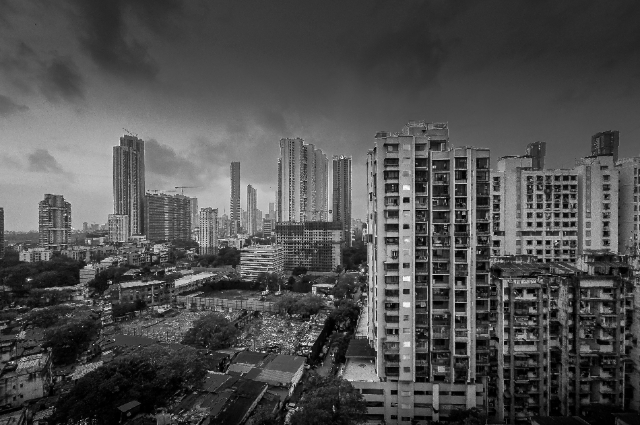
The penthouse of the Nirvana Sky Villas was a sanctuary of glass and arrogance. Located on the 42nd floor, it was a space where the air felt thinner, scrubbed clean by expensive filtration systems until it tasted like nothing at all. For Kabir, a twenty-three-year-old venture capitalist with a jawline carved by discipline and a bank account that felt like a cheat code, this wasn’t just a home. It was a throne.
It was Tuesday, October 13th. The digital clock on the obsidian kitchen slab flickered to 3:11 AM.
Kabir stood by the panoramic window, swirling a glass of amber liquid that cost more than a sedan. He was celebrating a promotion that had effectively turned his peers into his subordinates. He looked at his reflection. Sharp, silk-clad, and invincible.
Then, the world tilted.
It began as a malignant stillness. The ambient hum of the city seemed to get sucked out of the room, leaving a vacuum that made his eardrums throb. At 3:13 AM, the luxury turned predatory.
A sudden, claustrophobic weight crushed upon his shoulders, as if the oxygen in the room had turned to lead. Kabir tried to take a breath, but his lungs felt brittle, resisting the air. He looked down at his glass. The whiskey wasn’t just vibrating; it was forming. Tiny, jagged ripples were marching across the surface, colliding into perfect, terrifying hexagons.
He went to set the glass down, but his nervous system misfired. His vision liquefied. The straight lines of the glass table warped into sickening curves, and the floor seemed to drop three inches beneath his feet. A cold, electric dread—the kind felt by an animal a second before the trap snaps—flooded his marrow.
At 3:14 AM, he saw it.
In the periphery of his left eye, a looming, ash-grey smudge stretched against the white marble wall. It was a shivering distortion that looked like a man made of static. When Kabir turned his head to look directly at it, the shape vanished, only to reappear on his right. What began as a simple deformity curdled into something eldritch, a tangled mess of shifting shadows and impossible angles. It didn’t look like a ghost; it was as if the air itself was being bruised.
The pain hit next—a sudden thrum that started in his heels and vibrated up through his pelvis, rattling his ribs against his lungs. His molars began to hum in their sockets, a dry, metallic resonance that tasted like copper and old batteries.
His heart, usually a steady, athletic drum, began to flutter like a dying bird. It wasn’t beating; it was being driven by an external rhythm. Kabir collapsed, his expensive shirt tearing as he hit the edge of the glass table. He tried to crawl toward the door, but his muscles had turned to jelly. His last sight was the digital clock. 3:15 AM. The numbers blurred into a bloody red smear as his retinas began to vibrate in their cradles.
He died in a convulsion of silence.
Soon, the police arrived at 8:00 AM. The scene was disturbing. Kabir was lying on the dark wood, his face a mask of paralysed shock, but his body was unmarked. There were no bruises, no struggle, and no poison.
Investigator Arjun Iyer stood over the body, feeling a phantom nausea swell in his gut. He noticed one detail—a tiny, rhythmic anomaly that made his skin crawl. Beneath Kabir’s nose, a single drop of blood had fallen. It hadn’t splashed. It had landed with such unnatural precision that it had formed a perfectly circular, target-like stain on the rug. Each concentric ring was spaced exactly a millimetre apart, as if drawn by a compass.
“Looks like a fluke,” the Medical Examiner muttered, wiping sweat from his brow despite the air conditioning. “Sudden Adult Death Syndrome. Heart just gave out. High-flyers like this? It’s usually hidden stress or a silent defect. Case closed.”
The “Target” in the blood was ignored. The “Grey Man” was dismissed as a trick of the light. The file was stamped NATURAL CAUSES and buried.
Three weeks later, the bleach-scented penthouse was back on the market. The rent was halved. And Swayam, a man who believed only in what he could measure with a ruler and a spreadsheet, walked through the door with his moving boxes, smiling at the “lucky” deal he’d just secured.
The 3:14 AM Saturation
The keys to Penthouse 402 were heavy, made of a matte-black alloy that felt colder than the air-conditioned lobby of the Nirvana Sky Villas. For Swayam, they were the keys to a new life.
As he stepped out of the elevator, the silence of the 42nd floor swallowed the metallic jingle of his keychain instantly.
He wasn’t like Kabir. He didn’t care for silk shirts or amber whiskey. Swayam was a man of cold facts and precision. As a freelance content strategist for medical tech firms, his life was built on analysing data and finding patterns. To him, the “unfortunate incident” involving the previous tenant was just a statistical anomaly, a tragedy that had conveniently slashed the rent of the penthouse by half.
“Arbitrage,” he whispered to the empty, marble-clad hallway. “The city rewards those who don’t fear the shadows.”
The first few days were perfect. Swayam set up his office in the glass-walled den overlooking the Arabian Sea. In the daytime, Mumbai was a chaotic, breathing monster of yellow-black taxis and salt spray. But from up here, behind the triple-paned, reinforced glass, the city was a silent movie played on mute.
He felt powerful. He felt untouchable.
Then came Thursday.
It was 3:11 AM.
Swayam was deep into a content audit, the blue light of his dual monitors reflecting off his glasses. The apartment was bone-chillingly cold, the AC humming a low, steady note. Suddenly, he felt a strange, dry pressure behind his eyes. It felt like his brain was being squeezed by a giant, invisible hand.
He stopped typing. The silence in the room hadn’t changed, but it felt… heavier. It was no longer the absence of sound; it was a physical weight pressing against his eardrums.
He reached for his coffee mug, but his fingers misfired. He missed the handle by a fraction of an inch. When his skin finally touched the ceramic, he didn’t feel the smooth glaze. He felt a tremor. The mug was vibrating so fast it was almost a blur, a high-frequency thrum that made the nerves in his fingertips scream.
“High-altitude wind shear,” Swayam muttered, his voice sounding thin and hollow. “The building is designed to sway. It’s just physics.”
He stood up to walk to the kitchen, but the floor felt like it was liquid. Every time he took a step, there was a micro-delay—a sickening lag between his foot hitting the marble and the sensation of the floor pushing back. It felt as if the building were a predator, waiting for him to find his balance before shifting the ground again.
He walked to the panoramic window, hoping to see the steady lights of the Bandra-Worli Sea Link to ground himself. But the lights were wrong. The golden streetlights 42 floors below weren’t stationary; they were stretching. They looked like long, jagged needles of light, shivering with the intensity of a tuning fork.
Suddenly, a dull, rhythmic thud began at the base of his skull.
Thump. Thump. Thump.
It wasn’t his heartbeat. It was the building. The sound was so deep it bypassed his ears and resonated directly in his ribs.
He looked down at his smartwatch. His heart rate was 114 BPM, but he wasn’t running. He was standing perfectly still, his body working as if it were sprinting.
Then, the air in the room seemed to bruise.
In the corner of his eye, a tall, ash-grey smudge appeared against the shining white wall. It was the same figure. A shivering distortion that made the wallpaper behind it look like it was melting. Swayam turned his head sharply, his breath hitching in his throat.
The shape vanished.
He waited, his chest heaving. The silence returned, but it was different now. It was the silence of a lung holding its breath. He walked back to his desk, his legs feeling like lead, and noticed his phone screen was glowing.
A notification from his smart-home app was blinking in a violent, bloody red:
[!] SENSOR ALERT: UNIT 402 VIBRATION SATURATION - 12%.
Swayam stared at the screen. His logical mind tried to find an explanation—a software glitch, a faulty sensor, a prank. But then he felt it. A warm, metallic drip hit his upper lip. He wiped it away with the back of his hand.
It was blood. Bright, hot, and smelling of copper.
He didn’t run. He couldn’t. He sat back down in his ergonomic chair, his eyes fixed on the “Grey Man” who had reappeared in his periphery, taller and more jagged than before.
Swayam realised then that the silence of the penthouse wasn’t a luxury.
It was a hunger.
And he was the first course.
Sync Or Die
By Tuesday, the penthouse had stopped pretending to be a home.
Swayam sat at the dining table, his laptop pushed aside. He hadn’t slept in forty-eight hours. His skin had taken on a greyish, translucent hue, and his eyes were bloodshot, the capillaries having burst from the constant, invisible shaking. He looked like a man who had been vibrating for a century.
He had spent the night researching. He found the name: Kabir Hedge. The files were thin, but the descriptions of “Sudden Adult Death” and the “target-shaped blood stain” were enough.
Swayam’s logical mind was screaming. He knew the 18 Hz frequency—the “Ghost Frequency”—was being used by the building to stabilise its massive height against the Mumbai winds. But the building wasn’t just using air; it was using mass.
“It’s an experiment,” Swayam whispered, his teeth rattling in his head. “We aren’t tenants. We’re ballast.”
He needed to see it. He needed to prove the building was manipulating the physical world before it finished manipulating him. He grabbed a container of table salt and began to pour it onto the dark floor. He didn’t sprinkle it; he laid out a thick, even sheet of white, smoothing it with his trembling hands until it looked like a fresh snowfall.
“Cymatics,” he croaked. “Sound into shape.”
He sat back and waited. The air in the room felt thick enough to drown in.
At 3:05 AM, the table began to hum. A deep, guttural moan that felt like a beast waking up in the basement.
The salt began to dance.
At first, it formed simple geometric lines. But as the frequency intensified, the grains began to snap into place with violent precision. Swayam watched, his breath hitched in his throat, as the white dust carved out deep hollows and sharp ridges.
Within seconds, a face stared back at him.
It was Kabir.
The salt had perfectly recreated the previous tenant’s face, frozen in a silent, jagged scream of agony.
“No,” Swayam whimpered, reaching out to break the pattern.
But before he could touch the wood, the salt face shifted.
The grains blurred, moving in a frantic, microscopic swarm. The features melted and reformed into a new mask.
Swayam felt a cold, wet drip hit his hand.
He looked down.
His nose was haemorrhaging, the blood falling with clockwork rhythm.
He looked back at the table.
The salt face was now his own.
The digital clock on the oven flickered to 3:11 AM.
The world didn’t just tilt; it shattered.
The “Grey Man” didn’t hide in the corners anymore. The shivering pillar of static stepped out of the wall and walked directly into Swayam’s chest.
The sensation was beyond pain.
It was a total betrayal.
Swayam felt his bones, already turned to brittle chalk by the weeks of vibration, finally turn to powder. His internal organs, hummed into a frantic jelly, began to liquify.
He tried to scream, but his throat was full of the white calcium dust rising from his own disintegrating skeleton.
He hit the floor, not with a thud, but with a wet, heavy splash.
He was no longer a man; he was a vibration that had finally stopped.
Two Weeks Later
The scent of lavender bleach was thick in the air of Unit 402. The marble floors gleamed, reflecting the bright Mumbai sun as if they had never tasted blood.
Aditi, a high-frequency trader who thrived on the “impossible deal,” dropped her designer bags by the obsidian table. She spun around, admiring the view of the Arabian Sea.
“I heard the last guy had some kind of breakdown,” she told the real estate agent, her voice echoing in the clinical silence. “Work stress, I guess? Some people just can’t handle the height.”
The agent smiled—a wide, empty expression that didn’t reach his eyes.
“This penthouse is an engineering masterpiece, Ms. Aditi. It is perfectly stable. It just requires the right… alignment.”
Aditi laughed, feeling a tiny, rhythmic tickle in the back of her ear.
“Well, I’m as stable as they come. I’ll take it.”
As the agent left, the elevator doors hissed shut like a blade.
Aditi walked to the window and pressed her forehead against the glass.
It felt warm.
It felt like it was humming.
“So quiet,” she whispered, a small smile on her face.
Forty floors below, in a lead-lined room, a red light on a monitor turned a steady, hungry green.
[!] UNIT 402: NEW COMPONENT DETECTED.
[!] STATUS: COMMENCING CALIBRATION.
The tower gave a low, satisfied thrum that shook the air in the room.
The hunt was over.
The symphony had begun again.