
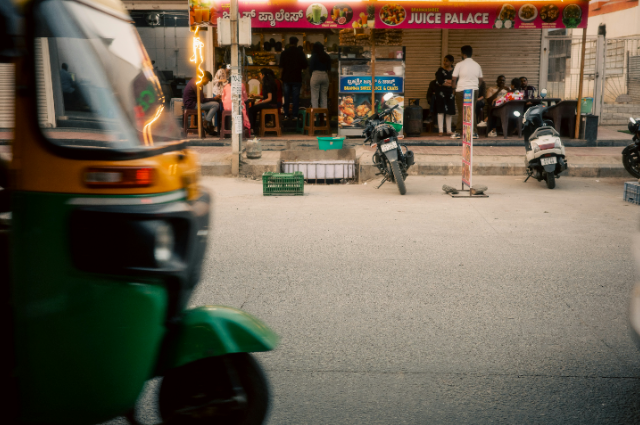
When I first read this story, something in me just — relaxed. Not because it was surprising, exactly, but because in a news cycle full of corruption, road accidents, failed government schemes, and corporate hypocrisy, here was a simple, human story about a man who did the right thing when nobody was watching. An auto driver found a bag containing Rs. 1.5 lakh in cash left behind by a passenger — a CEO — and waited. He did not drive away. He did not keep the money. He waited, and he returned it. And when I read that, my first thought was not about the reward, or the CEO, or the economics of it. My first thought was — there are still good people in this world. That feeling matters.
What Happened — The Story
The incident involved an auto rickshaw driver whose passenger left behind a bag containing Rs. 1.5 lakh in cash — a significant sum by any measure, and an extraordinary one for someone earning a daily wage income from auto driving. The passenger was identified as a corporate executive — a CEO. After realising what had been left behind, the auto driver did not simply pocket the money and move on. He waited. He made efforts to return the bag to its rightful owner. When the CEO was eventually reunited with his cash, he rewarded the auto driver with Rs. 15,000 — ten per cent of the amount that had been returned.
The story spread quickly. On social media, opinions divided almost immediately — some people celebrated the auto driver's honesty unreservedly, while others questioned whether Rs. 15,000 was an adequate reward for returning Rs. 1.5 lakh. Was the CEO too stingy? Should he have given more? These are understandable reactions. But I think they miss the most important part of the story entirely.
The Wrong Question — And the Right One
We keep asking: did the CEO pay enough? I suggest this is the wrong question. The right question is: what kind of person waits with someone else's money when no one is watching? Think about the actual situation the auto driver was in. He had Rs. 1.5 lakh in his possession. Cash. Untraceable. The passenger was gone. There was no camera pointed at him, no witness demanding accountability, no system that would have known if he had simply driven away and kept the money. For a man earning a daily wage — for whom Rs. 1.5 lakh might represent months of income — the temptation in that moment would have been real and entirely human. And he chose, without any external pressure, to return it. That choice is the story. Everything else is secondary.
Honesty Has No Market Price
As an Economics student, I have learned that not everything of value can be priced. Economists call these non-market values — things that matter deeply to human wellbeing and society but that do not have a price tag attached to them. Clean air. Family bonds. Trust between strangers. And integrity — the quality of doing the right thing even when doing the wrong thing would cost you nothing and gain you everything.
The auto driver's decision to return that money cannot be adequately compensated by any reward, because what he demonstrated was not a service — it was character. Rs. 15,000 is a generous acknowledgement. Rs. 50,000 would have been equally generous. But no amount of money fully captures what it means to be the kind of person who, sitting alone with someone else's cash and every opportunity to keep it, chooses honesty instead. That quality — that integrity — is what economists would call a positive externality. It benefits not just the CEO who got his money back, but every person who hears this story and is reminded that trustworthy people exist. That social value ripples outward in ways that no reward can fully measure.
Why We Need These Stories — Especially Now
I want to be honest about something. I have written articles about trafficking networks, road deaths caused by unchecked privilege, government schemes that built toilets nobody could maintain, and corporations that wave rainbow flags while funding anti-equality politicians. Those are all important stories. They are true, and they need to be told. But a steady diet of institutional failure and human disappointment can quietly erode something — a basic faith that ordinary people, in ordinary moments, are capable of doing the right thing.
Stories like the auto driver's matter because they restore that faith. Not naively — not by pretending that exploitation and inequality do not exist, because they very much do. But by reminding us that within the same society that produces all of those failures, there are also people like this auto driver. A man for whom integrity was not a policy or a principle written on a wall — it was just what he did, automatically, when faced with a choice that nobody else would have known about. Those people exist in every city, every village, every auto stand. We just do not always hear about them.
The Inequality That Sits Quietly in the Background
I do want to acknowledge something, because I think it is worth noting even in a story that deserves to be celebrated. The auto driver earns a daily wage. The CEO earns — well, enough that losing Rs. 1.5 lakh in cash was apparently something that happened, which tells you something about the difference in their financial realities. The fact that the auto driver returned the money is extraordinary precisely because of that gap. For the CEO, Rs. 1.5 lakh was a bad day. For the auto driver, it was likely more than he earns in several months. The honesty becomes even more remarkable when you hold that economic reality in your mind.
This is not a criticism of the CEO — he rewarded the driver, and that was the right thing to do. But it is a reminder that the people who most often demonstrate extraordinary integrity in our society are frequently the ones who can least afford to. The auto drivers, the domestic workers, the daily wage labourers — the people who return wallets and bags and phones, who wait with lost children, who go out of their way to do right by strangers — they do this not because they have enough to spare, but because of who they are. That deserves more than a moment of viral social media appreciation. It deserves genuine, sustained respect.
What This Story Teaches Us
There is a concept in behavioural economics called intrinsic motivation — doing something because it aligns with your own values, not because of an external reward. Research consistently shows that intrinsic motivation produces more durable, more genuine behaviour than reward-based incentives. The auto driver did not return that money because he knew there would be a reward. He returned it because not returning it would have been wrong. That is intrinsic motivation in its purest form. And it is, frankly, rarer and more valuable than most things we spend our time celebrating.
I think about what it would mean if more of us operated from that place — not just in dramatic moments involving large sums of cash, but in the small, daily choices that nobody notices. The work you do fully even when your manager is not watching. The space you leave for someone else even when you could take it. The truth you tell even when the lie would be easier. These are all versions of the same choice the auto driver made. They do not make headlines. But they are what a functioning, trustworthy society is actually built on.
The auto driver who waited with that money did not do something complicated. He did something simple — and in doing it simply, without drama or calculation, he reminded a lot of people of something they needed to be reminded of. Good people exist. Integrity exists. And sometimes the most important economic transaction is not the one that involves the most money — it is the one that involves the most character. He could have kept it. Nobody would have known. He did not. And that, more than any reward or any viral post, is the whole story.
References
- Times of India — Auto Driver Returns Rs 1.5 Lakh Left by Passenger, Rewarded with Rs 15,000: https://timesofindia.indiatimes.com
- Behavioural Economics Guide — Intrinsic vs Extrinsic Motivation: https://www.behavioraleconomics.com
- World Bank — Non-Market Valuation and Ecosystem Services: https://www.worldbank.org
- ILO — Informal Economy and Daily Wage Workers in India (2023): https://www.ilo.org
- Psychology Today — The Science of Honesty and Moral Character: https://www.psychologytoday.com