
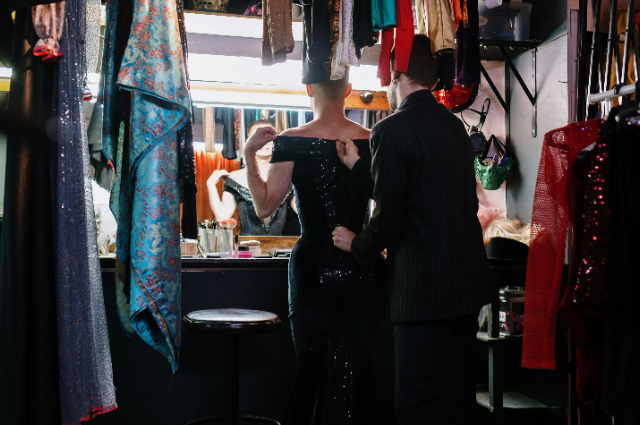
At first glance, orchestra groups in Bihar look like a normal source of entertainment during weddings, village functions, and local celebrations. People usually see girls dancing and performing songs on stage and think it is simply a way of earning money. However, after reading about journalist Mahima Singh’s undercover investigation, I realised that behind many of these orchestra groups there exists a hidden reality of trafficking, exploitation, and abuse of women and minor girls.
This issue became widely discussed after Dainik Bhaskar journalist Mahima Singh conducted a five-day undercover investigation into orchestra groups operating in Bihar. During the investigation, she lived among traffickers and exposed how many girls were trapped through false promises of jobs, money, and a better future. Instead of receiving safe employment opportunities, many girls were forced into exploitation and unsafe conditions. Following the investigation, police action took place in Siwan and Saran districts, and 21 minor girls were rescued in Siwan alone. In my opinion, this rescue operation also shows that the Bihar Police is becoming more aware and active regarding women’s safety and trafficking-related crimes.
What shocked me the most was that these orchestra groups appeared normal from the outside, but internally, many of them were connected to organised trafficking networks. Girls from poor families were often targeted because traffickers knew that financial problems make people vulnerable. This issue is not only a criminal issue but also a social and economic problem.
From an economics student’s perspective, I think poverty and unemployment are some of the biggest reasons behind this issue. Many families in rural areas are not financially stable and struggle to fulfil daily needs. Because of this, when traffickers offer jobs, income opportunities, or promises of a better future, families may trust them easily. Some parents may genuinely believe that sending their daughters to orchestra groups will improve the financial condition of the family.
Another major reason is the lack of opportunities for girls. In many places, girls still do not receive equal education or employment opportunities compared to boys. Sometimes, families consider girls a financial burden because of poverty and social pressure. I think this gender inequality increases the vulnerability of girls and allows traffickers to take advantage of poor and helpless families.
Government failure is another factor that cannot be ignored. India already has laws against trafficking and child exploitation, such as the Protection of Children from Sexual Offences (POCSO) Act and the Immoral Traffic Prevention Act. However, the proper implementation of these laws remains weak in many areas. Lack of jobs, weak monitoring systems, corruption, and poor awareness programs allow these illegal networks to continue operating. If governments provided better employment opportunities, stronger rural education systems, and awareness campaigns, many girls could be protected from exploitation.
Statistics also show how serious this issue has become in India. According to NCRB 2022 data, India recorded 6,036trafficking victims, including 2,878 children. Bihar itself recorded 751 trafficking victims, making it one of the states most affected by trafficking crimes. Reports also stated that between January and June 2025, Bihar Police rescued 271 girls, including many directly linked with orchestra groups. These figures clearly show that this is not an isolated issue but a large social and economic problem.
Bihar’s geographical location also increases the risk of trafficking. The state shares a border with Nepal, and traffickers often use these routes for illegal transportation of women and children. Railway connectivity between states makes movement easier for these criminal groups. Because of this, trafficking networks spread across different districts and states instead of remaining limited to one location.
At the same time, Mahima Singh’s investigation gives some hope. Undercover journalism of this kind is extremely risky and requires courage and patience. Spending five days inside such a dangerous environment was not easy, but her work helped expose a hidden reality that many people had ignored for years. In my opinion, investigative journalism plays a very important role in creating awareness and forcing authorities to take action against social crimes.
I also believe society has some responsibility in solving this issue. Many times, people enjoy performances without questioning the conditions in which these girls are working. Society needs to become more aware about trafficking and exploitation so that suspicious activities can be identified earlier. Families should also be educated about fake job offers and unsafe work opportunities.
In conclusion, Bihar’s orchestra trafficking issue is not only a criminal issue but also an economic and social.
Poverty, unemployment, gender inequality, and weak systems all contribute to this problem. In my opinion, solving this issue requires both government action and social awareness. Better education, stronger law enforcement, employment opportunities, and protection for vulnerable girls are necessary to stop such exploitation in the future.
References
- https://www.bhadas4media.com
- https://www.state.gov
- https://www.nextias.com
- https://universalinstitutions.com
- https://www.ohchr.org