
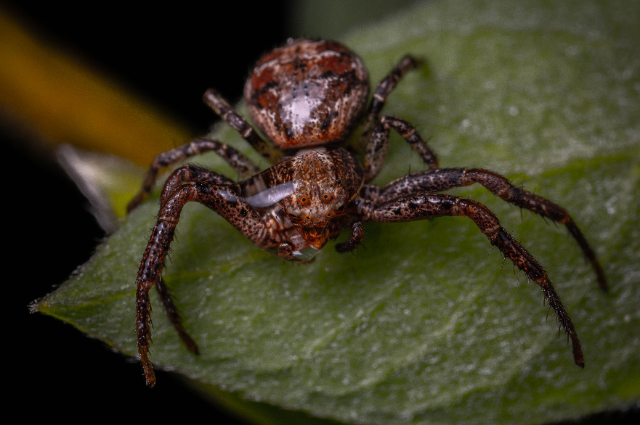
I never thought much about spiders. They were just there — in corners, on walls, occasionally making me step back before I carried on with my day. I was not afraid of them exactly, but I certainly never considered them important. That changed when I read about what spiders actually do — the scale of it, the economics of it, the sheer quiet usefulness of creatures that most people's first instinct is to kill. Honestly, it was shocking. Not in a dramatic way, but in the way that makes you pause and think — how did I not know this? How does almost nobody talk about this?
The Fear First — Because It Is Real
Let us start with the fear, because it is genuinely widespread. Arachnophobia — the fear of spiders — is consistently ranked among the most common phobias in the world. Studies suggest that somewhere between 3% and 15% of the global population experiences significant fear of spiders, with many more people reporting general discomfort or disgust. Evolutionary psychologists have argued that this fear may be partly hardwired — an ancient survival instinct developed in environments where venomous spiders posed a real threat. Others point to cultural transmission — we learn to fear spiders because the adults around us feared them. After all, movies and media portray them as dangerous because the combination of eight legs, multiple eyes, and unpredictable movement triggers a deep instinctive recoil in many people.
And yet, of the roughly 45,000 known species of spiders on Earth, fewer than 30 are considered dangerous to humans. The vast majority of spiders that share our homes, our gardens, and our fields are completely harmless. They do not want to bite us. They are not hunting us. They are, in fact, quietly doing something extraordinary — and we are mostly too busy being afraid of them to notice.
What Spiders Actually Do — The Numbers Are Shocking
Here is the fact that genuinely stopped me when I first read it. According to a 2017 study published in the journal Science of Nature by biologists Martin Nyffeler and Klaus Birkhofer, the world's spiders collectively consume somewhere between 400 and 800 million metric tonnes of prey every single year. To put that in perspective, the entire human population of Earth consumes approximately 400 million metric tonnes of meat and fish per year. Spiders, as a species, eat as much as — or possibly more than — all of humanity combined. Every year. Silently. Without being asked. Without being paid. Without anyone even noticing.
The vast majority of what spiders eat are insects — including the insects that destroy crops, spread disease, and invade homes. Mosquitoes, flies, aphids, locusts, and moths — these are the primary targets. A single spider can consume dozens of insects per day, depending on the species and the season. Multiply that across an estimated 131 spiders per square metre of land in productive ecosystems — a figure cited in Nyffeler and Birkhofer's research — and the scale of what spiders do for the planet becomes almost impossible to fully comprehend.
The Economics of Spiders — What They Save Us
This is where, as an Economics student, I find the spider story genuinely fascinating. We tend to think of ecosystem services — the benefits that nature provides to humans — in abstract terms. But spiders provide something very concrete and very measurable: pest control. And pest control, when done by humans using chemical pesticides, is extraordinarily expensive.
Global pesticide sales were valued at approximately USD 84 billion in 2021 and are projected to continue growing. Farmers in developing countries — including India — spend a significant portion of their income on pesticides, and many cannot afford adequate coverage, leaving their crops vulnerable. In India specifically, pest damage accounts for an estimated 15 to 25 per cent of total crop losses annually despite pesticide use. Now consider what spiders contribute as a natural, free, self-sustaining pest control system operating in every field, every garden, and every ecosystem. Their economic value, if you were to price it as a service, would run into hundreds of billions of dollars annually worldwide. This is not speculation — ecological economists have attempted to calculate the value of natural pest control services and consistently arrive at figures that dwarf most national agricultural budgets.
And unlike chemical pesticides, spiders do not contaminate soil and water. They do not kill beneficial insects like bees. They do not create resistant pest populations through overuse. They do not require packaging, transport, or application equipment. They reproduce, they adapt, and they show up every season without any human intervention. From a pure cost-benefit perspective, spiders are one of the most efficient free services that nature provides to agriculture — and we barely acknowledge their existence.
Spiders in Medicine — The Frontier Most People Do Not Know About
Beyond pest control, spiders are increasingly important in medical research in ways that most people have no idea about. Spider venom, which sounds terrifying, is actually a complex biochemical toolkit that scientists are mining for potential treatments for a remarkable range of conditions. Compounds found in spider venom are being studied for their potential as painkillers — some venom proteins target pain receptors in ways that could lead to non-addictive alternatives to opioids, which is a pressing medical need globally. Other compounds are being investigated for their potential in treating cardiac arrhythmias, erectile dysfunction, and even neurological conditions like Alzheimer's disease.
Spider silk is perhaps even more remarkable. It is, by weight, stronger than steel and more flexible than synthetic fibres. Researchers have been working for decades on ways to produce spider silk artificially for use in everything from bulletproof vests to surgical sutures to aerospace materials. The challenge is that spiders cannot be farmed like silkworms — they are territorial and cannibalistic — so scientists have turned to genetic engineering, using spider silk genes in goats, bacteria, and yeast to produce the protein artificially. The potential applications are vast, and the source of it all is an animal that most people's first instinct is to remove from their homes as quickly as possible.
Why We Should Stop Killing Them
I am not suggesting that everyone needs to become comfortable with spiders in their personal space — fear is a real psychological experience,e and I am not dismissing it. But I do think there is a meaningful difference between tolerating a spider in the corner of a room and actively seeking to kill every spider you encounter. The spider in your house is almost certainly harmless, and it is almost certainly eating the insects — the mosquitoes, the flies, the moths — that you would prefer not to have in your home. It is doing free pest control. And when we kill it reflexively, out of a fear that is largely cultural and mostly unwarranted, we are eliminating something genuinely useful in exchange for nothing.
At a larger scale, the indiscriminate use of pesticides kills spiders along with pest insects, which is a genuine ecological problem. Research has documented significant declines in spider populations in intensively farmed areas where pesticide use is heavy. As spider populations decline, pest populations — freed from one of their most effective natural predators — can grow. This creates a cycle where more pesticides are needed, which further damages spider populations, which further increases pest pressure. It is an expensive, self-defeating loop — and it starts with undervaluing something that was doing the job for free.
Spiders have been on Earth for approximately 380 million years. They were here long before humans, long before agriculture, long before the concept of pest control existed. In that time, they have built one of the most effective and widespread natural pest management systems the world has ever seen — silently, consistently, and entirely without recognition. The fear that surrounds them is understandable but largely misplaced. The usefulness that hides behind that fear is extraordinary. Next time you see a spider in the corner of a room, you do not have to love it. But maybe, just for a moment, consider what it is doing there — and let it carry on.
References
- Nyffeler, M. & Birkhofer, K. — An estimated 400–800 million tonnes of prey are annually killed by the global spider community, Science of Nature (2017): https://link.springer.com
- Grand View Research — Global Pesticide Market Size Report (2022): https://www.grandviewresearch.com
- National Geographic — Spider Silk: The Material of the Future: https://www.nationalgeographic.com
- American Psychological Association — Understanding Arachnophobia: https://www.apa.org
- ICAR — Crop Loss Estimation Due to Pests in India: https://icar.org.in
- Scientific American — Spider Venom as Medicine: https://www.scientificamerican.com